Post Workout Recovery

♠️Recovery♠️

🔹 I can remember my first few months of strength training. I wanted a huge bench press, so what did I do? I benched 4-5x/week to the point that I over trained. Even worse; I killed my gains and my strength came to a hault. 

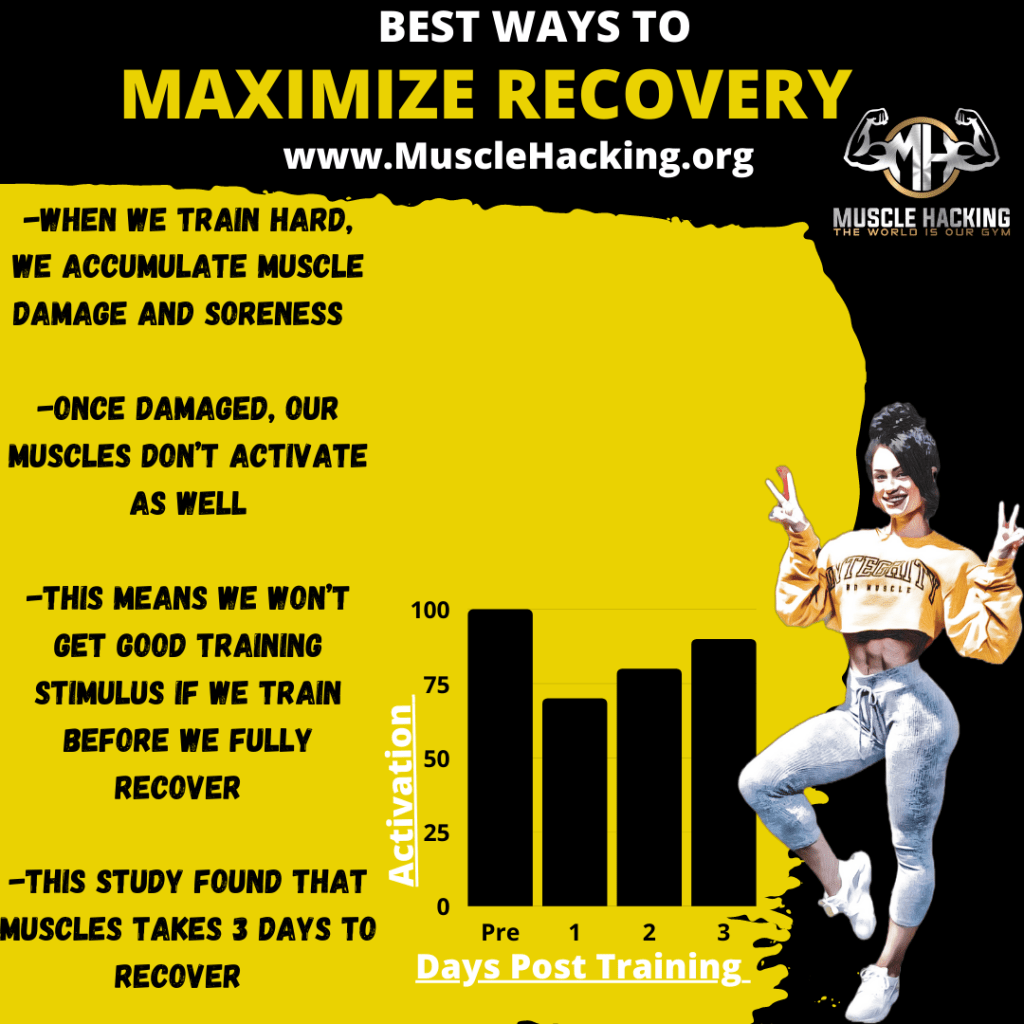
🔹 Studies show  that muscles takes around  3-days to recover from a hard workout. Recovery isn’t just feeling better or less sore, but a state in which your muscles are able to reach nearly full activation again. This is essential because a muscle has to be active in an exercise in order to grow from the stimulus. If soreness and fatigue are hindering muscle activation, your workout won’t cause your muscles to grow.

🔹 A prime rule of thumb to remember is  that you grow muscles outside of the gym. It’s important that you focus on recovery just as much as training. If you skip this critical step, you’ll find it difficult to reach your goals. Make sure that you give your muscles at least 48-72 hours of rest to optimize your recovery. This is very beneficial for the long run. 

Resources: https://pubmed.ncbi.nlm.nih.gov/12741861/

Boosting Metabolism

♠️Key To Boosting Metabolism♠️

🔹 If you are in a fat burning phase, you definitely want to focus on speeding up your metabolism through a phenomenon called the EPOC effect, which stands for, “Excessive Post-Exercise Oxygen Consumption.” The EPOC effect will produce more oxygen consumption to the body   in the post-workout period. This is beneficial because  when we consume more oxygen, we burn more calories. 

🔹 How and why does this happen?

🔹 Exercise will increase stress to the body. This interrupts our regular homeostasis. After our workouts, our bodies start to recover from this stress. Things such as tissue repair and nutrient replenishment require more energy, this is why we see increased calorie burning after we exercise. There are studies that show that this effect can last for as long as 38-hours. 

🔹 So let’s get to the question, “do all forms of exercise have the same effect”?

🔹 That’s precisely what this experiment investigated. Subjects performed workouts that burned the same amount of calories from resistance training, steady state cardio, and interval training. After that, they tracked their calorie burning throughout the post-workout period to see if there were any differences?

🔹 What were the results?

🔹 The steady state cardio group  didn’t boost metabolism one bit. Remember, the primary reason for an increase in metabolism  following a workout is due to things like tissue repair or nutrient replenishment. Steady state cardio typically isn’t stressful enough of a stimulus for most people so we don’t have as much muscle damage to repair or fuel stores to fill up.

🔹 On the other hand, both resistance training and interval training did increase metabolism. Both forms of exercise cause muscle damage and interval training will also deplete energy stores a little more than resistance training. Combine these two workouts and you’ll get a solid EPOC effect.

Resources:

https://www.researchgate.net/profile/Beau-Greer/publication/272187749_EPOC_Comparison_Between_Isocaloric_Bouts_of_Steady-State_Aerobic_Intermittent_Aerobic_and_Resistance_Training/links/56d264a608ae4d8d64a5f597/EPOC-Comparison-Between-Isocaloric-Bouts-of-Steady-State-Aerobic-Intermittent-Aerobic-and-Resistance-Training.pdf

https://minds.wisconsin.edu/bitstream/handle/1793/48951/Oschuenkemark2001.pdf

Burning Fat And Keeping Muscle

This is how you burn fat and maintain your muscle mass…

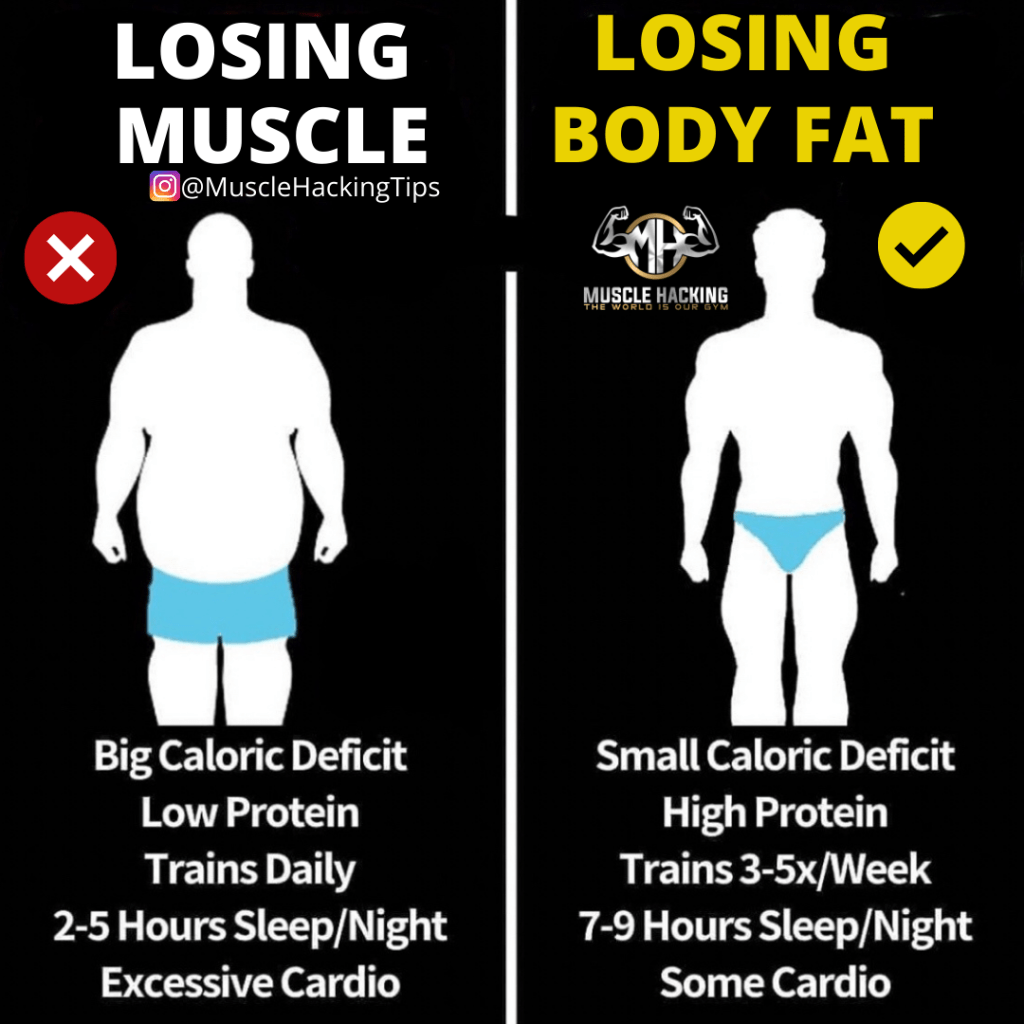
🔹 When tapping into a caloric deficit, it is imperative to ensure that you lose as much fat as possible, while retaining muscle mass.
To maintain your muscle mass, you have to follow these few steps.
.
🔹 Keep the deficit as small as you can, while still seeing the scales go down.

🔹 Keep your protein levels quite high.

🔹 Make sure you’re getting at least 7-9hrs of quality, uninterrupted sleep each night.

🔹 Focus on resistance training, to give body the right stimulus to keep all the muscle mass & avoid excessive amounts of cardio.

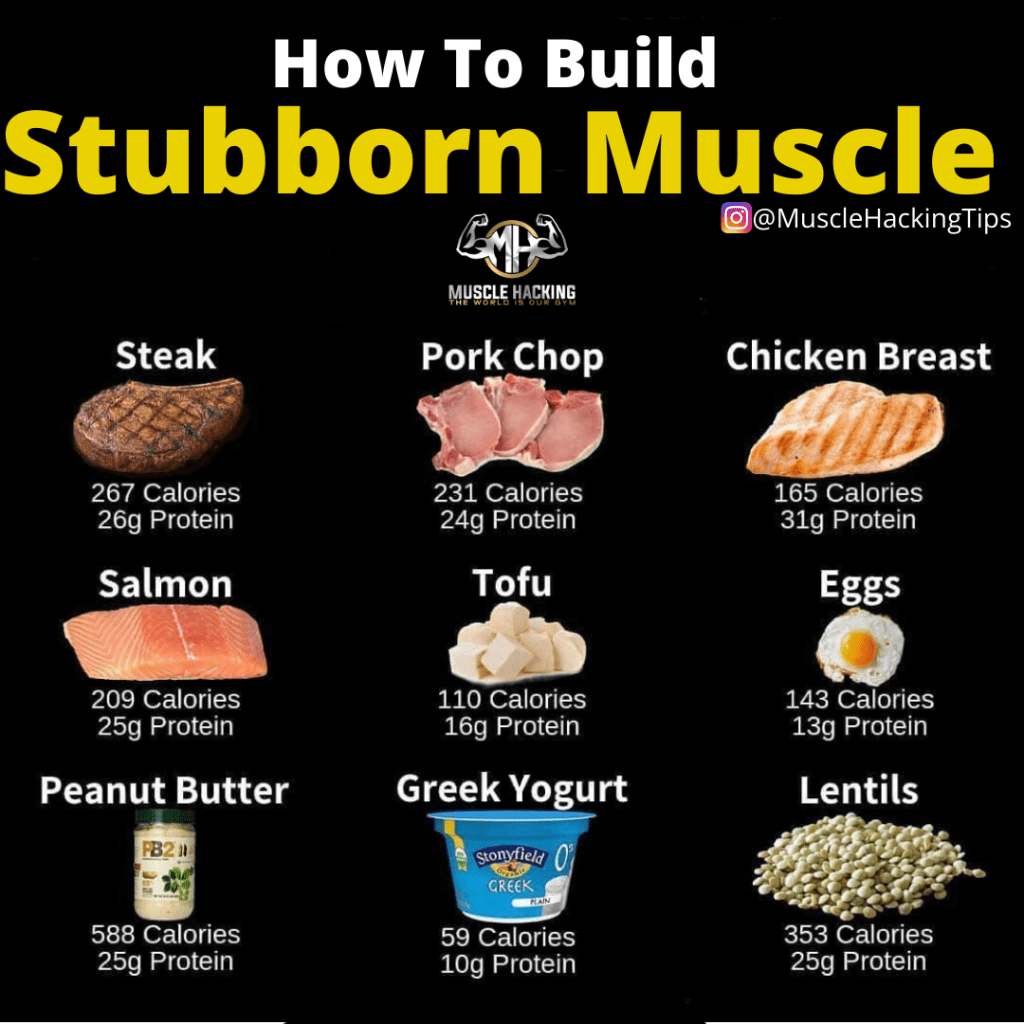
How to Build Stubborn Muscle

🔹 If you recently started training for less than a year, you don’t have any  lagging muscle-groups yet, your entire body is  adapting to the stimulus of working out and building muscle. With that said, if you’ve been training for some time time and you are now starting to notice that a certain muscle is lagging behind, you will need to implement some specialized techniques. Here are 4 things I’d recommend if your goal is to bring up a lagging muscle.

_

Tip Number 1: Increase Training Frequency

🔹 If you’re currently training a muscle-group once per week, I’d recommend that you  increase your training to twice per week. This is a way to maximize training-induced protein synthesis and also increases your  total volume.

Tip Number 2: Prioritize

🔹 If you’re trying to build bigger biceps, then avoid from leaving them for the end of your workout when you’re already taxed.  Start prioritizing that muscle-group by putting it first. 

Tip Number 3: Progressive Overload

🔹 Progressive overload is the main pathway of building muscle. And unless we’re gradually increasing the amount of work we do, no matter how hard we train, we’ll never grow. Get back to the basics – if you want to build your chest, you’ve got to bench press more weight or do more reps. 

Tip Number 4: Eat Enough to Grow

No matter how solid your training is… if you’re not providing your body with  the necessary nutrients to grow, you’ll never build any  muscle mass. It’s synonymous to building a house without enough bricks – it doesn’t matter how many workers are present if they don’t have the necessary tools for the job that house will not be constructed. 

_