Are You Eating Enough Protein?

Are you eating enough protein?

▪️When it comes to aligning your diet with your fitness goals, one aspect I see people constantly struggle with is consuming enough protein.

▪️(About 0.7-1g per lb of total bodyweight, or roughly 0.8-1g per lb of lean body mass if you have more weight to lose.)

▪️Of the three macronutrients (protein, fats, carbs), protein is typically the one that’s lagging behind.

▪️Why is eating enough protein so important?

▪️Protein is a crucial component in the muscle building and retaining process. You want muscle (you won’t get bulky, I promise) not just for the visual appeal, but for the many health/performance benefits as well. Fun fact…the more muscle you have, the more calories you burn just existing…this is a nice plus.

▪️Protein is also the most filling and satiating macronutrient, which is a big positive especially when restricting calorie intake. Staying full longer will keep you from sneaking back into the kitchen or break-room much sooner than you need to.

▪️The thermic effect of protein is another big plus. Your body has to burn more calories to digest protein than any other macronutrient, which is definitely a good thing.

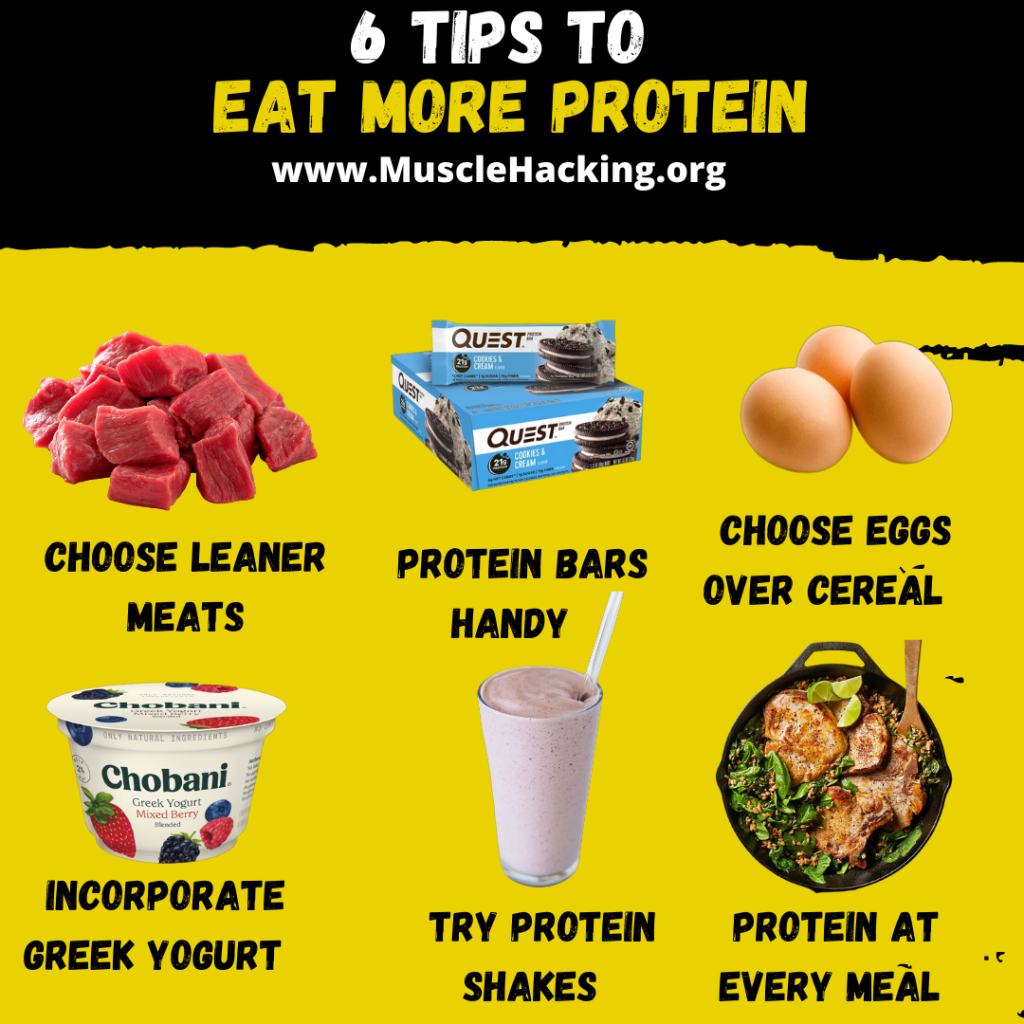
▪️I’ve listed a few of my favorite ways to increase your protein intake in this graphic, there are definitely others as well.

▪️And if you are vegan/vegetarian, a few of my staple recommendations to bump up your protein intake are options like: quinoa, lentils, chickpeas, beans, rice, tofu, tempeh, almonds, edamame, etc.
Controlling Your Body Fat

Controlling Your Body Fat

⁣⁣

▪️As modern research progresses, there seems to be more data backed by the “Set Point theory” which suggest that a biological system may be responsible for metabolic changes. ⁣

⁣⁣

▪️The research is not absolute on the matter and specific mechanisms remain unclear, but this may produce some “food for thought” to those who believe that the set point doesn’t exist. Some say that it should be preferably called “Settling point” and that it’s more involved with environmental factors rather than physiological ones. ⁣

▪️Others advocate that the two (set and settling points) can coexist and should not  be mutually exclusive, which is more likely the case.⁣

⁣⁣

▪️I digress..⁣..

▪️Have you ever noticed your body trying to fight back when your goal is to lose body fat? As you continuously lose weight, you feel more lethargic, hungrier than normal and, before you know it, you’re back to the weight that you started with. ⁣⁣

⁣⁣

▪️On the other side of the spectrum, when you start bulking (and do so for a while) suddenly eating all the calories becomes more difficult, hunger decreases and.. you actually start losing weight.⁣⁣

⁣⁣

▪️How does this happen? ⁣⁣

⁣⁣

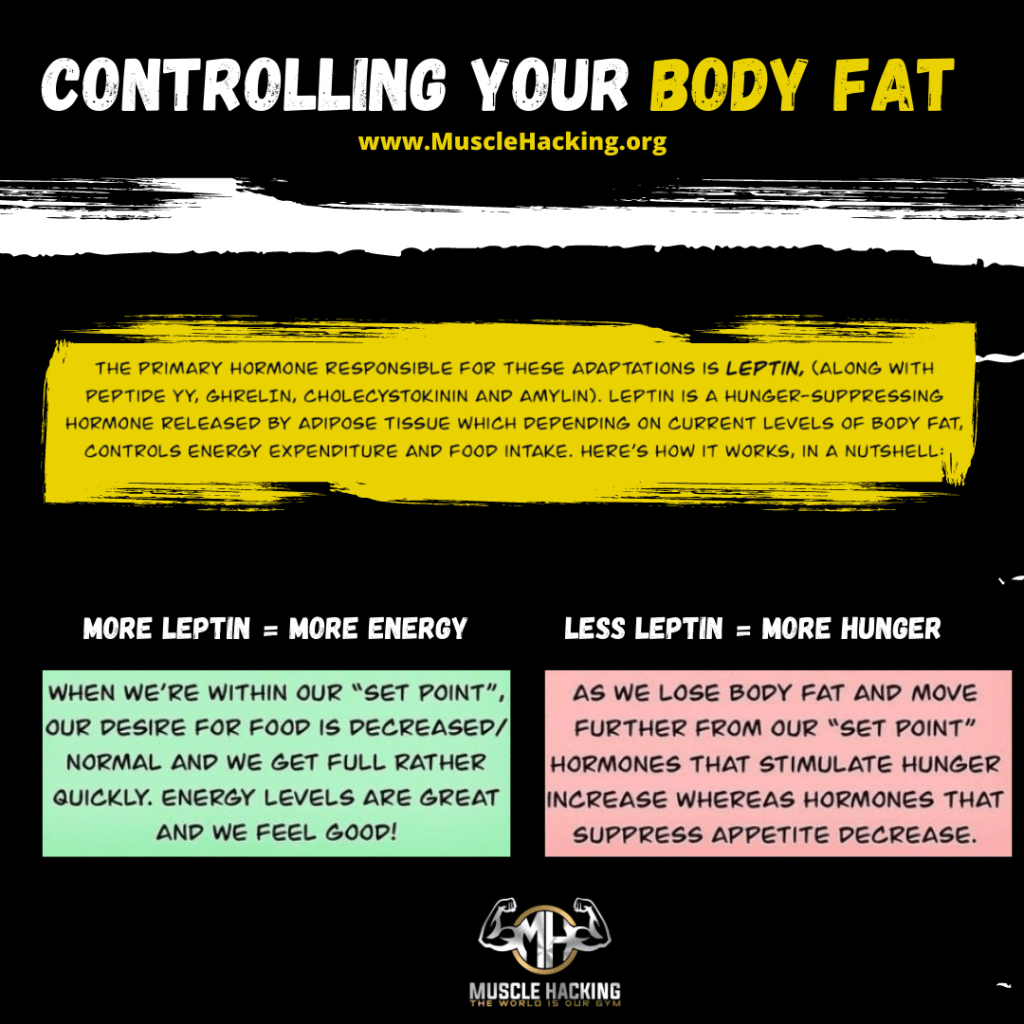
▪️When we start losing fat, our appetite increases, and that is largely due to a hormone called leptin, which is produced by the fat cells. ⁣

▪️In other words, more triglycerides within the cell creates more Leptin, which will increase metabolic rate and decrease hunger.⁣⁣

▪️However, less triglycerides within the fat cells will lead to less Leptin, which decreases metabolic rate and increases hunger.⁣⁣⁣

⁣⁣

▪️Based on out genetics, we tend to maintain a certain body weight and body fat, and if we start to fluctuate, then our appetite, behavior, and energy expenditure tends to adjust accordingly.⁣⁣

Reference: ⁣

https://pubmed.ncbi.nlm.nih.gov/34074915/

Refeed Days vs Cheat Days

REFEED DAYS VS CHEAT DAYS

⁣⁣⁣

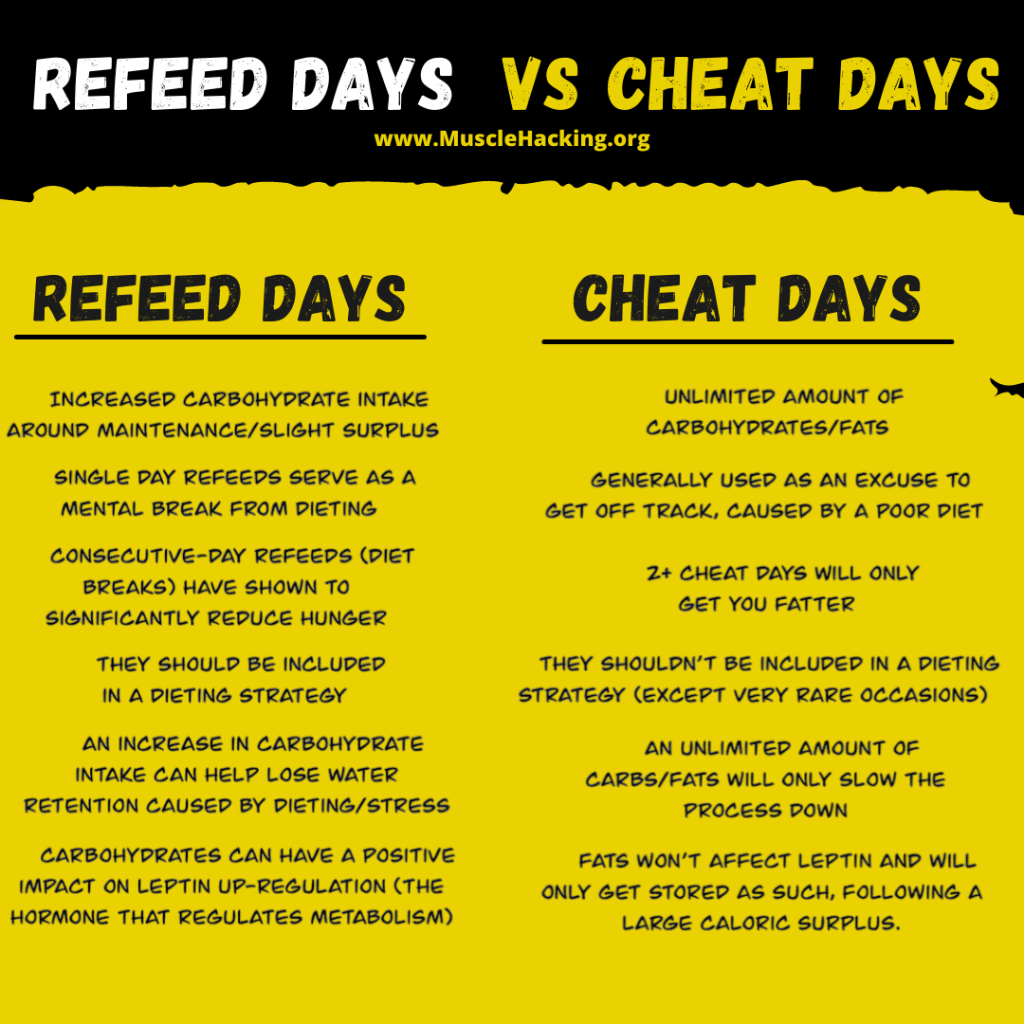
▪️I personally suggest that you should incorporate refeed days instead of cheat days when your goal is to lose fat.

⁣⁣⁣

▪️When it comes to refeed days, calories are raised to maintenance or a slight surplus, through an increase in carbohydrates which will serve as a mental and metabolic  break from dieting. ⁣

▪️Overall, when you are planning your diet, it’s a good idea to add at least one or even two refeed days every one in a while (frequency should be based on the person’s leanness), and it won’t cause  any “damage” to the progress being made in a diet. ⁣⁣⁣

⁣⁣⁣

▪️Refeed days can also help you reduce water weight because of the increased amount of carbs, which can help decrease stress levels and cause water weight to drop: as a result you generally feel tighter/leaner/fuller, you will also have more energy during your workouts and even your mood your mood will improve.⁣

⁣⁣⁣

▪️And it doesn’t just stop there! ..2 or more (consecutive refeed days) generally referred to as “Diet Breaks” have a positive impact on our Leptin levels, which is the hormone that is responsible for regulating our metabolism. From my experience I’ve seen that Multiple Days spent at maintenance with an increased amount of carbs will increase my energy expenditure and will allow me to train better, without regaining the fat back since the calories are still kept around maintenance. 

⁣⁣⁣

▪️However, on the other hand “Cheat Days” will never be anything more than an excuse not to diet. Cheat days really don’t serve a purpose and will only slow the process down due to the fact that the calories consumed will generally be very high (it’s called “cheat” for a reason). ⁣

▪️Also the mental aspect of a cheat day, which mostly (not always) tends to make people feel guilty and more likely to quit the diet afterwards. ⁣⁣⁣

▪️Am I saying that you should never have a cheat day? Certainly not, there are some occasions in which you could cheat a little, however, if the goal is losing fat they would only slow down the process.

Benefits of Deadlifting

Benefits of Deadlifting

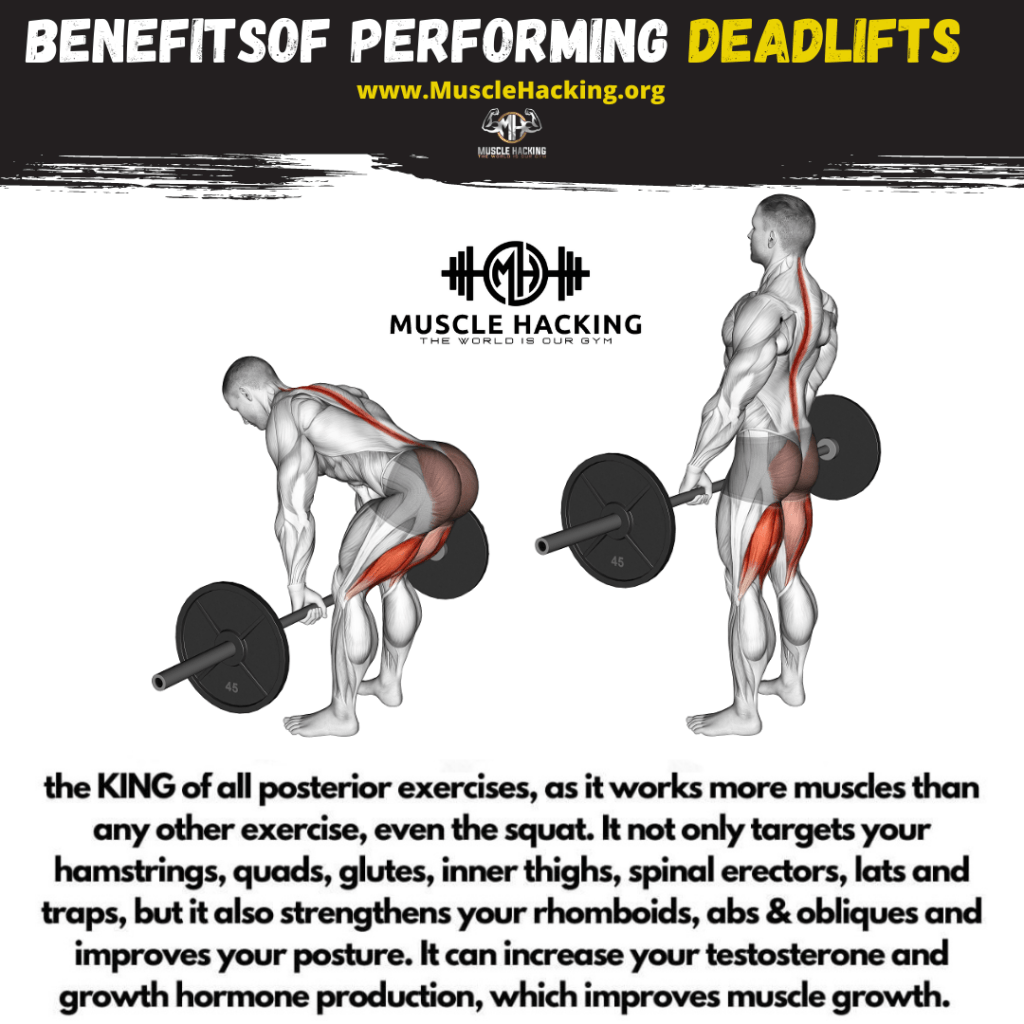
▪️People often avoid the deadlift because they think that it’s dangerous, but in actuality; it’s a very safe exercise to do (if you are performing proper form).⁠
⠀⁠
▪️When you deadlift, you don’t need anyone to give you spot, and if the weight is too heavy, you can just simply drop the weights on the ground, while other exercises like the Bench Press where you’d drop the weight on yourself if you just let it go.
⠀⁠
▪️It’s important to focus on proper form before trying to increase weights on the deadlift, and you’ll be fine.⁠
⠀⁠
▪️There are more benefits to deadlifting such as huge improvement in Grip Strength, increases fat burning, and it decreases injury by strengthening the muscles around critical tendons and ligaments.

Progressive Overload

Progressive Overload
⠀⁠
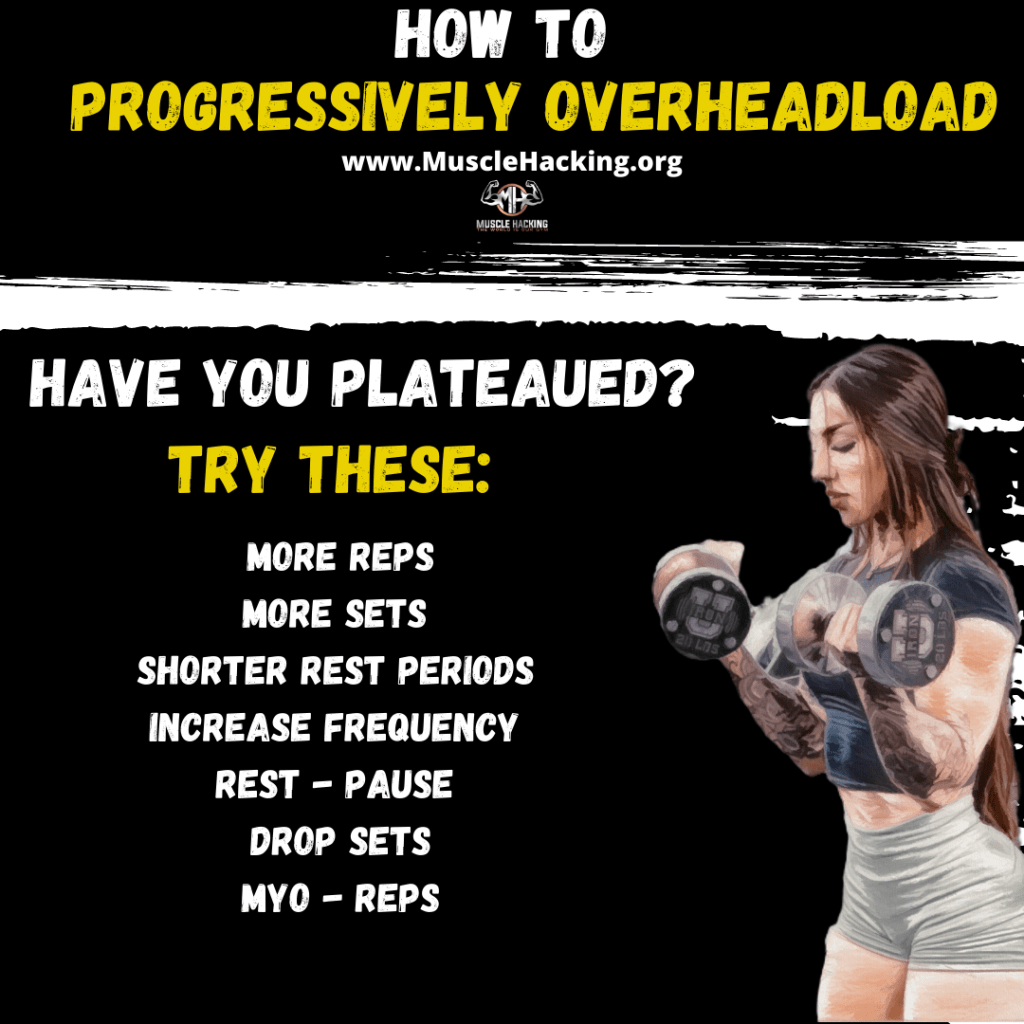
▪️ What does progressive overload mean?⁠
⠀⁠
▪️ Progressive overload is when you continuously increase the demands placed on your body through exercise.⁠
⠀⁠
▪️For the most part, the goal is improve muscle hypertrophy (muscle growth) or strength.⁠
⠀⁠
▪️Most of the time people plateau when doing this because they only try to increase the weights, but that can limit you if this is your only strategy.⁠
⠀⁠
▪️So Yes, you can add more weights, but unless you’re ok with only having a hammer in your toolbox, it’s best to put a variety of tools in your toolbox.⁠
⠀⁠
▪️Doing this can get you a diversify your progressive overload strategy, and ultimately, increase your hypertrophy and strength gains.⁠
⠀⁠
▪️ You can also change the tempo of your lifts, decrease the rest intervals between sets, increase the amount of reps or sets, as well as incorporating different training methods such as the rest-pause or drop sets.⁠
⠀⁠
▪️So there are definitely numerous ways to progressively overload than just increasing weights.

Energy Intake

Energy Intake 

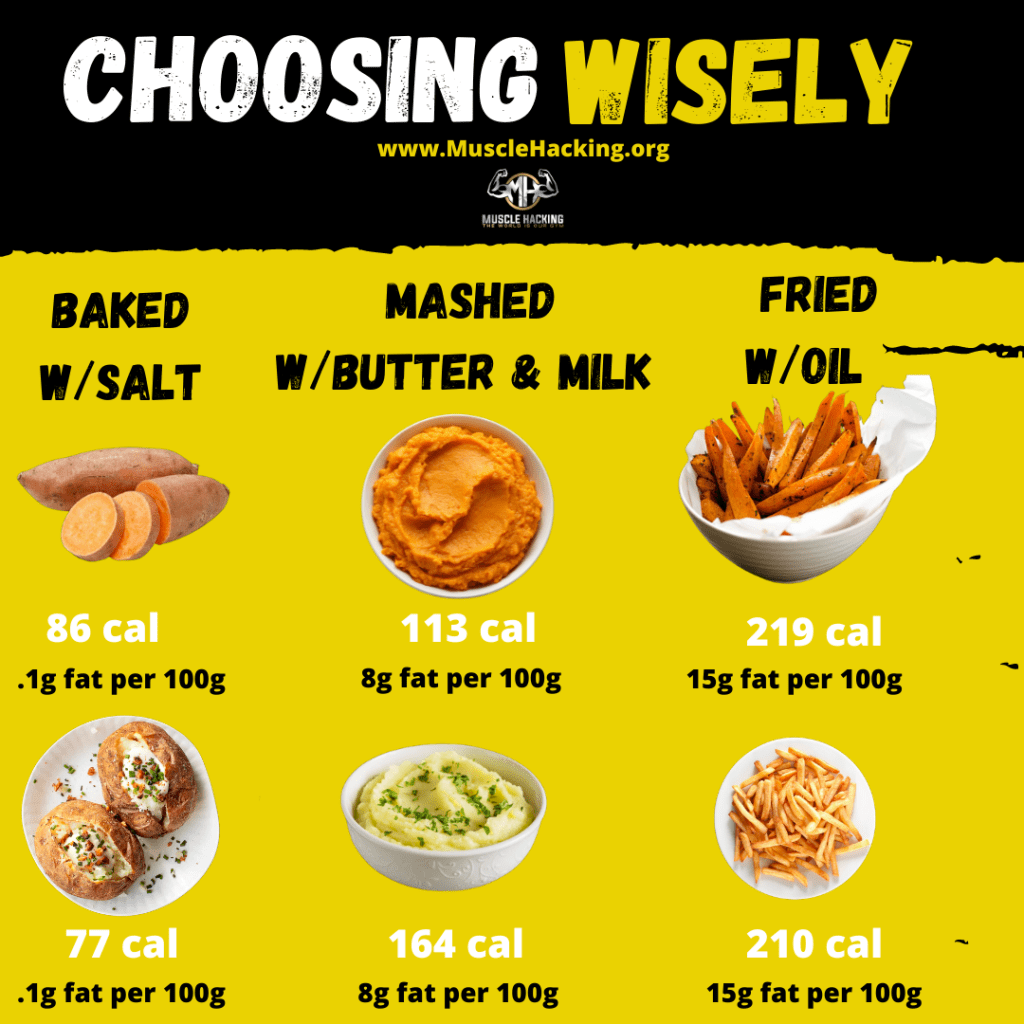
▪️Here’s an idea of what your potatoes can cost you in calories. It’s imperative to understand the energy density of the food you eat. Not all food is created equal no matter how similar it may look on your plate.

▪️Potatoes for instance, vary in calories based on their type and also by the way they are prepared.

▪️Here’s a few reasons how food appearing similar can vary:

-Cooking methods

-Types and brands

-Additives like butter, milk and oil.

▪️Be conscious of the  amount of calories and the preparation method of the food that you are eating. Especially if you’re looking to shed some extra fat.

▪️Ultimately, in order to lower your body fat percentage, you need to be in a calorie deficit. When you are focusing on calorie awareness while choosing potatoes; aim for the lower caloric option such as steamed potato or the variation without any cooking additives.

▪️Where you are consuming a higher calorie and higher fat potato like chips; you should make sure that your other food choices throughout the day compensate for this by being high protein, high fiber and nutrient dense.

Build A Stronger Back

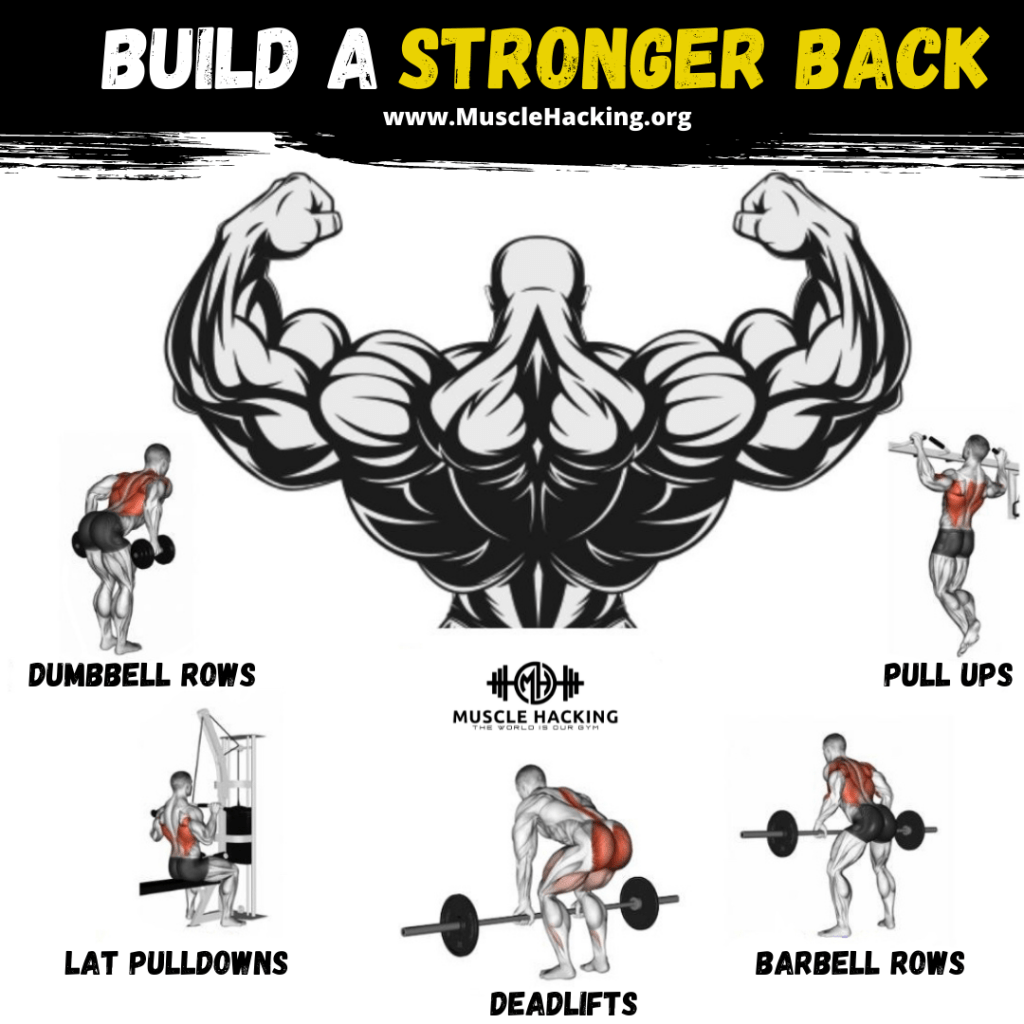
Here are five workouts that will help you to build a back of steel.⁠
⠀⁠
1️⃣ Deadlifts – This is an awesome exercise that targets the posterior part of your body and activates a large amount of muscles which allows you to lift incredibly heavy. It’s important to note that you must practice and perfect your form & technique before adding on heavier weights.⁠
⠀⁠
2️⃣ Barbell Rows – This is also a compound workout that stimulates mostly the muscles in your lats but also your upper back and your arms.⁠
⠀⁠
3️⃣ Pull-Ups – This is my favorite back builder. You don’t need much equipment or even a gym for that matter, but once you get stronger, you can start adding dumbbells between your feet or use a weighted vest to add more resistance.⁠
⠀⁠
4️⃣ Lat Pulldowns – If it’s difficult for you to do Pull-Ups, this is the perfect exercise that can help you get there. This exercise is similar to pull ups and you can start with lighter weights. Since the movement is very similar to pull ups, it can help you get the strength you need in order to perform the pull up properly.
⠀⁠
5️⃣ Dumbbell Rows – You can perform dumbbell rows with either two or one dumbbell at a time. Perform this exercise while leaning over on a bench, which will help you fix any muscle imbalances you might have.

Effort Exertion

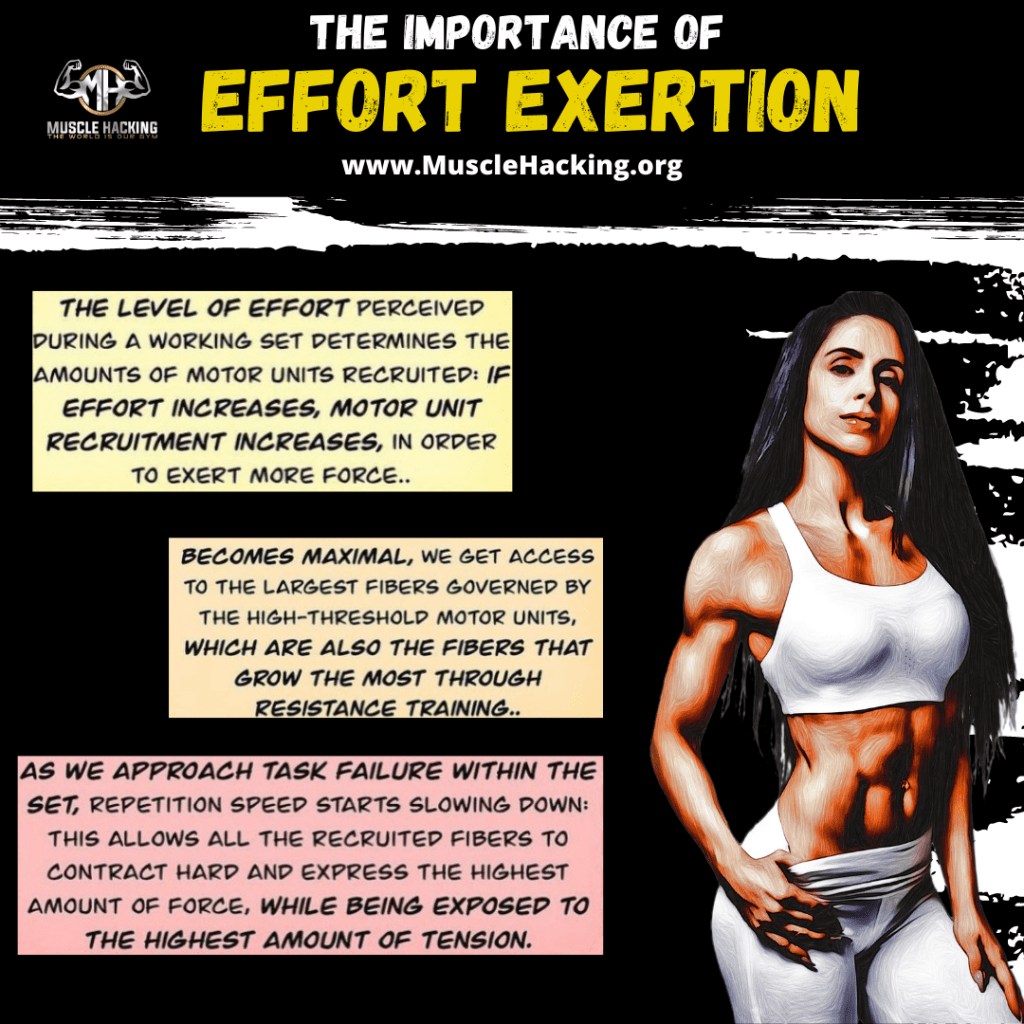
Why effort exertion MATTERS for muscle growth

▪️Effort is a key factor for hypertrophy, and if you try to get away with no-effort based workouts, well… then you’re hindering the efficacy of your training program.⁣

▪️But don’t get me wrong, there are cases in which exerting high levels of effort is unnecessary. For example, beginners who are just starting out with resistance training and learning the movement can get away with putting less effort into their workouts as they gain substantial strength through improvements in coordination.

▪️But past this phase, you need to push yourself progressively, if you want to get results. The reason why effort exertion is essential for muscle growth, is because the perceived level of effort establishes the level of motor unit recruitment to be assessed. ⁣

▪️The more of the effort perceived, the higher the level of motor units recruited to perform the task, which creates a greater force to be produced.⁣

▪️When the goal is muscle growth, we need to optimize the level of motor unit recruitment. This way we are able to get access to the fibers controlled by the high-threshold motor units. These are the largest fibers and the ones which grow by lifting weights.⁣

▪️Having slow bar speeds (close or to failure) with high-effort reps will increase the amount of hypertrophy we can create during each set. So if your goal is to build muscle, start putting some more effort into your sets so you can get the best results possible.

How Often Should You Train To Failure

How Often Should You Train To Failure? 

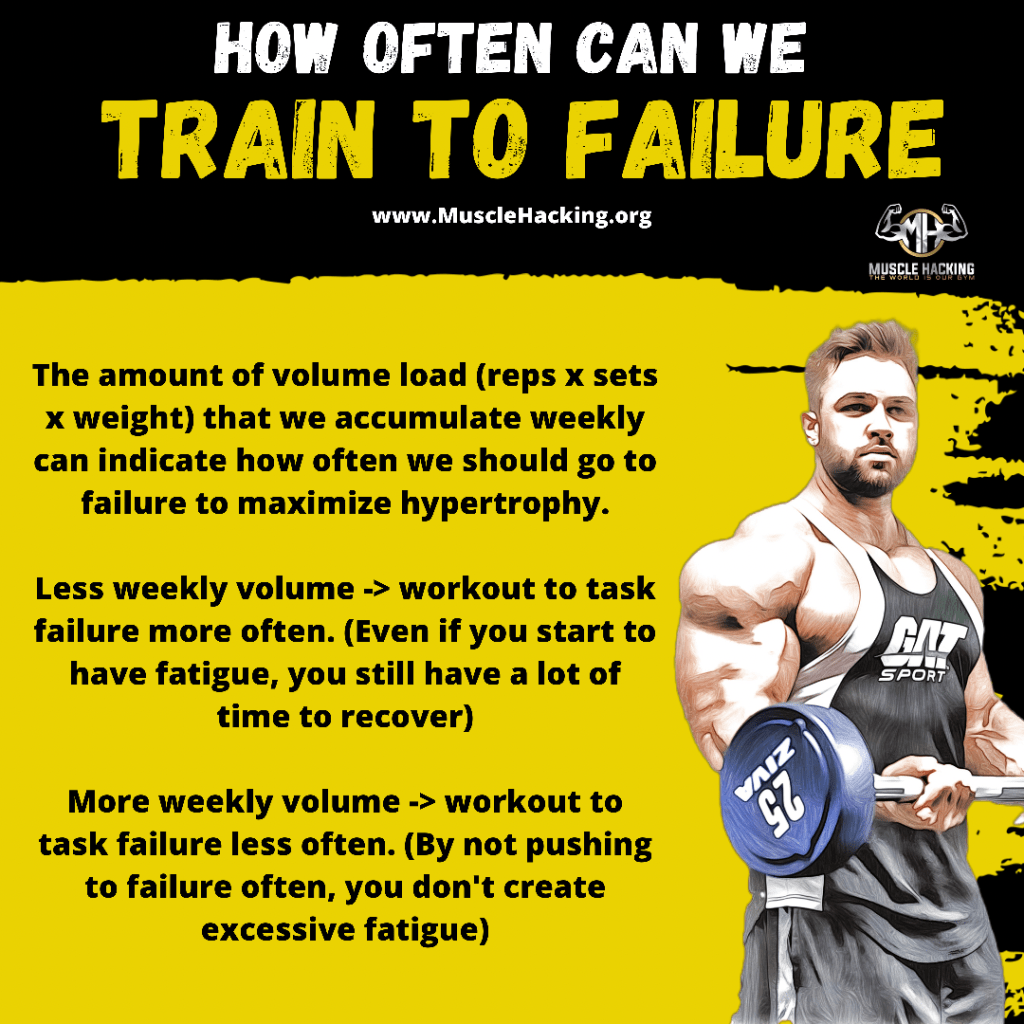
⁣▪️The strategy of training for task failure (the point of an exercise at which we’re unable to complete another rep with that given weight) is volume phase that is directly correlated to hypertrophy. However, that doesn’t mean that you won’t experience muscle growth if you don’t train to failure.

▪️As a matter of fact, the amount of volume load (reps x sets x weight) that we accumulate weekly can indicate how often we should go to failure to maximize hypertrophy.⁣

▪️Less weekly volume -> workout to task failure more often. (Even if you start to have fatigue, you still have a lot of time to recover)⁣

▪️More weekly volume -> workout to task failure less often. (By not pushing to failure often, you don’t create excessive fatigue)⁣

▪️To some capacity, the amount of training to failure that we do is inversely proportional to the amount of weekly volume and frequency we choose to work out with. This is why lower training volumes can be seen as “more efficient” ways to train.

▪️But remember a “more efficient” program is not necessarily the best program, for everyone. 

▪️Some people may dislike or not know what training to failure means. Also they may want to pick a “softer” approach which can still build muscle by increasing training frequency or total volume.

▪️Some people find no meaning in training at submaximal effort level, and may prefer a lower frequency/volume with very hard training levels. 

▪️It’s all subjective towards the individual’s preference, and many variables do dictate the variability of these recommendations. However, this model can be seen as a great starting point to understand how intricate variables such as effort, volume and frequency are and play together when creating a training program.

Resource: 

https://pubmed.ncbi.nlm.nih.gov/27433992/

Incline Bicep Curl

Incline Bicep Curl

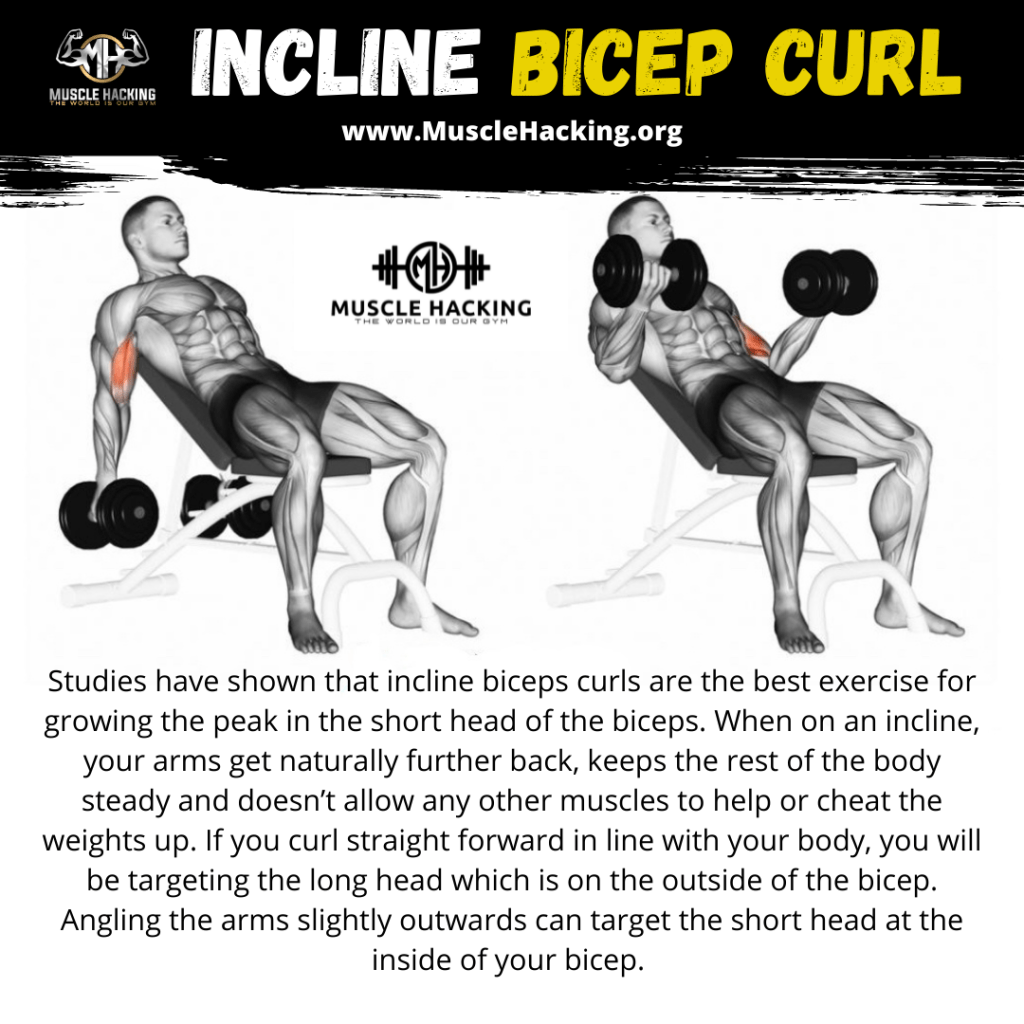
▪️Studies have shown that incline biceps curls are the best exercise for growing the peak in the short head of the biceps.

▪️When on an incline, your arms get naturally further back, keeps the rest of the body steady and doesn’t allow any other muscles to help or cheat the weights up.

▪️If you curl straight forward in line with your body, you will be targeting the long head which is on the outside of the bicep

▪️Angling the arms slightly outwards can target the short head at the inside of your bicep.

▪️If you’re currently only doing biceps curls using bars, implementing a dumbbell curl might help you take out any imbalances you have, as most of us use one arm more than the other for certain things (like, I’m right-handed and do most things with my right hand)