Are You Eating Enough Protein?

Are you eating enough protein?

▪️When it comes to aligning your diet with your fitness goals, one aspect I see people constantly struggle with is consuming enough protein.

▪️(About 0.7-1g per lb of total bodyweight, or roughly 0.8-1g per lb of lean body mass if you have more weight to lose.)

▪️Of the three macronutrients (protein, fats, carbs), protein is typically the one that’s lagging behind.

▪️Why is eating enough protein so important?

▪️Protein is a crucial component in the muscle building and retaining process. You want muscle (you won’t get bulky, I promise) not just for the visual appeal, but for the many health/performance benefits as well. Fun fact…the more muscle you have, the more calories you burn just existing…this is a nice plus.

▪️Protein is also the most filling and satiating macronutrient, which is a big positive especially when restricting calorie intake. Staying full longer will keep you from sneaking back into the kitchen or break-room much sooner than you need to.

▪️The thermic effect of protein is another big plus. Your body has to burn more calories to digest protein than any other macronutrient, which is definitely a good thing.

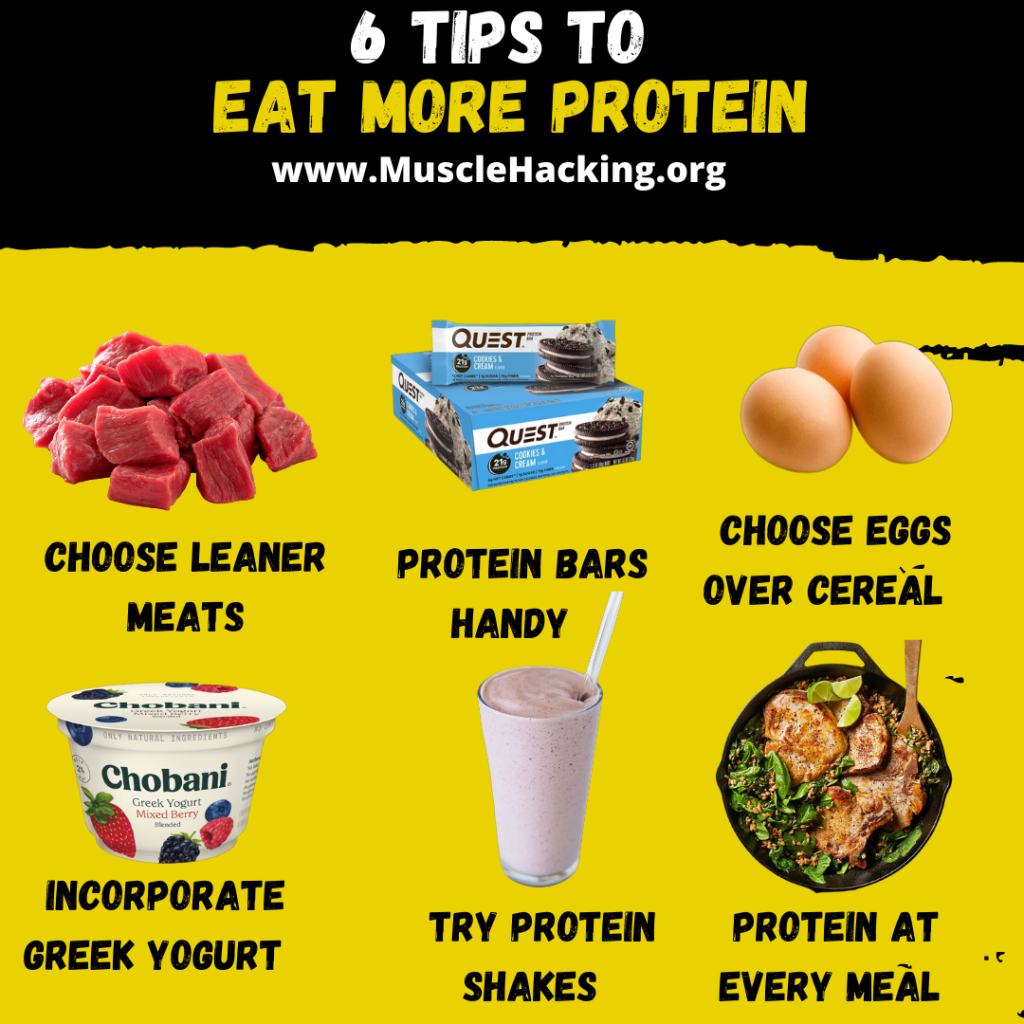
▪️I’ve listed a few of my favorite ways to increase your protein intake in this graphic, there are definitely others as well.

▪️And if you are vegan/vegetarian, a few of my staple recommendations to bump up your protein intake are options like: quinoa, lentils, chickpeas, beans, rice, tofu, tempeh, almonds, edamame, etc.
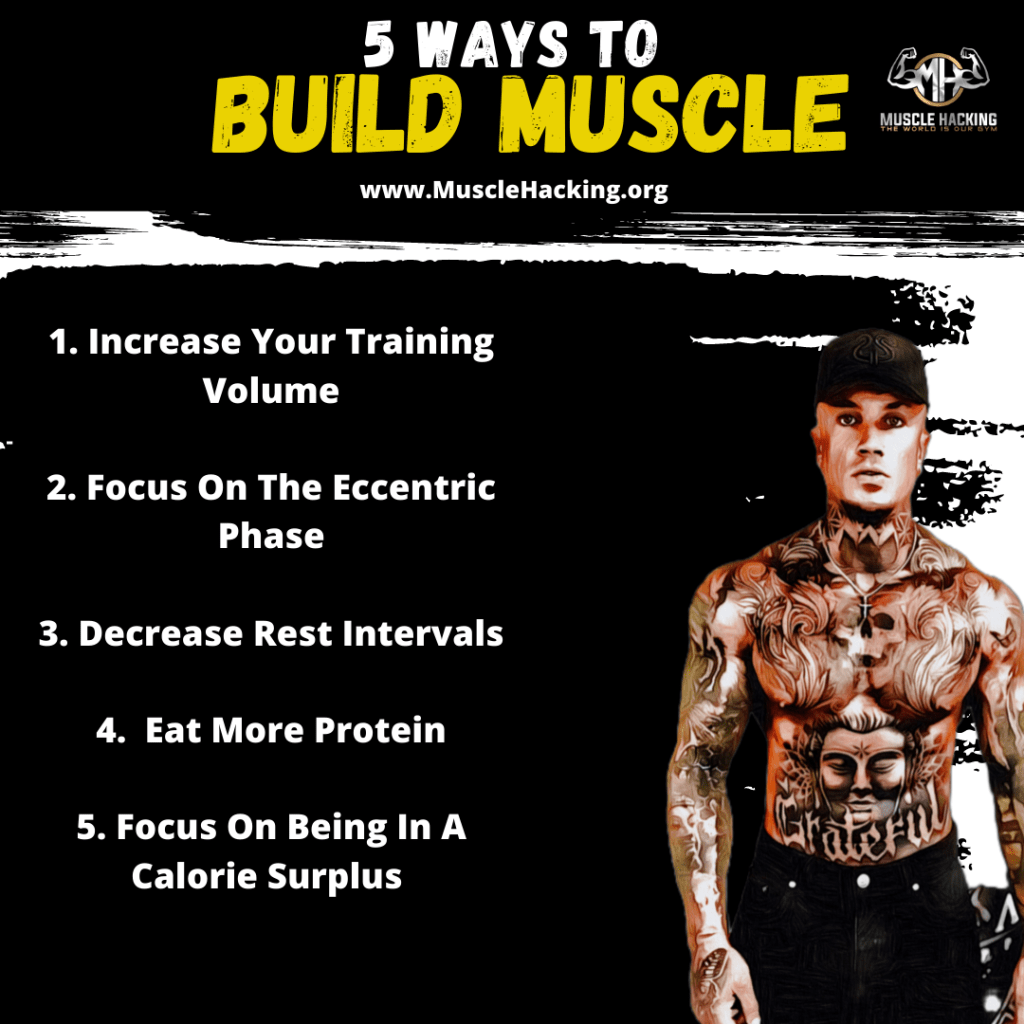
5 Ways To Build Muscle

▪️Patience is overvalued; especially within the weight room and particularly when it involves those focused on a specific outcome: 

▪️Sure it takes time to build muscles, but if you’re trying to build muscle and aren’t seeing obvious size increases from month to month, it’s a sign that your approach is off.

▪️And a workout may be a terrible thing to waste. Plus, if you’re seeing progress, there’s no reason you can’t see more.

▪️How do you rev up your results? Here are 5 ways.

1. Increase Your Training Volume

▪️Training volume—your number of reps multiplied by your number of sets—is a primary determiner of hypertrophy (aka the way to grow muscle). And to extend volume, you’ll really need to lower the weight than you would expect.

2. Focus On The Eccentric Phase

▪️When weight training, you’ve got a concentric (hard) and eccentric (easy) phase.  For example , as you lower into a squat, you’re performing an eccentric movement. Once you return to standing, that’s concentric. And, according to research published within the ecu Journal of Applied Physiology, eccentric work is much better at activating muscle growth. 

3. Decrease Rest Intervals

▪️When lifting for hypertrophy, rest periods of 30 to 90 seconds encourage a fast release in muscle-building hormones (including testosterone and human growth hormone) while also ensuring that you truly fatigue your muscles.

4. To Grow Your Muscle, Eat More Protein

▪️Weight training breaks down your muscles. Protein rebuilds them. The more intense your workouts, the more important it is to consume protein to solidify recovery.

5. Focus On Being In A Calorie Surplus 

▪️This can be hard to get used to , especially for those who are used to counting calories within the hopes to burn fat. But to most efficiently  build muscle mass quickly (that means weight gained, not lost), you have to consume more calories than you burn every day.

▪️That’s because, when your body senses that you are in a calorie deficit which means that you’re consuming fewer calories than you’re burning each day—it lowers your body’s ability to create new muscle. After all, if your body thinks food is on low supply, getting swole isn’t going to be its main priority.

▪️Consume roughly between 250 to 500 extra calories per day to make sure that any weight gained is from muscle. A 2014 Pennington Biomedical research facility concluded from a study of people that ate a high-calorie diet rich in protein stored about 45 percent of these calories as muscle, while people following a low-protein diet with an equivalent number of calories stored 95 percent of these calories as fat.

▪️Resources: https://sandcresearch.medium.com/what-is-muscle-growth-and-how-does-it-happen-b7f7cd68ee34

Egg Protein

♠️Egg Protein♠️

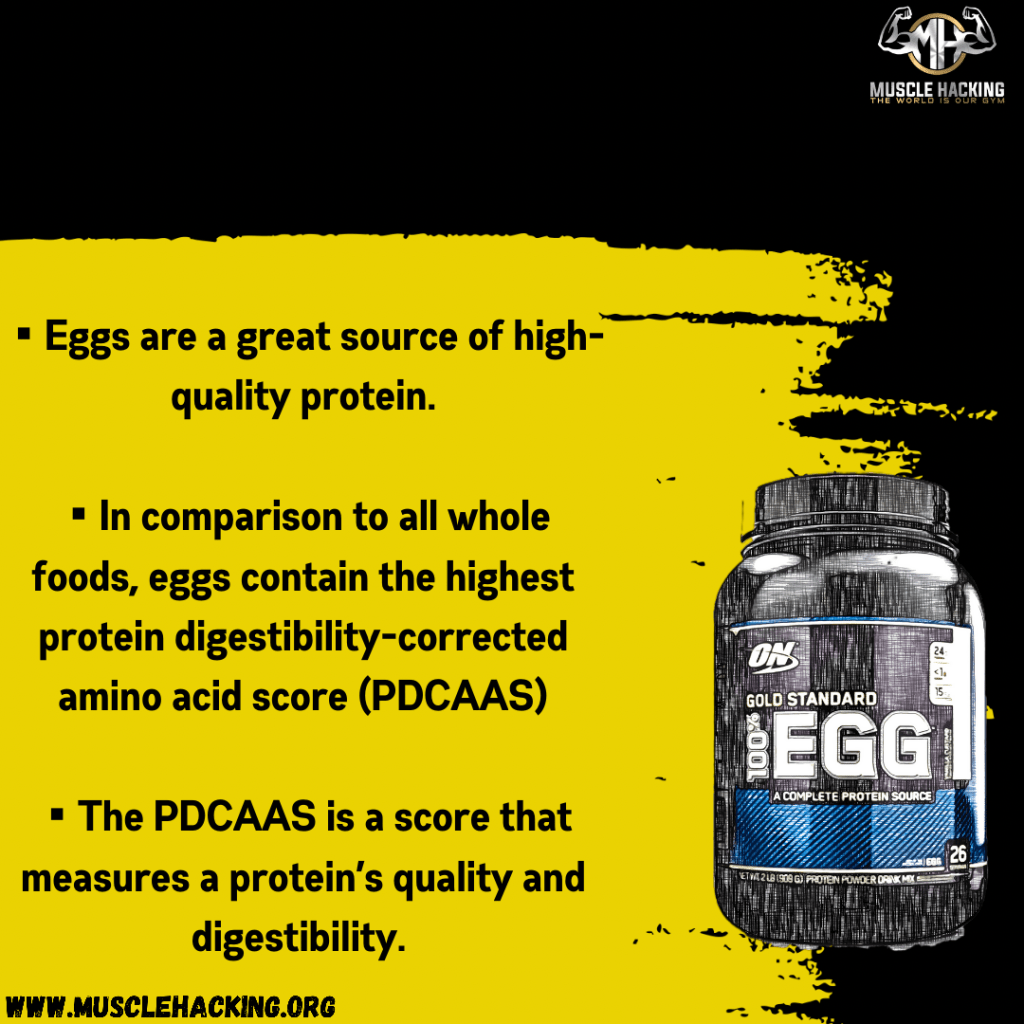
▪️Eggs are a great source of high-quality protein.

▪️In comparison to all whole foods, eggs contain the highest protein digestibility-corrected amino acid score (PDCAAS)

▪️The PDCAAS is a score that measures a protein’s quality and digestibility. 

▪️Eggs also helps you stay full longer by  decreasing your appetite. 

▪️Even though the  protein quality is excellent, you could experience less fullness because egg protein powders are usually made from egg whites rather than whole eggs. 

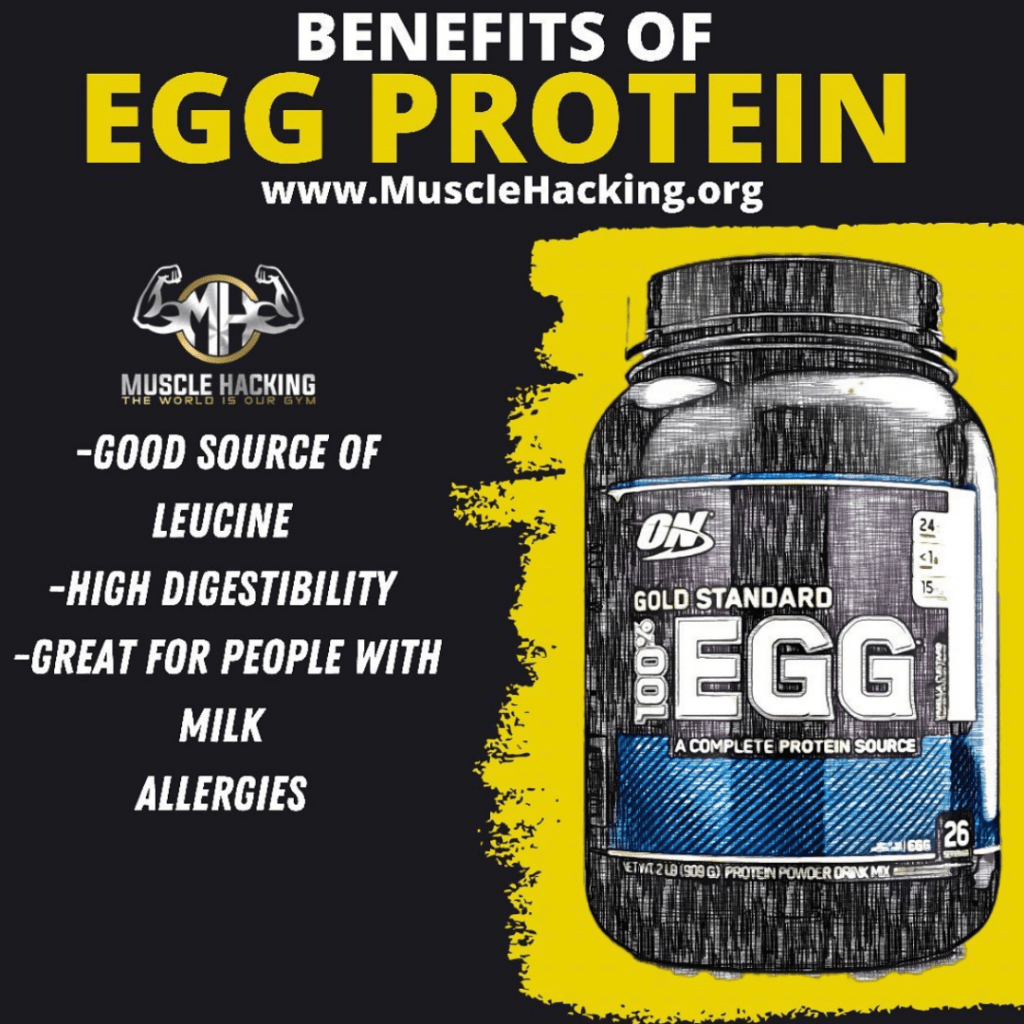
▪️Eggs are a complete protein source, in other words they have all nine essential amino acids that your body can’t make itself.

▪️Egg protein is ranked second to whey protein as the highest source of leucine, which is the BCAA that is the biggest portion of muscle health. 

▪️The only negative aspect is that egg-white protein hasn’t been studied as much as whey or casein.

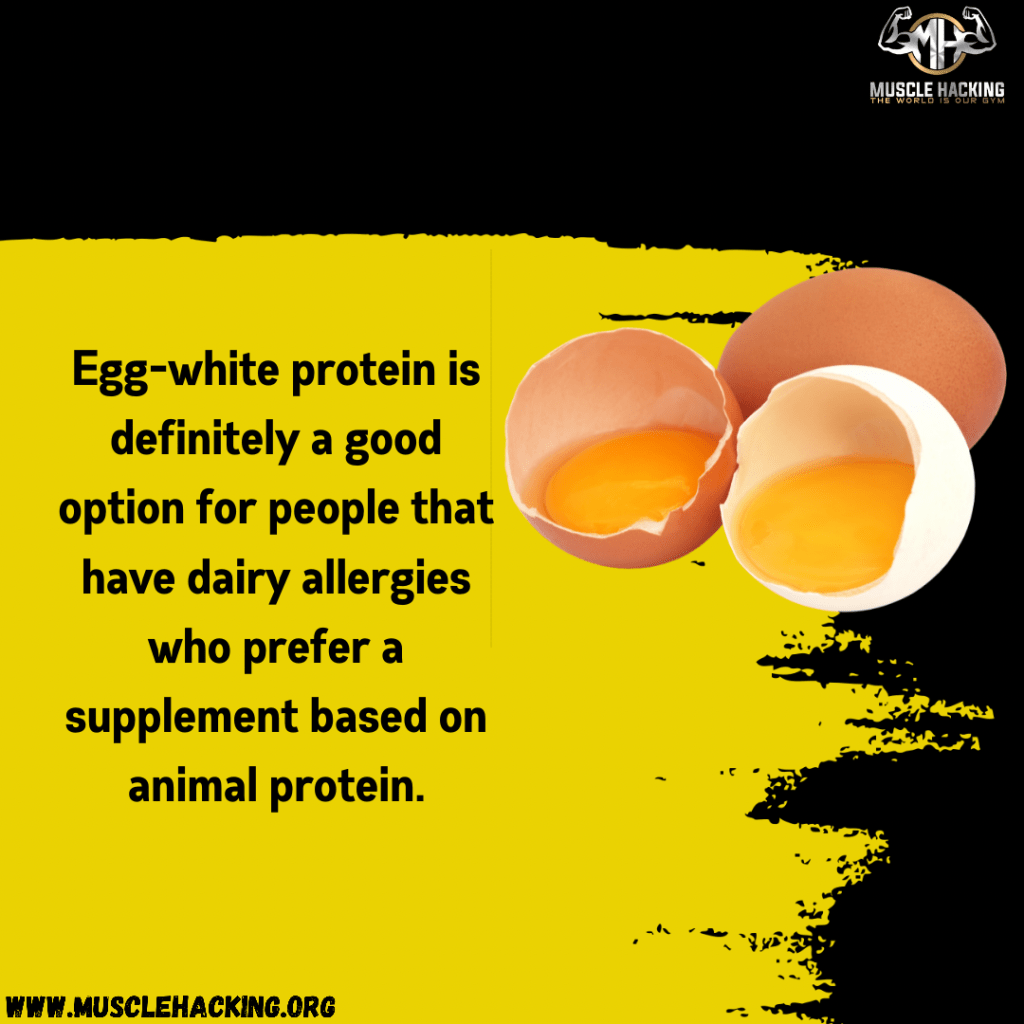
▪️Egg white protein is definitely a good option for people that have dairy allergies who prefer a supplement based on animal protein.

Resources: 

https://pubmed.ncbi.nlm.nih.gov/10867064/

https://pubmed.ncbi.nlm.nih.gov/20226994/

https://www.researchgate.net/publication/232241300_Egg_Protein_as_a_Source_of_Power_Strength_and_Energy

Know Your Protein Powders

🔹It can be difficult targeting the appropriate amount of protein for your physique goals. This is where supplementation comes in. 

🔹I’m not a big advocate for buying protein powder. It’s  better to get protein from a natural food source, yet I do advise people to consume protein as a last result, if they are having a hard time reaching their macros.

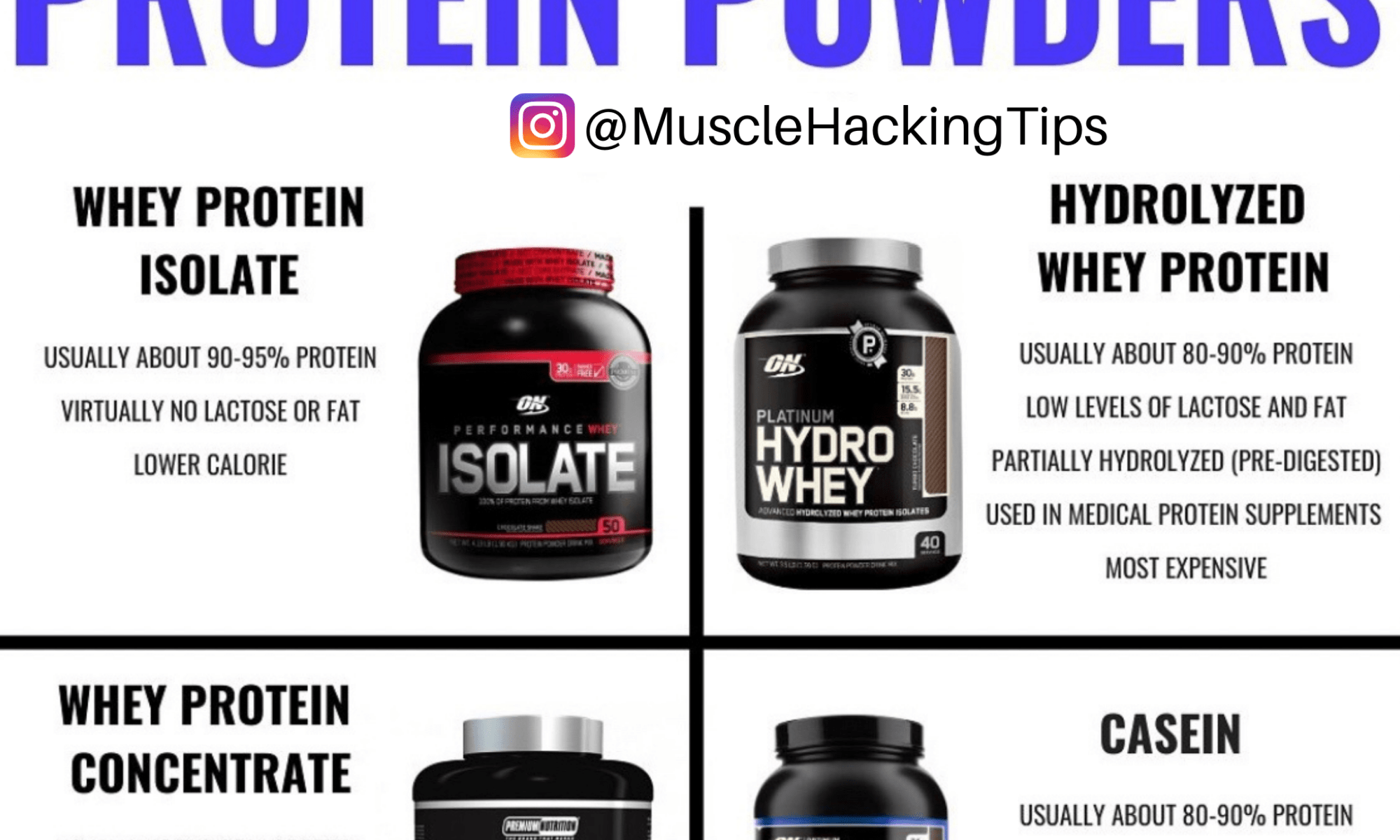
🔹There are several forms of protein powders, but my main focus today will be on the types of whey and casein. Whey is fast digestive and casein is slow digestive, and they both benefit for different purposes.

🔸Concentrate: This protein has gone through the least amount of processing but the downfall is that it contains lactose and fat. This protein is calorically dense so it’s best to consume while bulking and not so much while cutting.

🔸Isolate: A high percentage of the calories comes from protein. The good thing about this supplement is that 90% of the lactose and fat are almost completely removed. So you can get 30 grams of protein for 120 to 130 calories, which is good if you’re focusing on being in a caloric deficit.

🔸Hydrolyzed: This whey protein has been  moderately hydrolyzed, which means that it has been broken down so your body can absorb it more efficiently. This supplement is often used for medical protein and baby formula. It tends to be expensive because of all the processing it goes through.

🔸Casein: Casein does not optimize on protein synthesis as much, and digest much slower than whey. Because of its slow action, casein is best taken before you go to sleep. 

🔹The most important thing to consider while picking protein is the quality of the brand and the protein to calorie ratio. If you have any questions feel free to message me.