Office Jobs & Fitness

♠️Stay In Shape With A Office Job♠️

▪️It’s common knowledge that spending hours out of our day sitting down isn’t good for u.

▪️But the question of the day is; just how much exercise is needed to counteract the negative health impact of a day at a desk?

▪️A 2020 study concluded that about 30-40 minutes per day of building up a sweat should do the trick.

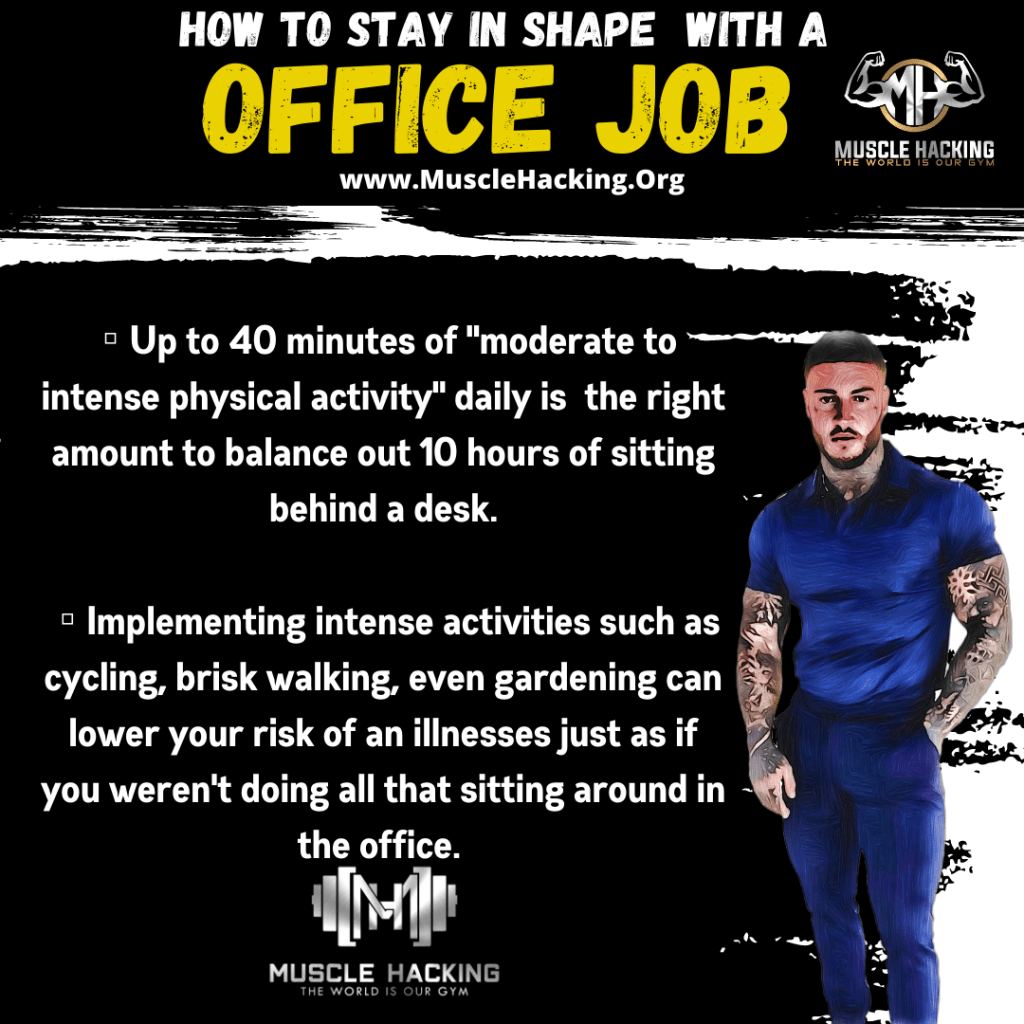
▪️Up to 40 minutes of “moderate to intense physical activity” daily is about the right amount to balance out 10 hours of sitting behind a desk.

▪️Research states that any amount of exercise or even just standing up helps to some capacity.

▪️This data is from the examination of nine previous studies, which involved 44,370 people in four various countries who were wearing a fitness tracker.

▪️️The analysis discovered an increase in the risk of death among those who lived a more sedentary lifestyle and a decrease in risk of death in those who spent time engaging in moderate-to-vigorous intensity physical activity.

▪️Implementing intense activities such as cycling, brisk walking, even gardening can lower your risk of an earlier death just as if you weren’t doing all that sitting around in the office.

Join The Muscle Hackers Club For Updates On Free Fitness Books : https://mailchi.mp/aa9bea26a029/musclehacking

Resources: https://bjsm.bmj.com/content/54/24/1451

Boosting Metabolism

♠️Key To Boosting Metabolism♠️

🔹 If you are in a fat burning phase, you definitely want to focus on speeding up your metabolism through a phenomenon called the EPOC effect, which stands for, “Excessive Post-Exercise Oxygen Consumption.” The EPOC effect will produce more oxygen consumption to the body   in the post-workout period. This is beneficial because  when we consume more oxygen, we burn more calories. 

🔹 How and why does this happen?

🔹 Exercise will increase stress to the body. This interrupts our regular homeostasis. After our workouts, our bodies start to recover from this stress. Things such as tissue repair and nutrient replenishment require more energy, this is why we see increased calorie burning after we exercise. There are studies that show that this effect can last for as long as 38-hours. 

🔹 So let’s get to the question, “do all forms of exercise have the same effect”?

🔹 That’s precisely what this experiment investigated. Subjects performed workouts that burned the same amount of calories from resistance training, steady state cardio, and interval training. After that, they tracked their calorie burning throughout the post-workout period to see if there were any differences?

🔹 What were the results?

🔹 The steady state cardio group  didn’t boost metabolism one bit. Remember, the primary reason for an increase in metabolism  following a workout is due to things like tissue repair or nutrient replenishment. Steady state cardio typically isn’t stressful enough of a stimulus for most people so we don’t have as much muscle damage to repair or fuel stores to fill up.

🔹 On the other hand, both resistance training and interval training did increase metabolism. Both forms of exercise cause muscle damage and interval training will also deplete energy stores a little more than resistance training. Combine these two workouts and you’ll get a solid EPOC effect.

Resources:

https://www.researchgate.net/profile/Beau-Greer/publication/272187749_EPOC_Comparison_Between_Isocaloric_Bouts_of_Steady-State_Aerobic_Intermittent_Aerobic_and_Resistance_Training/links/56d264a608ae4d8d64a5f597/EPOC-Comparison-Between-Isocaloric-Bouts-of-Steady-State-Aerobic-Intermittent-Aerobic-and-Resistance-Training.pdf

https://minds.wisconsin.edu/bitstream/handle/1793/48951/Oschuenkemark2001.pdf

Sprinting

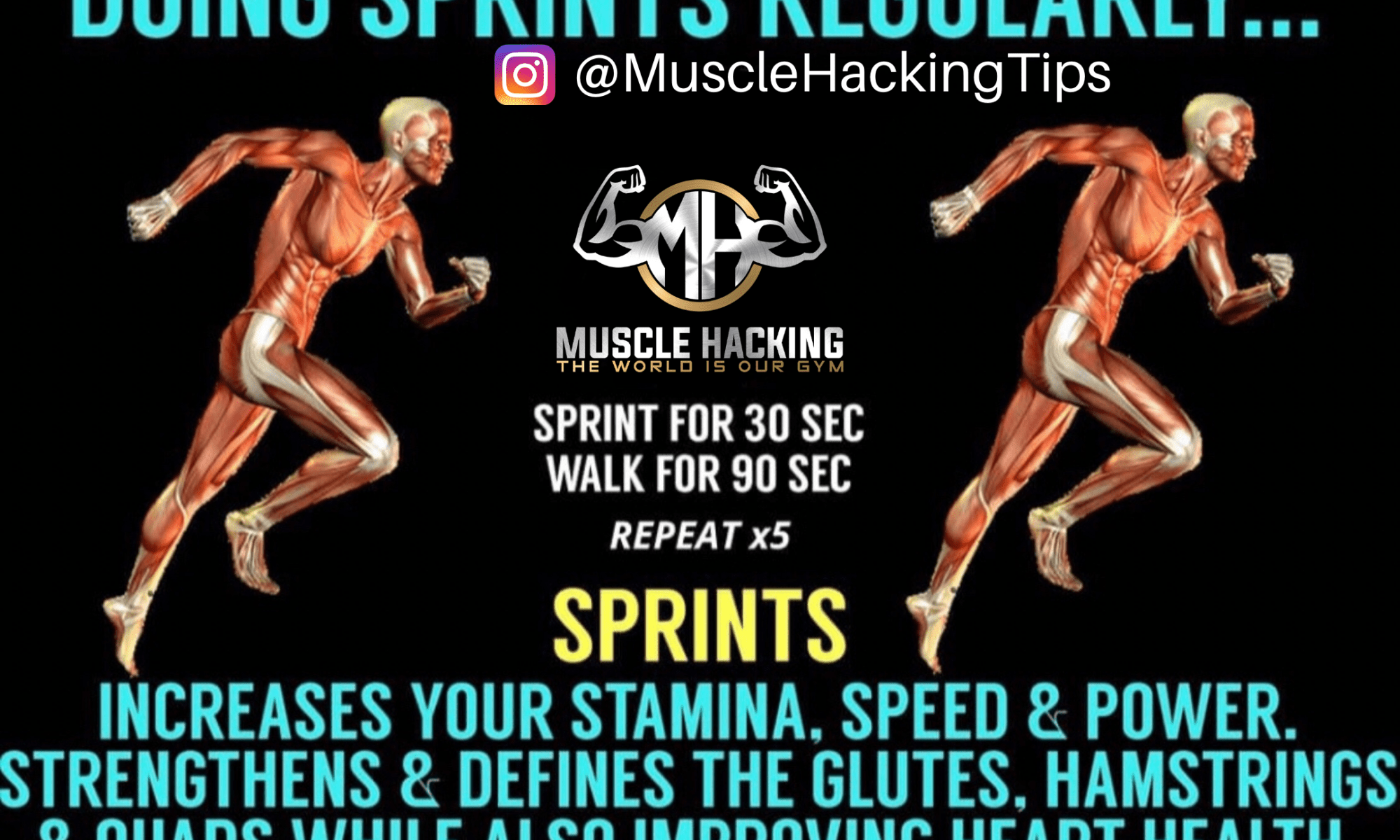
🔹 When sprinting, your heart rate speeds up to its maximum limits, while increasing the demand of blood flow to your legs.

🔹 Over time, sprinting can boost your heart, which allows you to workout more efficiently. This is because you are able to take in more oxygen as your cardiovascular system develops.

🔹 Sprinting is also known as an anaerobic exercise, which means that it requires a short burst of energy to produce lactic acid. This type of training increases your anaerobic threshold and the rate at which your body can produce lactic acid, allowing you to work harder for a longer period of time.

🔹 Sprinting also helps with making gains the same way that weight training does, because of the short burst of energy your body produces while targeting the fast twitch muscle fibers.

🔹 Sprinting increases your metabolism and burns more calories in a short period of time. It also burns calories after your workout; some call this the after burn effect.

🔹 So don’t waste your time jogging. Try hitting those sprints to optimize your gains and fat burn.

Cardio before or after workout?

Cardio before or after workout?

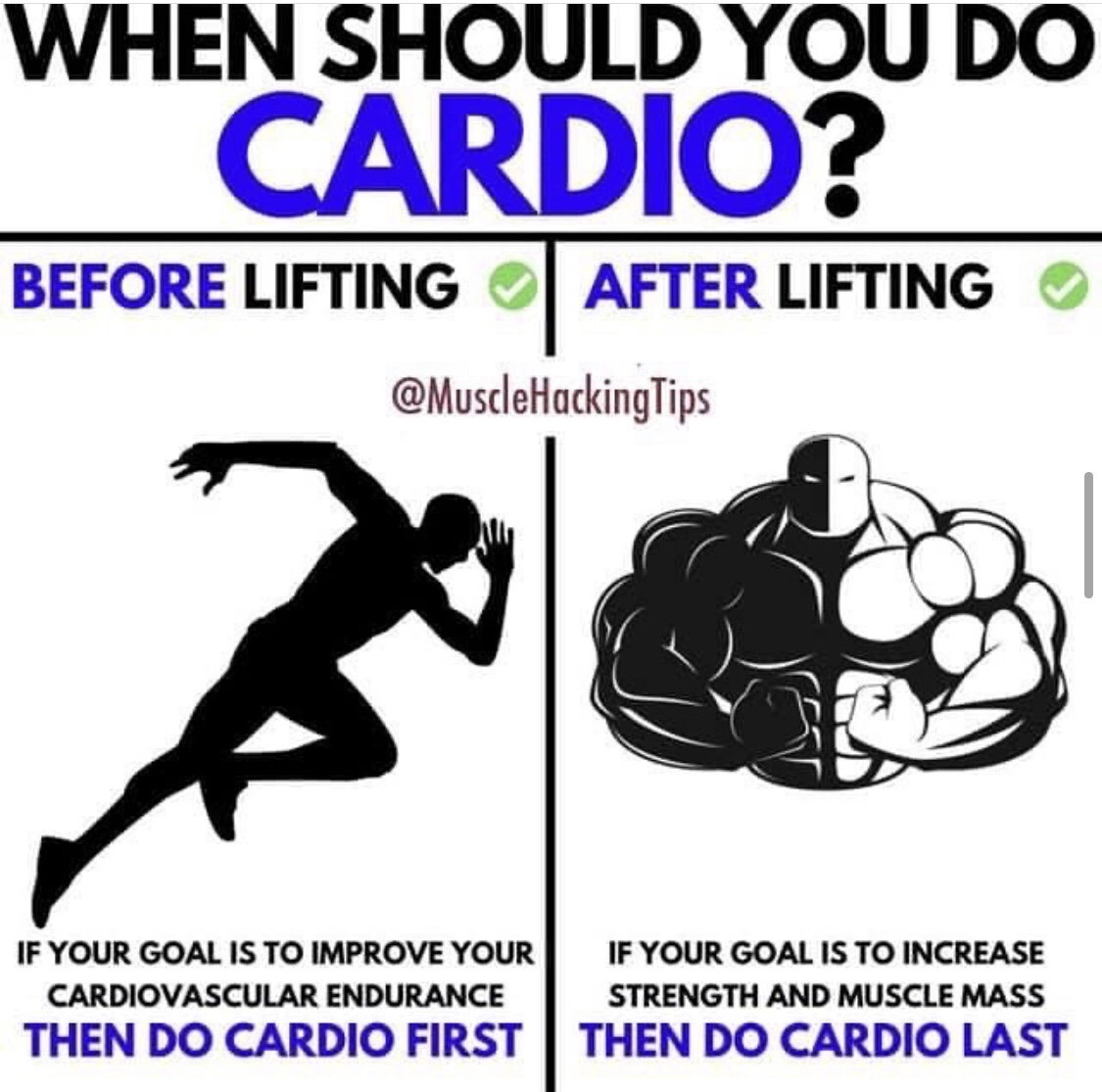
To simplify your decision, put what’s most important to you at the beggining of your workout.

For example, if you’re looking to build strength, implement your weight training first, or if you are trying to focus on endurance, put your cardio before your workout.

Studies have shown that performing too much cardio can be a hinderance to muscle growth. However, if you are a competitive bodybuilder, you want to implement HIIT cardio into your workout routine to prevent muscle loss.

In contrast, doing steady state cardio has a lot of benefits for people trying to lose weight, and it is usually best added after your workout or on a rest day.