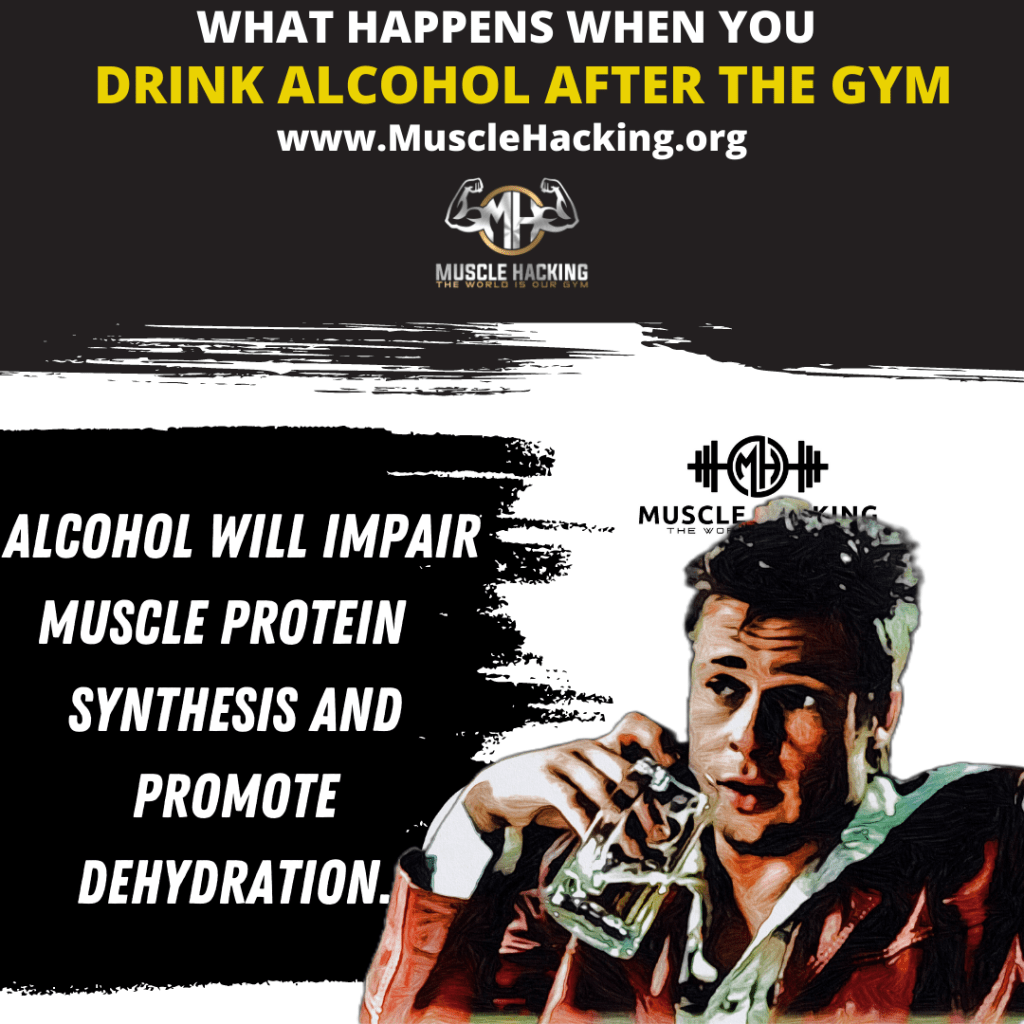
Drinking Alcohol After A Workout

♠️Does alcohol consumption affect muscle hypertrophy♠️

🔹Exercise and protein intake are the main factors that create muscle protein synthesis (the main process driving muscle adaptations, such as growth).

🔹It has been documented that athletes are more inclined to consume excessive amounts of alcohol, especially as part of binge-drinking practices in team sports. Can these binges affect muscle protein synthesis?

🔹There was a case study that researched on the the effects of post-exercise alcohol consumption on protein synthesis rates in healthy young subjects who work out regularly. The subjects first performed combined resistance and endurance exercises in order to mimic team sports. During an 8 hours of recovery, subjects consumed either:

-25 grams of protein

-25 grams of  protein and 12 standard alcoholic drinks

-25 grams of  carbohydrate and 12 standard alcoholic drinks

🔹The alcohol intake ended up reducing the  post-exercise muscle protein synthesis rates. But the post-exercise muscle protein synthesis rates were still elevated compared to the rest periods, even when alcohol was ingested.

🔹So what this means is  that even when you know that you will consume large amounts of alcohol afterwards, it is not an excuse to skip your training session.  

⚠️Keep in mind that the subjects received a large amount of alcohol (i.e. 12 drinks). The amount of alcohol in the study was  to mimic the binge drinking practices of sports players.  If the  alcohol consumption was lower, there would be much less of a effect.

🔹The conclusion is that consumption of large amounts of alcohol  after exercise lowers protein synthesis. 

Resources: https://pubmed.ncbi.nlm.nih.gov/24533082/
Hydration

♠️Hydration♠️

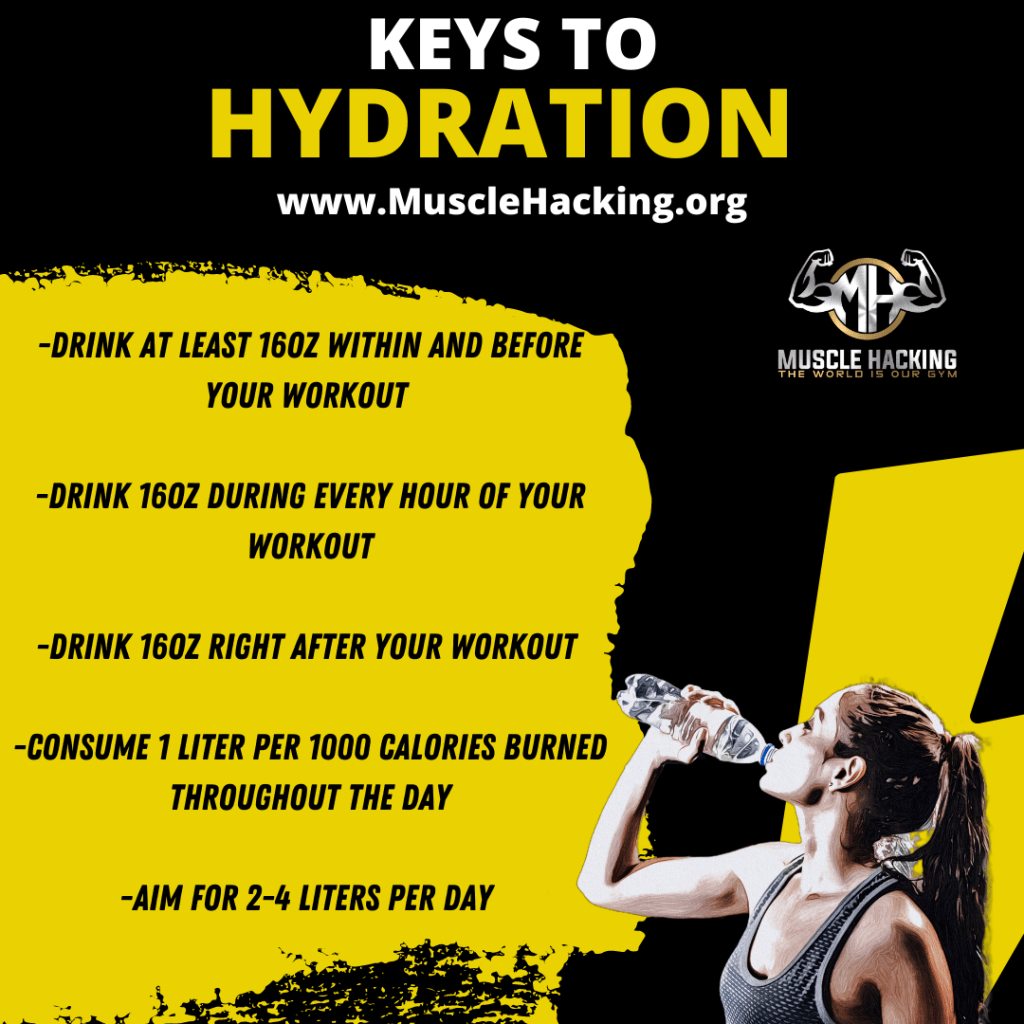
🔹 Drinking a 1/2 liter of water per hour of training is enough to prevent dehydration/lowering of body weight during exercise. 

🔹 A  liter of water is about 33 fluid ounces, so half would be 16.5 fl oz, or a medium-sized water bottle. A quick sip of water is normally about an ounce, give-or-take, so it’s easy to see that consuming 16-33 fl oz during exercise shouldn’t be too hard if you’re constantly grabbing a swig between each  set. 

🔹 Even if you’re not thirsty, it’s a good rule of thumb to hit the water fountain or grab a quick gulp from your bottle between sets. Work smarter, not harder is what I always say.

🔹 There was a study that states that ingesting 500mL (16.9 fl oz) about 2-hours before exercise is a good place to start. A good habit to start  is to simply start sipping on water at least two hours before your workout if you haven’t already been taking in water all day. 

🔹 If you are getting light-headed or nauseous during your workouts, you might not only be dehydrated, but it’s possible that you are experiencing symptoms of hyponatremia as well, which means your sodium levels are running low. 

🔹 Most sports drinks, like Gatorade, contain sodium so it might be a good idea to sip on a sports drink during your workout if you think you may have issues with sodium loss. 

🔹 Water may be one of the most important factors for your performance today and your gains in the long term. 

🔹 Good thing it’s one of the easiest deficits to overcome. Just get yourself a water bottle and keep it at your side at all times. If you don’t like plain water, add flavoring into it to make it more pleasurable. Whatever you have to do, just do it. 

Resources:

https://journals.lww.com/acsm-csmr/Abstract/2003/08000/Fluid_Balance_and_Endurance_Exercise_Performance.6.aspx

http://citeseerx.ist.psu.edu/viewdoc/download?doi=10.1.1.583.3481&rep=rep1&type=pdf

Working The Quads

♠️Working The Quads♠️

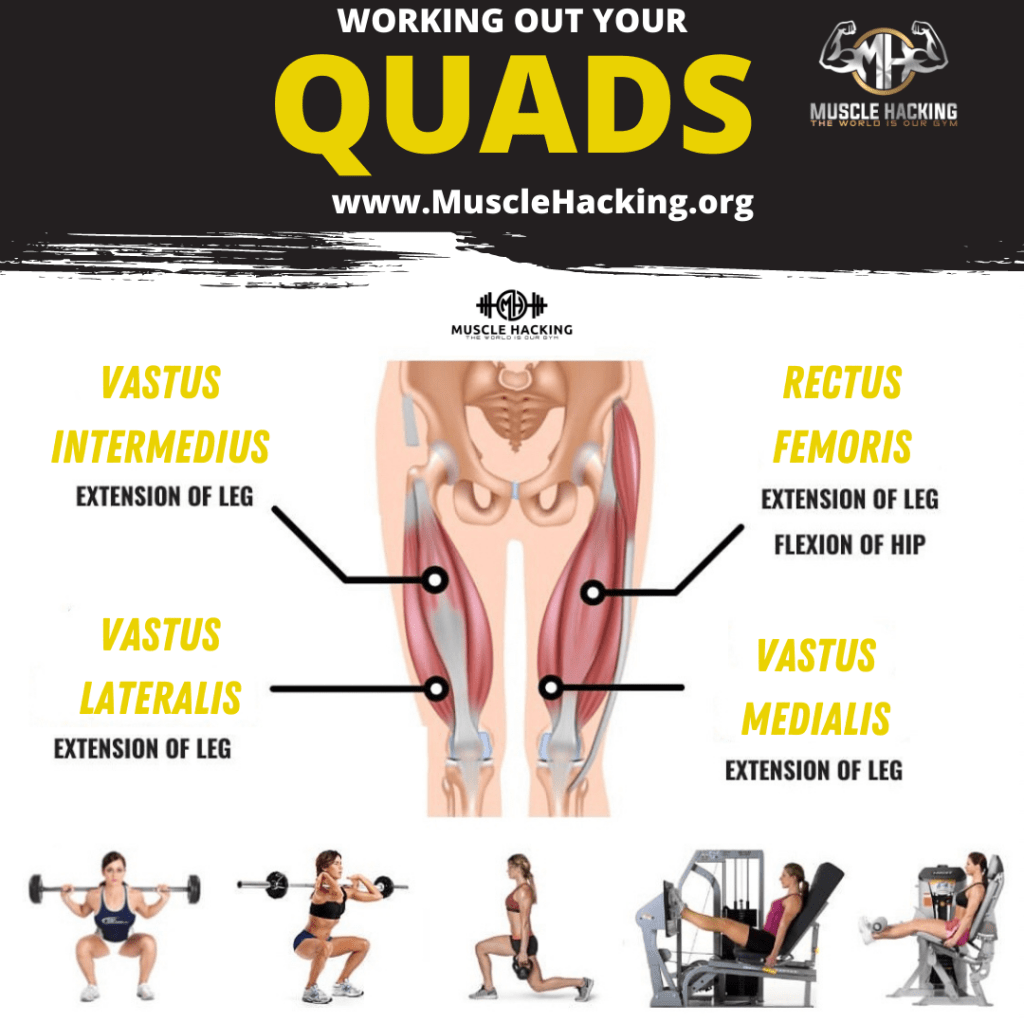
🔹Everyone needs strong quads to balance out the strenuous amount of hamstring and glute movements during leg day.

🔹The Quadriceps are made of  4 muscles that work together to extend your knee. They join together into one tendon which passes over your kneecap. The Rectus Femoris also helps flex the hip.

🔹They are a strong muscle group that often gets overly tight and pulls hard on the lonely tendon trying to hold them together at the bottom. Stretching, foam rolling and barbell smashing them will help loosen them up if they are getting tight.

🔹I would suggest that you put the majority of your focus on front squats, back squats and lunges when training your quads. The leg press can suffice and a narrower, lower foot position will target them more.

Slow Reps

♠️FULL MOTOR UNIT RECRUITMENT♠️⁣⁣⁣⁣

⁣⁣

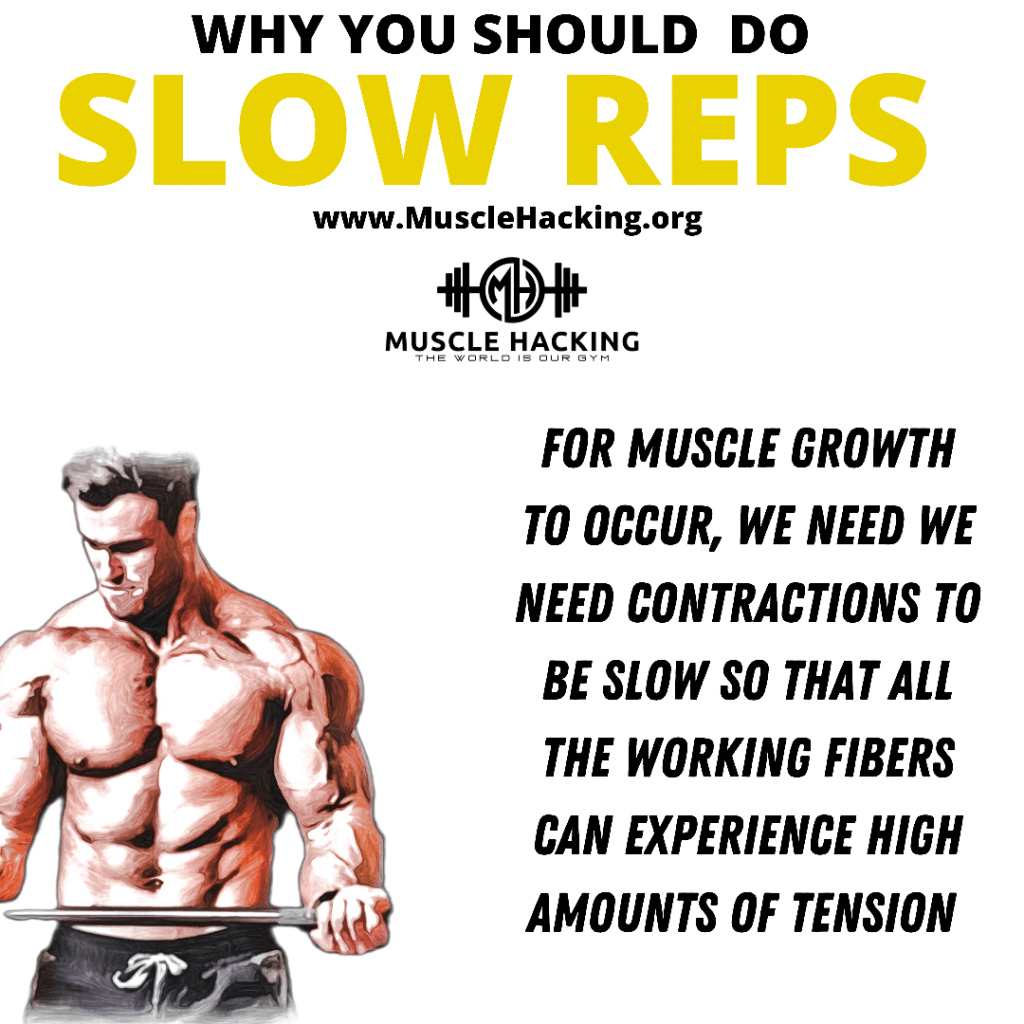
🔹Recruiting all muscle fibers is one of the most important conditions that need to occur when striving to grow  bigger muscles. ⁣⁣⁣⁣⁣

⁣⁣⁣⁣⁣

🔹Is it the only one? Definitely not, but it can be a prerequisite. In fact, if we can’t recruit high threshold muscle fibers, which are the fibers controlled by high threshold motor units, we won’t get any meaningful result from strength training, since they’re the ones which grow.⁣⁣⁣⁣⁣

⁣⁣⁣⁣⁣

1️⃣ When lifting heavy  weights, most motor units are quickly recruited and the weight is heavy enough to automatically cause high-threshold motor units to be recruited and actin-myosin bindings to form simultaneously. ⁣⁣⁣⁣⁣⁣

⁣⁣⁣

🔹The same thing happens with moderate and light weights: as effort increases through each repetition, high threshold motor units are quickly recruited to make up for the lack of force exerted by low threshold muscle fibers.⁣⁣⁣

⁣⁣⁣⁣⁣⁣

🔹Bar speed is slow and because of the Force-Velocity relationship (which states that a slower shortening of the muscle fibers produces more force), the force output is greater, allowing the heavy weights to be moved.⁣⁣⁣⁣⁣⁣

⁣⁣⁣⁣⁣⁣

2️⃣ Full motor unit recruitments occurs on high velocity movements too, however, because of the fact that the contraction is so fast or ‘explosive’ not enough tension is experienced by each fiber. This means no meaningful tension to cause muscle growth. ⁣⁣⁣

⁣⁣⁣

🔹So, while both movements show high levels of effort and full motor unit recruitment, only one will cause growth!⁣⁣⁣

⁣Resources:

1) https://medium.com/@SandCResearch/explaining-how-hypertrophy-works-using-only-basic-principles-of-muscle-physiology-48beda5fbf1b⁣

2) https://medium.com/@SandCResearch/what-can-jumping-teach-us-about-muscle-growth-5bef1865246b⁣

⁣⁣⁣⁣⁣

Time Under Tension

♠️Time Under Tension and Muscle Growth⁣⁣♠️

⁣⁣

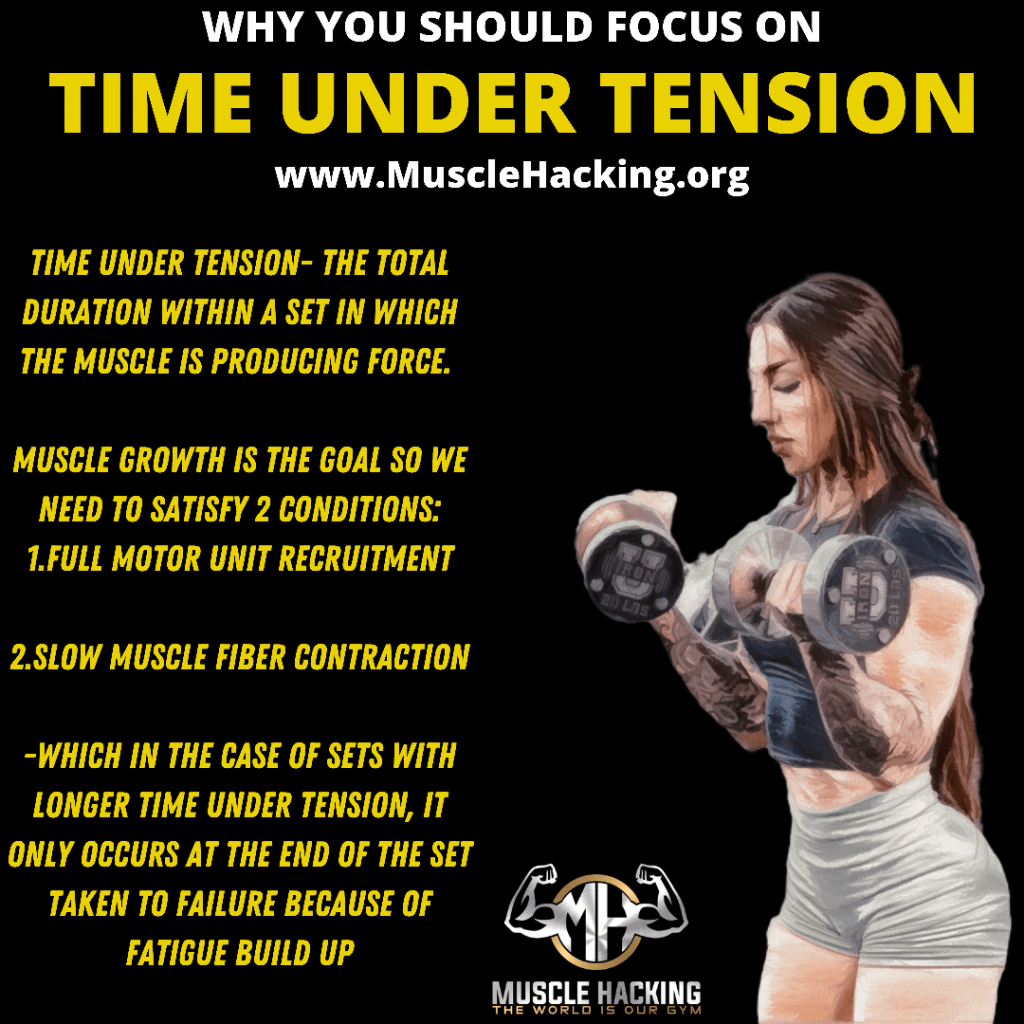
🔹There’s a lot of misconception among Time Under Tension (TUT) and its relationship with muscle growth. ⁣⁣

🔹I’ve noticed many articles say that slowing reps down and increasing the duration of the muscular contraction can create greater hypertrophy. And while there’s some truth to this statement, there’s still more to it. 

🔹Why ? Because time under tension (TUT) matters, but mostly for the volume that counts as  effective  for hypertrophy. 

🔹TUT can help maximize two specific components of training that are related to muscle growth with the first being volume. Studies show that training volume has been shown to have a dose-response relationship with muscle growth, so increasing training volume should increase gains. 

🔹The second component is tension. When a muscle contracts to lift a weight, the muscle fibers experience mechanical tension while they shorten to move the joint. Mechanical tension is probably the main determinant of muscle hypertrophy, so the more tension you can create, the more gains you’ll get.

Resource: https://www.ncbi.nlm.nih.gov/pmc/articles/PMC3861774/#sec1-1title

https://www.tandfonline.com/doi/abs/10.1080/02640414.2016.1210197

Barbell Row

Are You Training Barbell Rows?

If you’re not doing Barbell Rows then you’re leaving gains on the table… Let me explain….

There are many different Rowing variations that you can try out, but one of the best rowing variations for building a bigger and stronger back are the Barbell Rows.

They activate your Latissimus Dorsi, Trapezius, Posteriors Deltoids, Scapula Stabilizers, Rhomboids, and your Spinal Erectors.

Your biceps and Shoulders will benefit from these exercises as well, and who doesn’t want stronger and bigger Biceps?!

BARBELL & DUMBELL& MACHINE

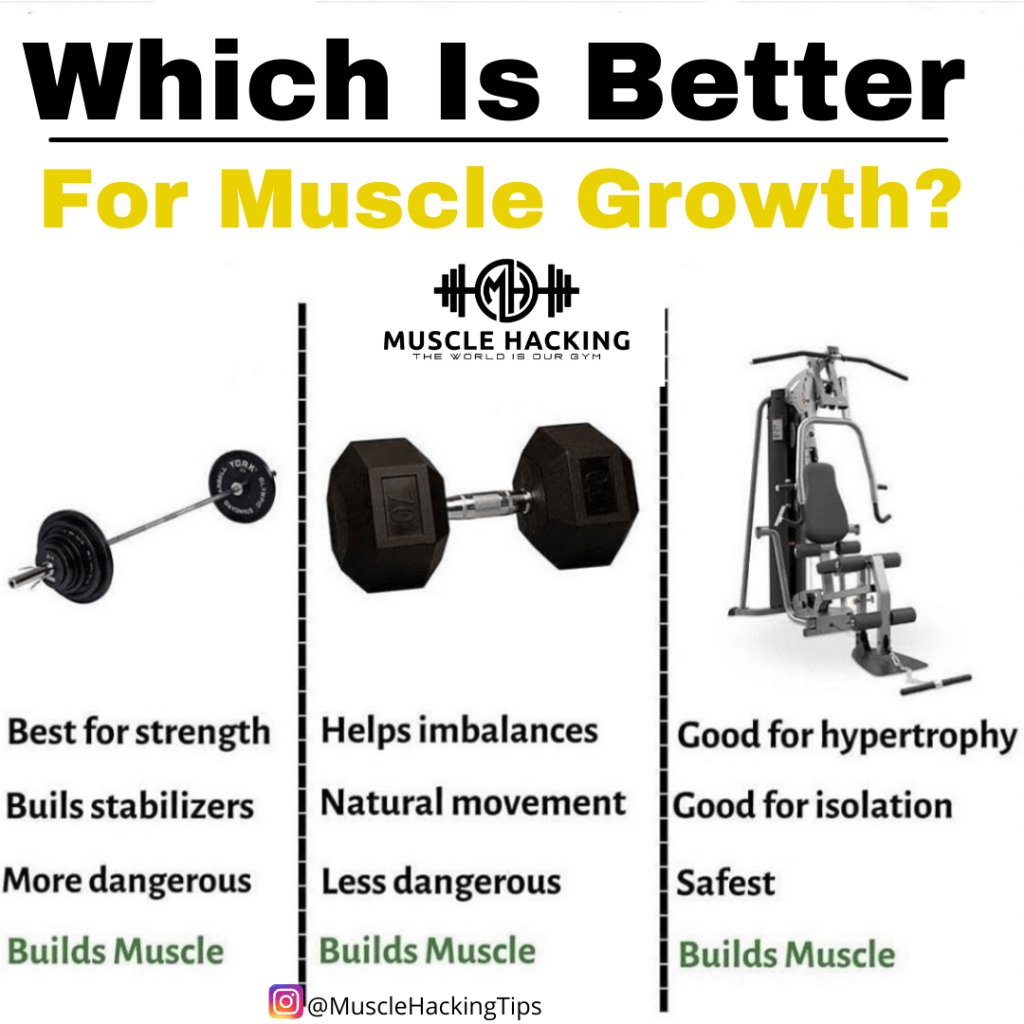
🔹 Everyone wants to know which is “best” between barbells, dumbbells, and machines. I hate describing anything as the best because like most things in fitness and in life, all three have benefits.

🔹 Barbells are best for strength since it’s easiest to go heavy with them. Dumbbells are ok for strength too but they can be more difficult to use in lower rep ranges since it’s a struggle just to get them into the starting position. Most machines are a bit awkward to use in lower rep ranges but the right machine can be great in higher rep ranges.

🔹 Barbells and dumbbells help build stabilizer muscles whereas machines do all the stabilizing for you. Your range of motion is a bit more natural with barbells and dumbbells since you are not locked into a straight path. Dumbbells can be helpful if you have uneven body parts since you can work each side evenly.

🔹 Barbells are the most dangerous since you could hurt yourself on several exercises without a spot whereas dumbbells can be dropped if you fail. Machines are obviously the safest.

🔹 All three have benefits and how you utilize all three will depend on your goals. A pretty good approach is to stick with mostly barbells for strength movements and incorporate dumbbells and machines in slightly higher rep ranges.


.