Building Strong Abs

♠️Building Strong Abs♠️

🔹 A strong core can benefit you in various ways, such as preventing injuries, reducing back pain, and stimulating proper posture.

🔹 While working out on the core, people often target the rectus abdominis (the six pack) yet leave out the internal and external obliques ( side abs), and the transverse abdominis (underneath the side ab).

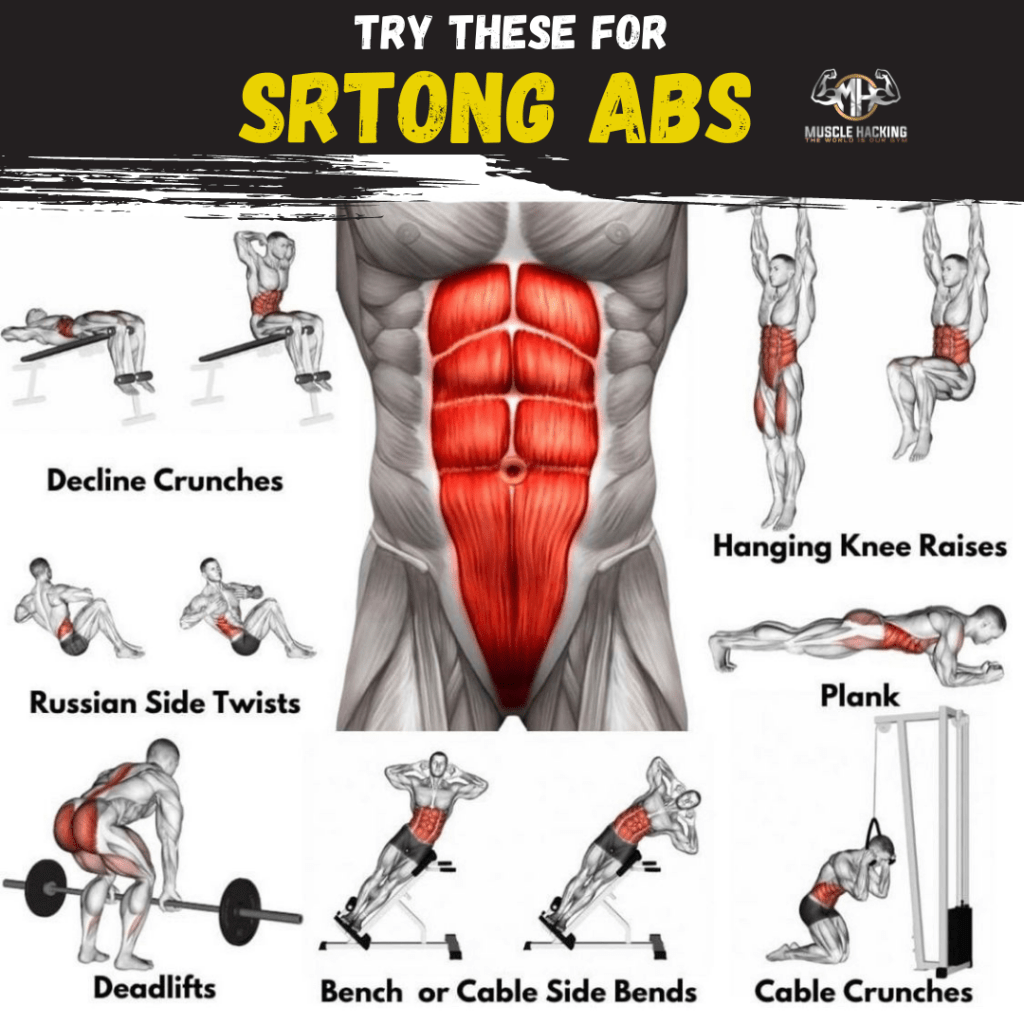
🔹 Building a strong core requires more exercises than just crunches.Not to mention, the abdominals have limited and specific movements that consist of different muscles that run through the entire length of the torso. Here are a few core workouts to add to your regimen.

🔹 Planks are one of the best exercises for working the core and burning calories. Doing a plank hold will engage multiple muscles at once, while benefiting the core strength of your body.

🔹 Decline crunches are great for eliminating the tendency to use momentum to complete the movement. Increase the decline angle over time in order to progressively overload.

🔹 The Russian Side Twist targets your obliques. Try adding a dumbbell or medicine ball increases to make this workout more challenging.

🔹 Hanging knee raises with a twist can help build muscular stability in the upper back and shoulders. This workout can increase both muscular size and strength.

🔹 Cable Crunches enables you to increase resistance, allowing you to train to failure using heavier weights.

🔹 Cable Side Bend targets the obliques and improves stability in the lower back.
Supersets & Metabolism

♠️Supers Sets & Metabolism♠️

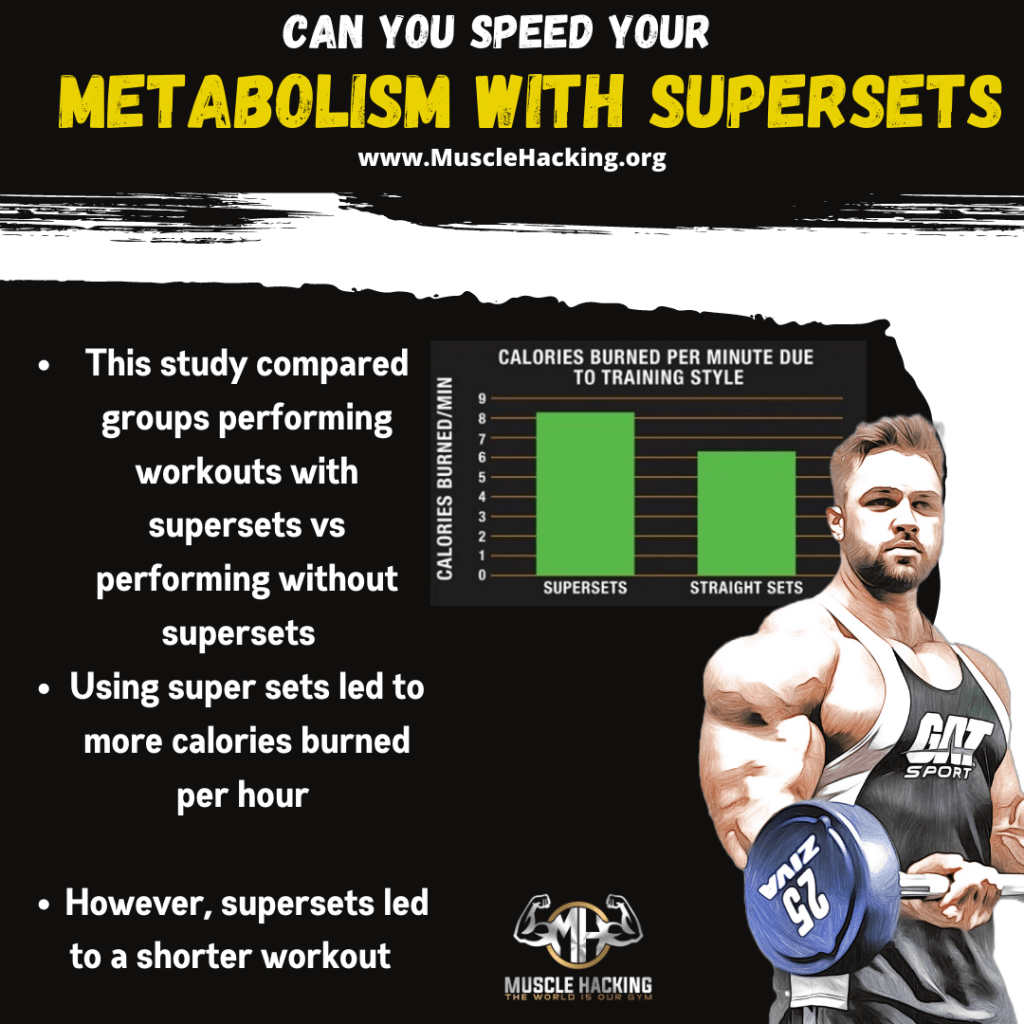
🔹I’ve heard countless times, practitioners and trainers state that using supersets is optimal for burning more calories. In short, this turns out to be true; However, there’s more to this statement than meets the eye.

🔹It’s a known fact that a huge benefit of using supersets is that it can reduce your time in the gym. If your workout time in the gym is reduced, you’ll reduce calories burned in the gym. In essence, that’s what this case study discovered. Performing supersets was a great way for burning more calories per minute, but since supersets decreased the workout time, total calorie burning was similar between both groups.

🔹From my experience, you still get an extra boost from using supersets from an EPOC (Excess Post Exercise Oxygen) standpoint, but I’m not convinced that it’ll burn a ton of extra calories throughout the day. If anything, supersets can be beneficial for challenging your conditioning and work capacity which helps for long-term gains.

Resources: https://journals.lww.com/nsca-jscr/Fulltext/2010/04000/The_Metabolic_Costs_of_Reciprocal_Supersets_vs_.23.aspx#

Build Bigger Traps

♠️Build Bigger Traps♠️

🔹 Want to be a trap king or trap queen? You have to know this about growing bigger traps…

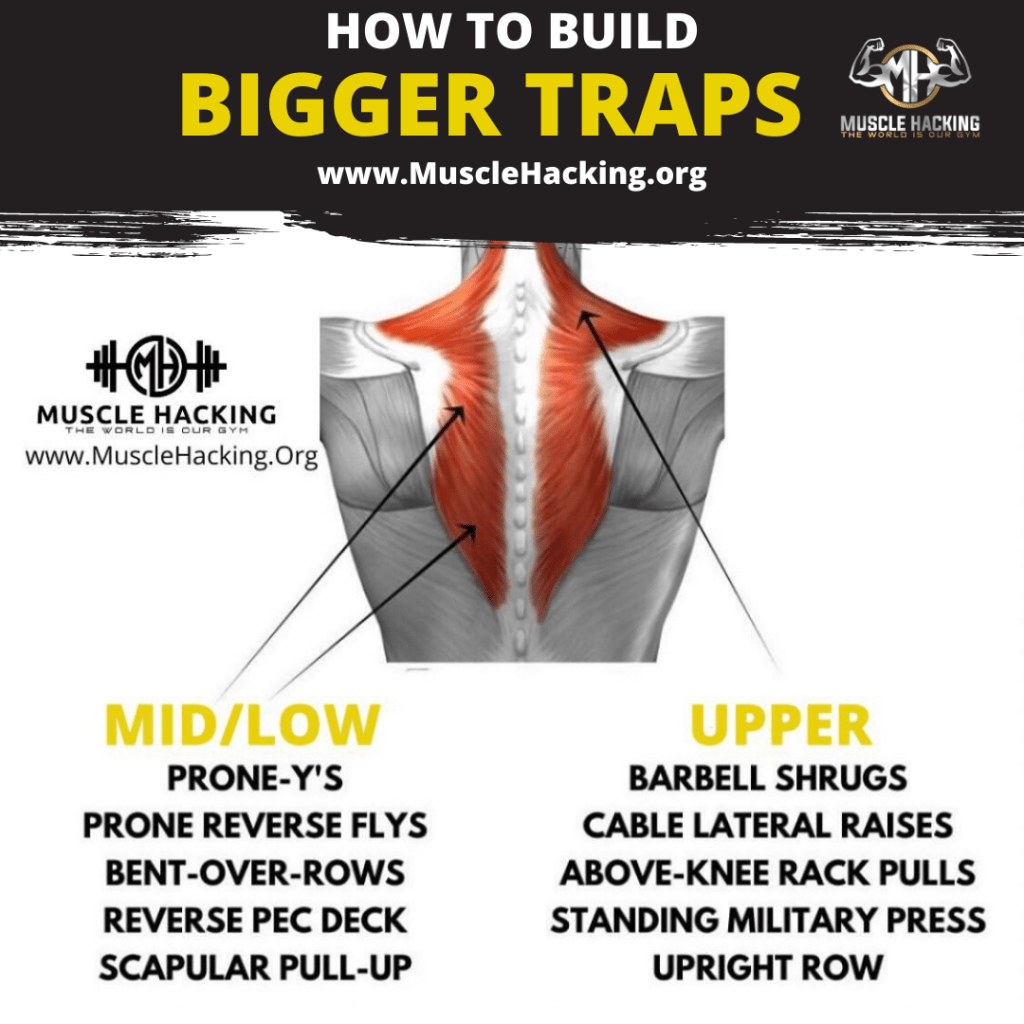
🔹 The trapezius are often recognized by the part that you see in the mirror, which are the upper portion of the traps. But the traps actually stretch down the back.

🔹 Training the traps requires more than performing shrugs. If you want to target the mid and lower part of your trapezius, try these workouts and watch the gains appear right before your eyes.

Prone- Y’s
Prone Reverse Flys
Bent Over Rows
Reverse Peck Deck
Scapular Pull Ups

🔹 And to target the upper part of the trapezius, try these out for size…

Barbell Shrugs
Cable Lateral Raises
Above The Knee Rack Pulls
Standing Military Press
Upright Rows

🔹 What’s your favorite trap workout?

Post Workout Recovery

♠️Recovery♠️

🔹 I can remember my first few months of strength training. I wanted a huge bench press, so what did I do? I benched 4-5x/week to the point that I over trained. Even worse; I killed my gains and my strength came to a hault. 

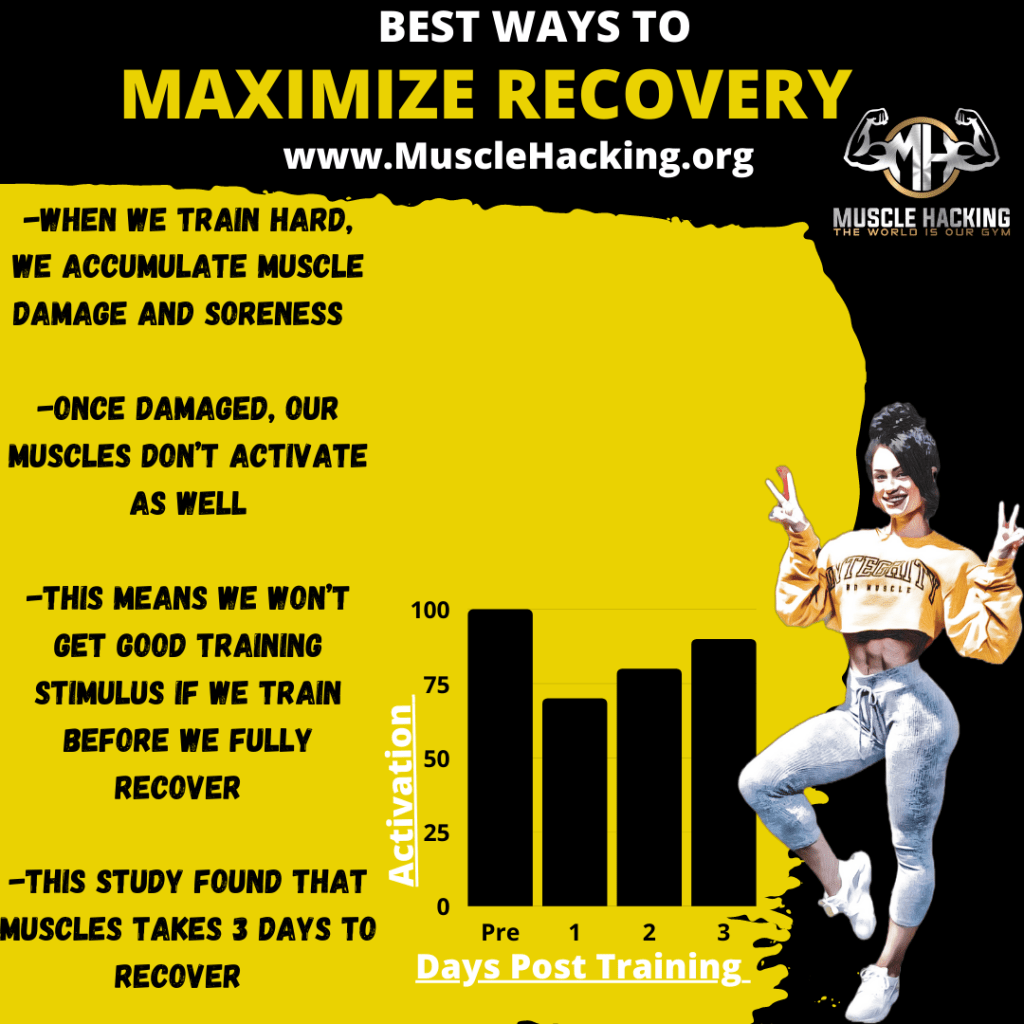
🔹 Studies show  that muscles takes around  3-days to recover from a hard workout. Recovery isn’t just feeling better or less sore, but a state in which your muscles are able to reach nearly full activation again. This is essential because a muscle has to be active in an exercise in order to grow from the stimulus. If soreness and fatigue are hindering muscle activation, your workout won’t cause your muscles to grow.

🔹 A prime rule of thumb to remember is  that you grow muscles outside of the gym. It’s important that you focus on recovery just as much as training. If you skip this critical step, you’ll find it difficult to reach your goals. Make sure that you give your muscles at least 48-72 hours of rest to optimize your recovery. This is very beneficial for the long run. 

Resources: https://pubmed.ncbi.nlm.nih.gov/12741861/

Carbs After Workout

♠️Carbs After Workouts♠️

🔹 It’s often said that carbs are important for post-workout recovery. At times people even claim that carbs are more important than protein. Is this actually the case?

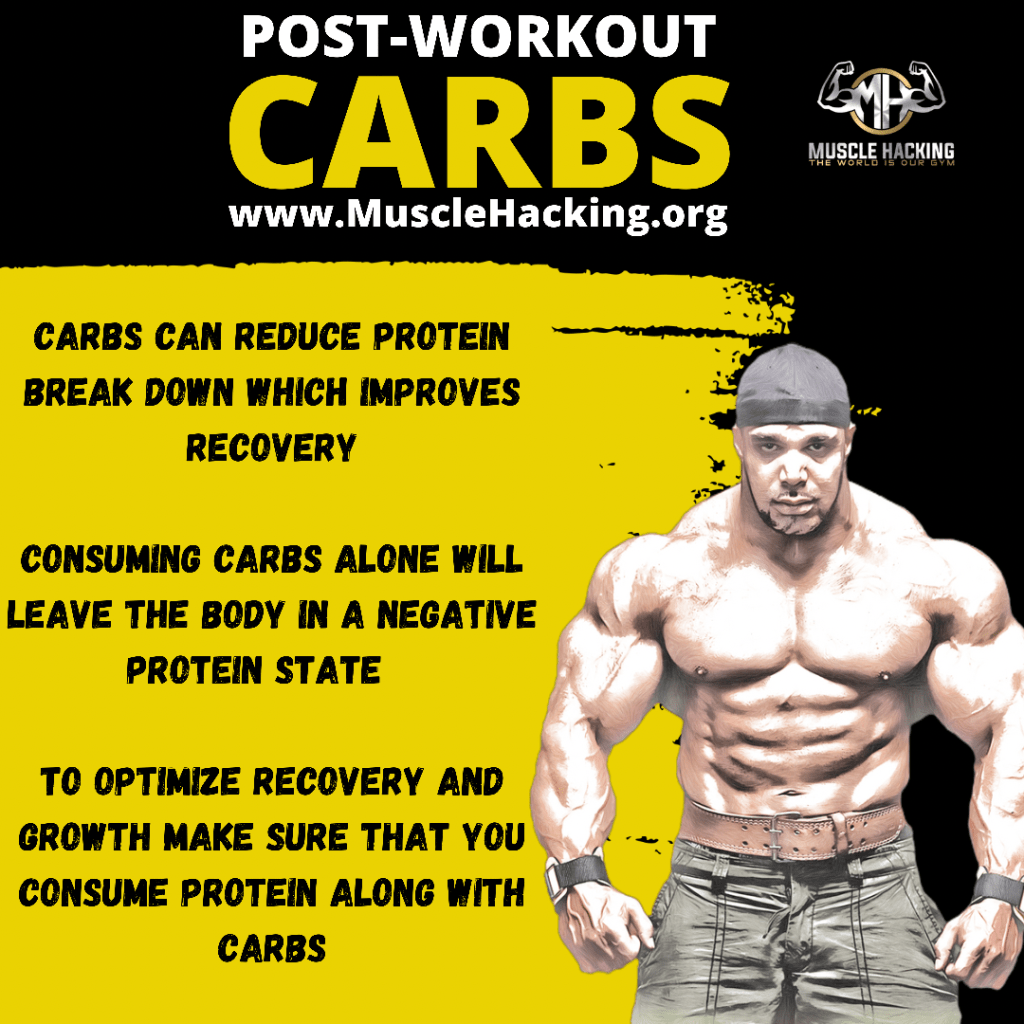
🔹 When we perform any type of strength training, we inevitably break down some muscle tissue. If we train in a fasted state, it’s very likely that by the end of the workout we will be in a negative protein balance. This is because we’re breaking down more muscle than we’re building. If I made the assumption that carbs were more important than protein and only consumed carbs after my workout, I would be in a negative protein balance. If I’m in a negative protein balance, my muscles wouldn’t grow.

🔹So how can we fix this situation? If your goal is to grow muscle, make sure that you are getting enough protein after your workouts;especially if you are training while fasted. The goal should be to spend as much time as possible in a positive protein balance and getting protein ASAP after working out is a great way to ensure this happens.

Resources: https://www.ncbi.nlm.nih.gov/pmc/articles/PMC5794245/

Training To Failure

♠️Training To Failure♠️

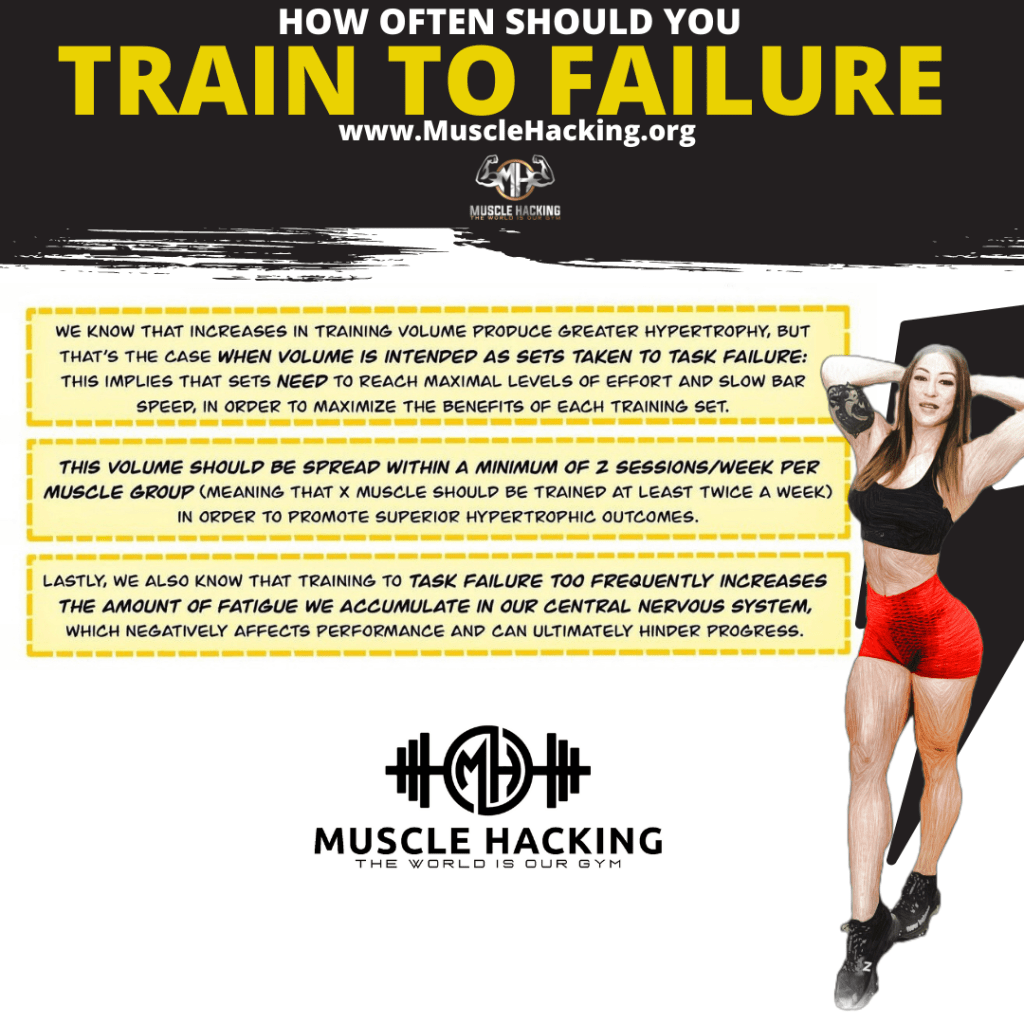
🔹 Depending on how much volume load (reps x sets x weight) we perform over a week, we can decide how often we should go to failure to maximize muscle growth.⁣ 

🔹 Less weekly volume -> workout to failure more often. (Even if you become fatigued, you will have more time to recover)⁣

🔹 More weekly volume -> workout to failure less often. (By not working out to failure often, you don’t build excessive fatigue)⁣

🔹 The number of times we train to failure is directly related to the amount of weekly volume we should perform. The days that we have lower training volume can be seen as “more efficient” when it comes to training to absolute failure. ⁣

Muscle Memory

♠️Muscle Memory♠️

⁣⁣

🔹 No training will lead to no progress and consequently we can experience muscle loss aka atrophy. ⁣

🔹 How hard is it to regain muscle you might ask? ⁣

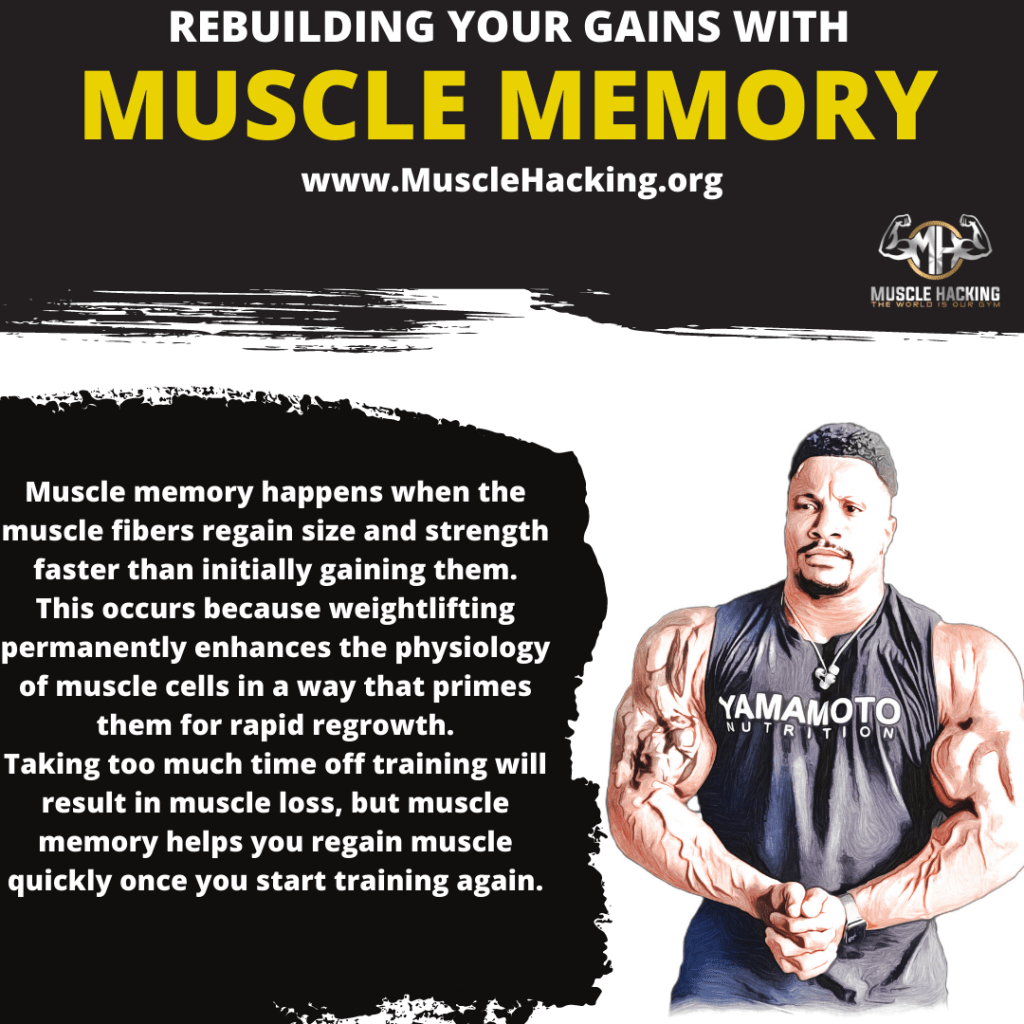
🔹 It turns out, “Muscle Memory” is real, and  the majority of us have likely experienced it. It’s far easier to regain lost muscle, than it is to gain it for the first time. ⁣

🔹 Our muscle fibers have an “epigenetic memory” which means the changes that the cell’s DNA goes through, including information about its previous size can be replicated over again. 

🔹 Even though we will lose muscle mass after a period without training, we don’t actually lose the number of myonuclei. This increases the amount of resting muscle protein synthesis, and makes it much easier to regain lost muscle once we’re back to training. ⁣

🔹 In addition, motor unit recruitment seems to decrease slowly in comparison to muscle size. ⁣

🔹 This means that when we start back working out, we’ll be able to regain a good number of muscle fibers, and still apply high amounts of force, compared to when we previously started training.. which will allow muscle regrowth to happen at a much faster rate. 

Reference: https://medium.com/oxford-university/the-amazing-phenomenon-of-muscle-memory-fb1cc4c4726

Cutting & Bulking

♠️Cutting & Bulking♠️

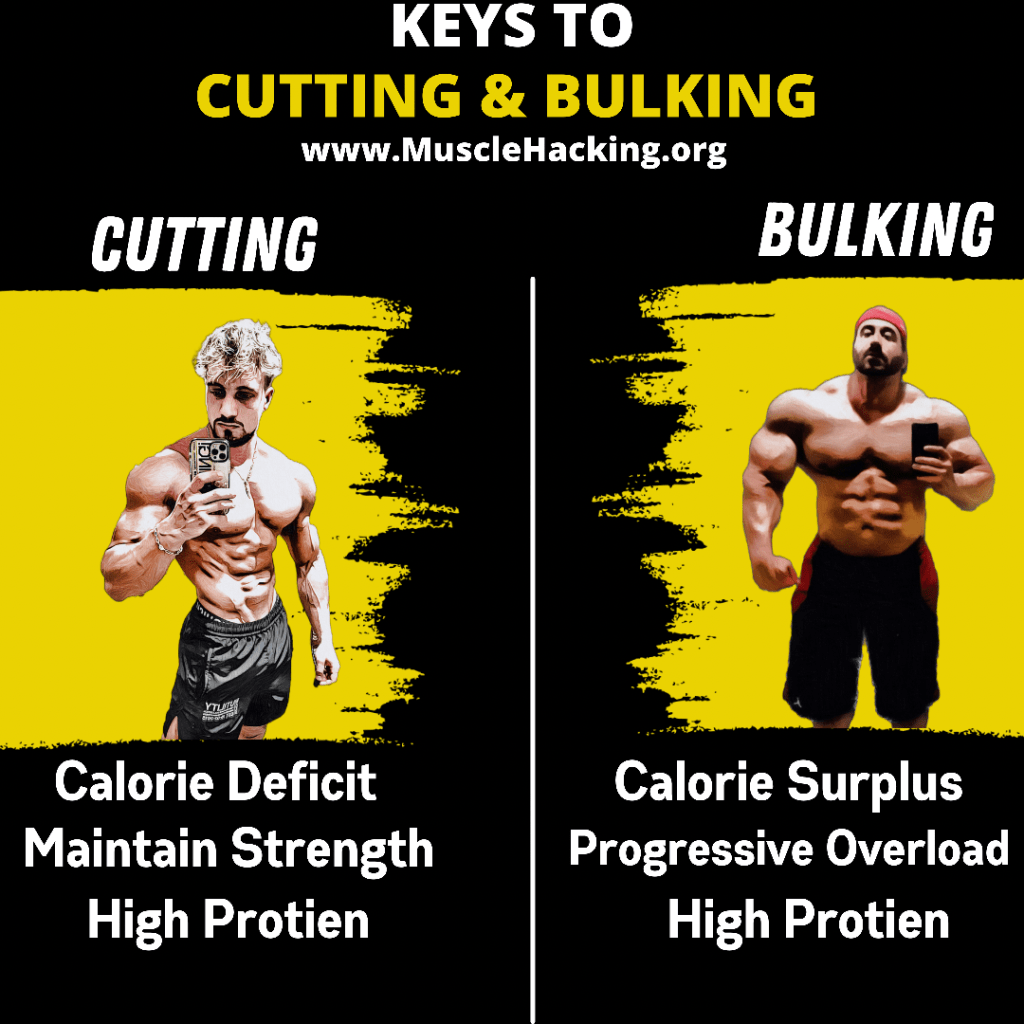
🔹 The difference between a bulking and cutting cycle  is that you eat MORE calories in a bulking phase than you burn, and you do the opposite in a cutting phase; you eat LESS calories than you burn.

⠀⁠

🔹 There are many ways to calculate your calorie deficit and surplus, but today I’m going to talk about a simple way to go about this. 

⠀⁠

🔹 So, if you are trying to figure out your Calorie Surplus, take your bodyweight in pounds and multiply it by 18-20.⁠

⠀⁠

🔹 Ex: Let’s say that you weigh 150 lbs, then you multiply it with 18-20 (in this case we take 20). So 150 x 20 = 3000 calories is your calorie surplus that you need to consume to build more muscle mass. 

⠀⁠

🔹 Keep in mind that this isn’t a perfect calculation, but you can start eating at that calorie surplus for a week, and then see if you’ve gained weight. If you have, then you’re in the right track of being in a caloric surplus. If you have’nt gained any weight, then you need to eat MORE.⁠

⠀⁠

🔹 Some people like adding more than their lbs x 20, but just be aware that you will most likely put on more fat in the process as well.⁠

⠀⁠

🔹 Fora cutting phase, you take your Bodyweight x 12-13 = your calorie deficit.⁠

⠀⁠

🔹 Calculate it, and eat at that calorie level for a week, if you lost weight, then you’re in a calorie deficit, if you didn’t, than you’re not, and you need to eat less; unless you’ve  packed on more muscle, which can happen when you recomposition.⁠

🔹 During a surplus, you will be progressively overloading your training to build strength and muscle mass. But when you are cutting, you want to maintain your muscle mass and strength (and yes, some muscle & strength gains can be made while cutting).⁠

⠀⁠

⠀⁠

🔹 Make sure to eat enough protein when doing either of these.

Increase Focus

♠️Increase Focus♠️

🔹Brain waves are indicators of electrical activity produced by the brain. These waves materialize when a group of neurons sends a burst of electrical pulses to another group of neurons. Gamma waves are the most productive yet fastest waves in the brain with numerous benefits.

🔹Gamma waves are responsible for processing information and resolving problems. They also elevate attention, focus, binding of senses (smell, sight, and hearing), consciousness,and perception. A brain that produces high levels of gamma waves, tends to make people happier and more receptive. They may also have a higher intelligence quotient or IQ and increased concentration levels. 

🔹People that are suppressed in gamma, this can lead to Attention Deficit Hyperactivity Disorder (ADHD), depression, learning disabilities and memory problems. 

🔹You can manipulate the brain to produce more gamma waves through various techniques such as:

-Meditation

Various types of meditation and breathing practices can increase the amount of gamma waves in the brain.

-Diet

Eating nuts like pistachios and peanuts can help boost your gamma waves efficiently.

-‌Music

There was a study that revealed how auditory stimuli like music or binaural beats can potentially boost your alpha and theta brain waves.

Resources:

https://www.ncbi.nlm.nih.gov/pmc/articles/PMC5486945/

https://www.ncbi.nlm.nih.gov/pmc/articles/PMC5486945/