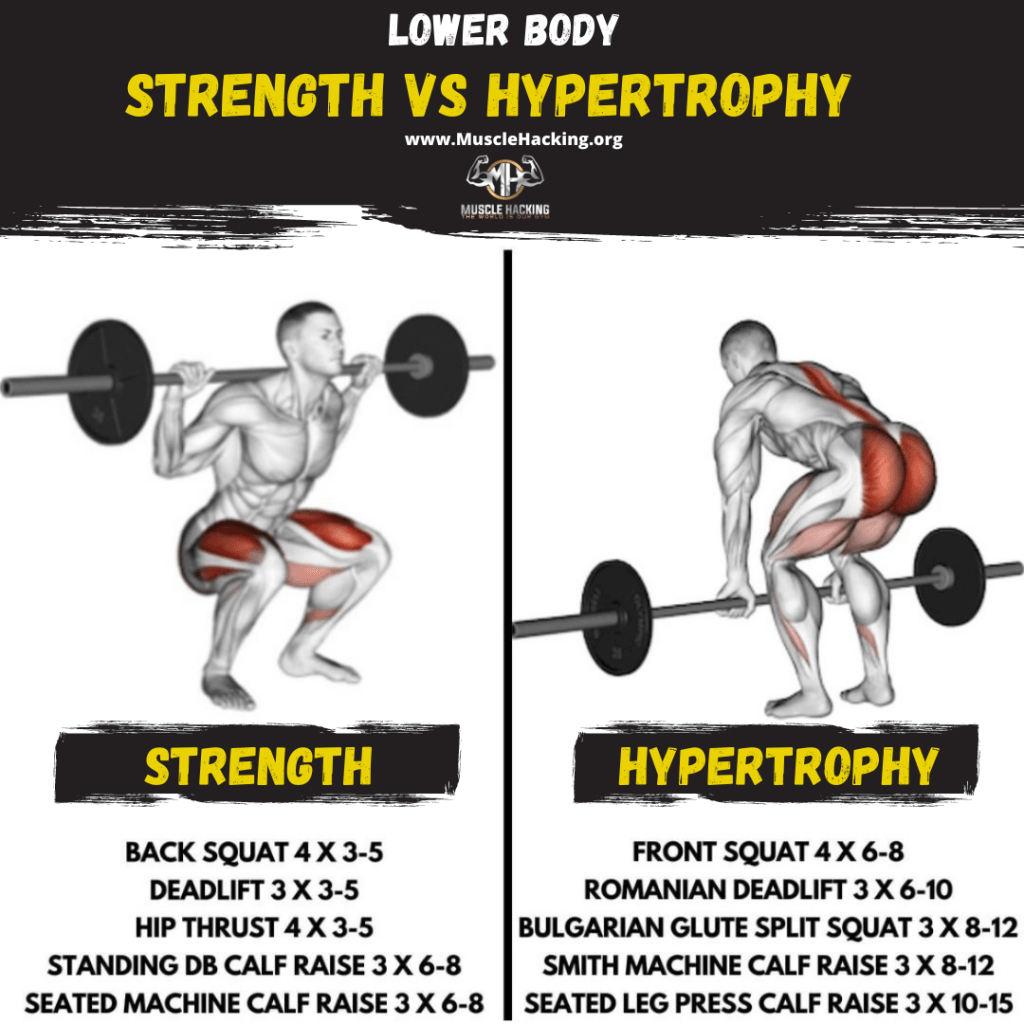
▪️When you are training for strength, it’s best to keep your resistance high and the rep range in the lower end (between around 2-6 reps). ⠀ ▪️But for hypertrophy (muscle growth), research has discovered that the sweet spot is somewhere between strength (2-6 reps) and endurance (15+ reps). So you should aim around 6-15 reps to optimize your muscle growth for your upper body. ⠀ ▪️For both rep ranges, I’d advise that you start with the most important workouts for your goals, which are usually heavy compound exercises. After that, finish off the day with isolation workouts as shown in the post.
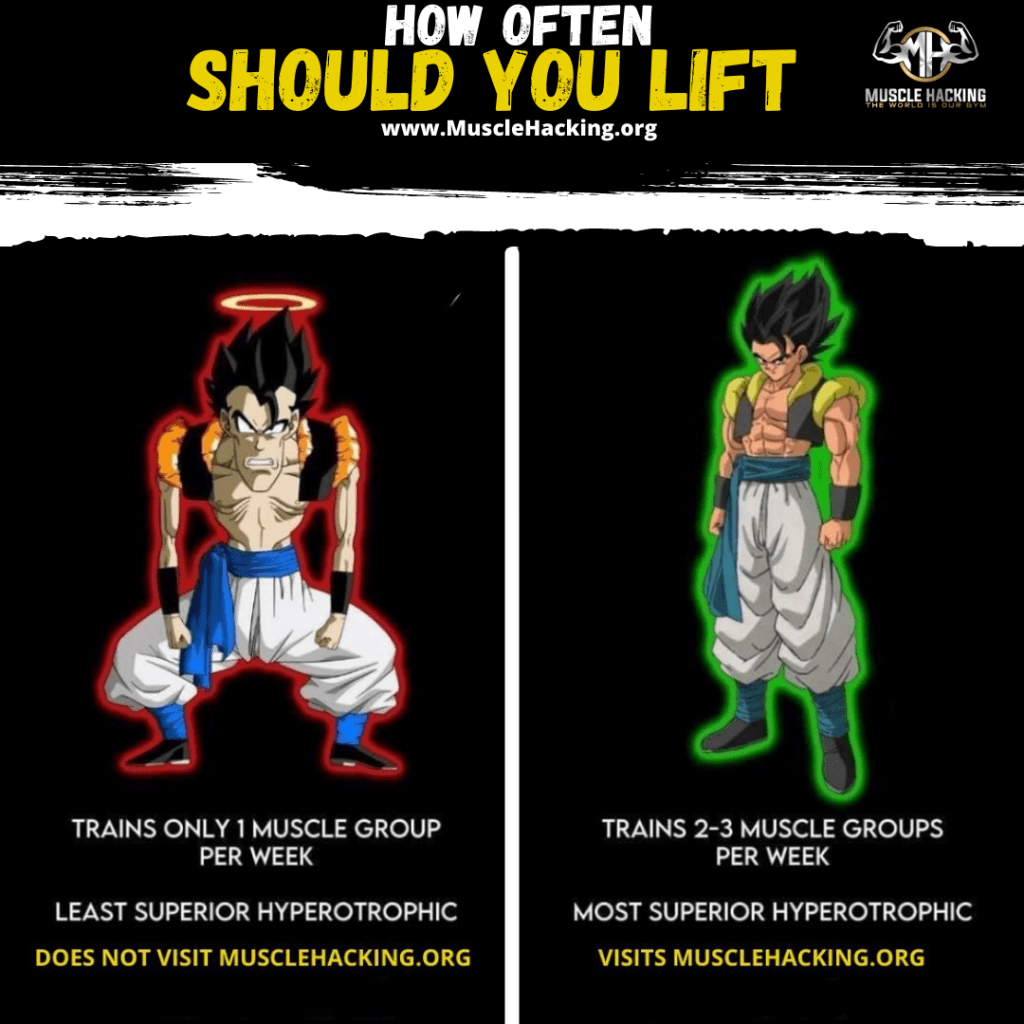
▪️As muscle hackers, we already know that hitting the muscle groups more frequently is what causes us to respond better. These common splits that you see hitting single muscle groups per week, rinse and repeat are used by enhanced athletes and are not quite on the same playing field as you or I.⠀
⠀
▪️With that being said, I’ve cited a study here shown by Schoenfeld that conducted results in maximizing muscle growth over a four week period of time with healthy non diseased, non injured participants.⠀
⠀
▪️The results showed “When comparing studies that investigated training muscle groups between 1 to 3 days per week on a volume-equated basis, the current body of evidence indicates that frequencies of training twice a week promote superior hypertrophic outcomes to once a week. It can therefore be inferred that the major muscle groups should be trained at least twice a week to maximize muscle growth.
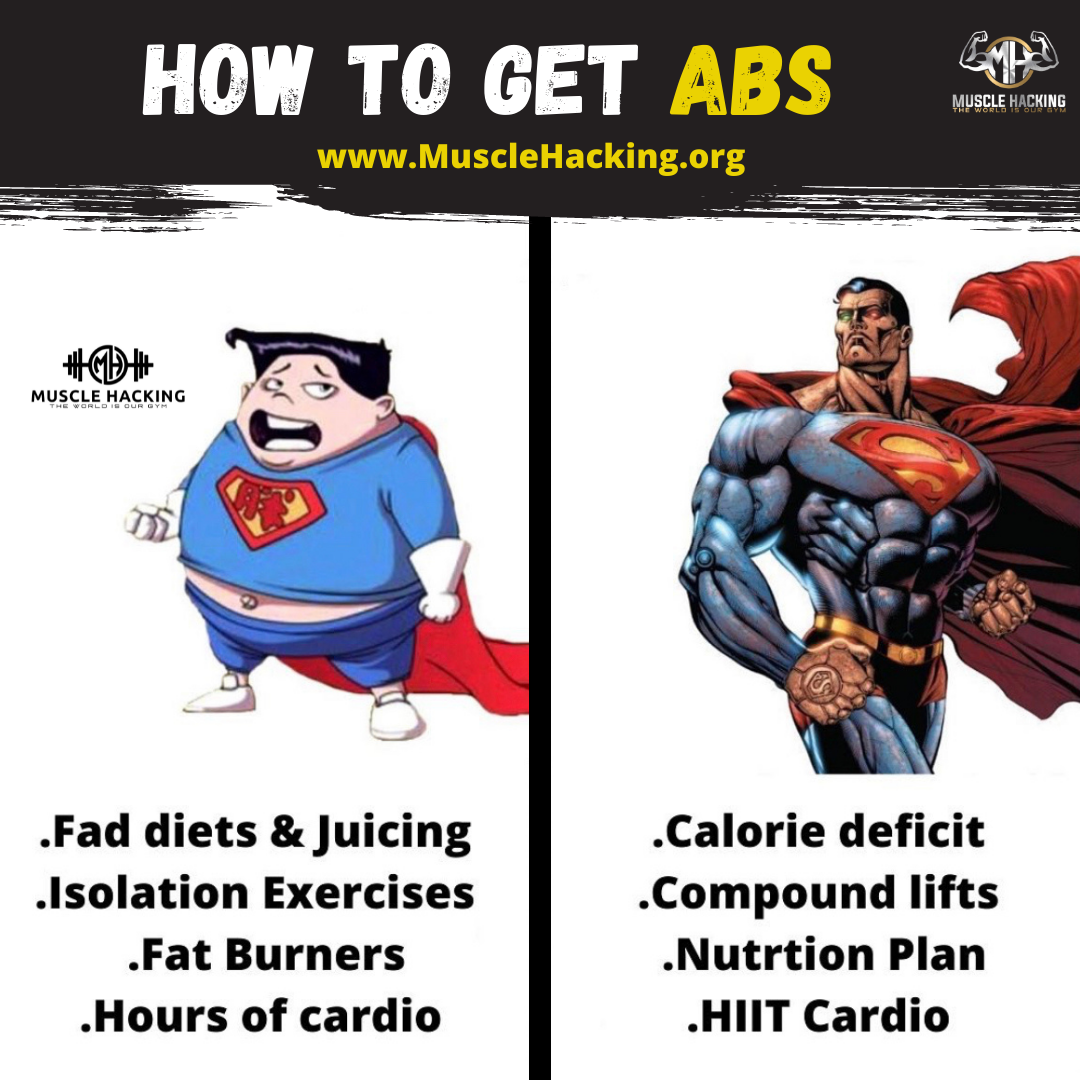
▪️One of the most common questions googled on the internet is “How do I get my abs to show”? ⠀ ▪️Participating in a 4-Week crunch challenge won’t get you the results you are looking for if you have fat around your belly hiding it. ⠀ ▪️Drinking Detox Juices won’t get you there. ⠀ ▪️Hours of cardio won’t get you there. ⠀ ▪️Fat Burning Supplements will DEFINITELY not get you there. ⠀ ▪️Avoid from focusing on the ‘quick’ fixes… ⠀ ▪️It’s pretty simple, actually. ⠀ 1️⃣ Eat nutritious whole foods. ⠀ 2️⃣ Focus on compound exercises and add HIIT cardio to keep your muscle while burning fat (and then add a few crunches/leg lifts). ⠀ 3️⃣ Increase the intensity level as you progress in your workout routine (progressive overload). ⠀ 4️⃣ Stay in a slight calorie deficit over a longer period of time, depending on where your fat percentage is and what your goal is. ⠀ ▪️It’s simple, not easy. Don’t listen to people that are trying to confuse you to buy their fat loss detoxes, pills, or other scammy products.
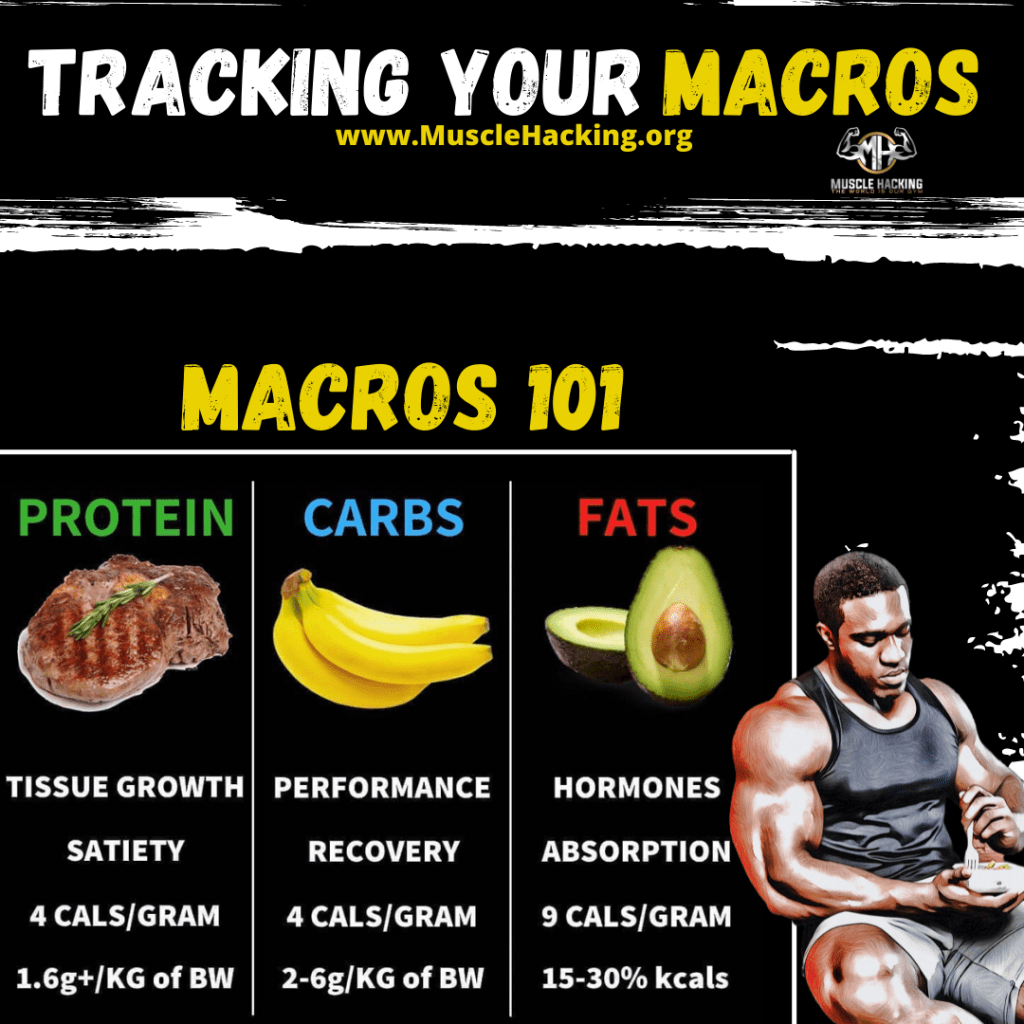
▪️Protein: When you are consuming protein, your body starts to break down the protein molecules into amino acids and uses them to rebuild new muscle tissue. If you don’t take in enough protein, your body will not get enough amino acids, which will impair your ability to build and repair muscle.
▪️The average sedentary individual can “survive” with very little protein because of the survival mechanism that we inherited from our ancestors. These mechanisms allow us to reuse broken down protein. The fact of the matter is, you would die if you didn’t consume protein, but you can easily survive on tiny amounts. But if you’re reading this, chances are you’re not an average sedentary person, right? Since you regularly lift weights, your body will require more protein intake. In fact, research has discovered that athletes need to eat a high protein diet in order to maximize their performance.
▪️Fats: Dietary fat is the most calorically dense source of energy to the human body. Each gram of fat has twice the amount of calories as a gram of carbohydrates or protein. You can find healthy fats in dairy, meat, eggs, oils, nuts, and fish. These fats give your body the ability to absorb nutrients.
▪️Carbohydrates: A study published in The American Journal of Clinical Nutrition discovered that when participants were put in a 50% caloric surplus—either purely from consuming carbs or purely from consuming fats—after one day of overeating, the carb-only group stored only 10% of excess calories as fat, vs the fat-only group which stored a whopping 60%. In a nutshell, excess dietary fat will lead to greater fat accumulation than consuming an excess of carbohydrates.
▪️Looking at the bigger picture, this actually makes perfect sense. Especially since there are numerous sources of evidence that shows that carbs are inefficiently stored as body fat even when overfeeding. This process is due to a highly regulated metabolic pathway called de novo lipogenesis.
▪️Carbohydrates are sugars, starches and fibers which can be found in fruits, grains, vegetables and various milk products. Their main influence revolves around energy. This energy stems from a sugar called glucose. So, whether you are getting your carbs from candy or from brown rice, the carbs convert into glucose during digestion, which then becomes the preferred source of energy for both the mind and muscles.
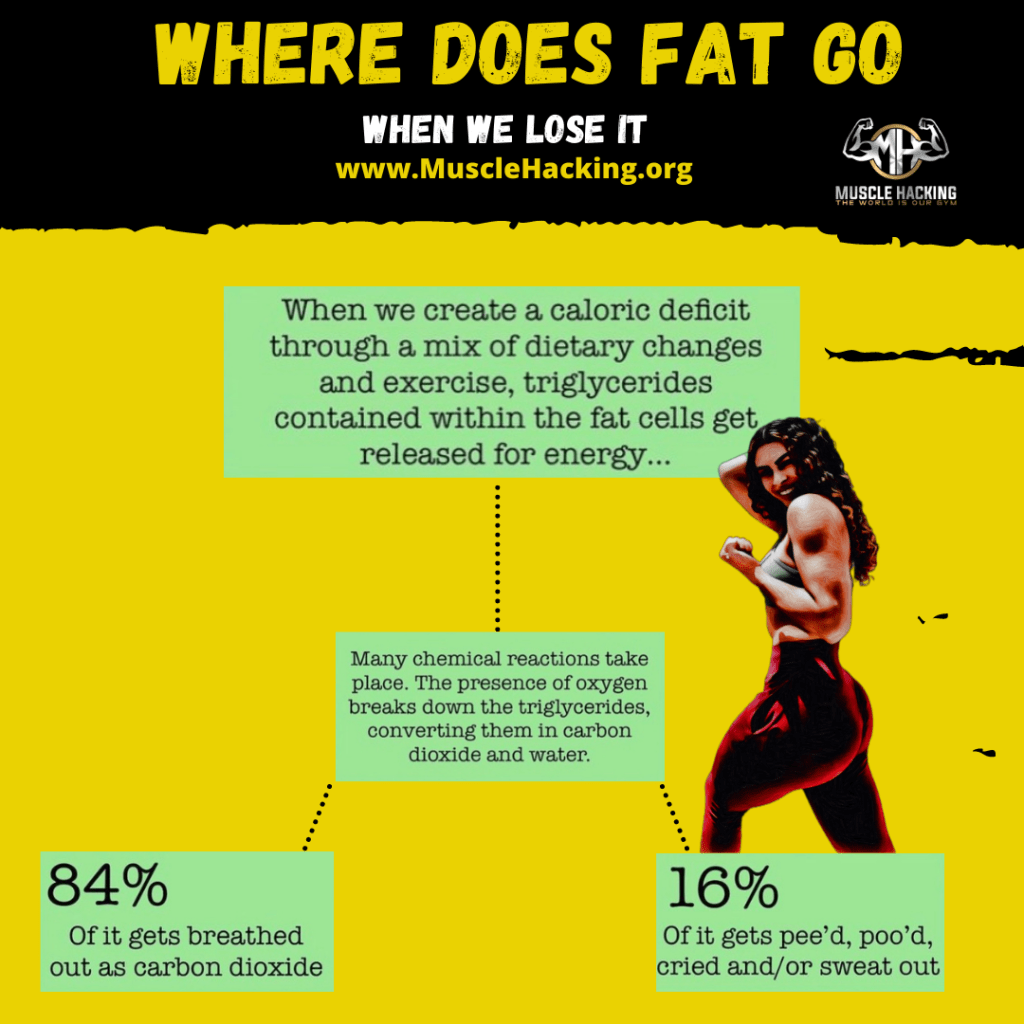
WHERE DOES FAT GO WHEN YOU LOSE IT? ▪️At least one time in your life, you’ve probably wondered where fat goes after you lose it… and the answer is.. most of it gets breathed out as CO2! ▪️In a study published by the British Medical Journal in 2014, the authors confirmed that to lose about 10 kg (22lbs) of fat we must inhale ~29 kg of oxygen. During this metabolic process, 28 kilograms of carbon dioxide is produced (which are breathed out) and 11 kilograms of water is exerted through bodily fluids. ▪️As a matter of fact, if we were to follow the atoms in 10 kg of fat as they are depleted, about 8.4 of those kg are exhaled as carbon dioxide through the lungs. The rest of the 1.6 kg becomes water, which can be excreted through urine, faeces, sweat, breath, tears and other bodily fluids, the researchers report. ▪️But before you start breathing into hyperventilation, know that breathing more or faster, will not help you lose fat.
▪️This process occurs from prolonged dietary adherence, with a calorie deficit set in place, and exercise. ▪️Remember that answer will always remain the same, if you want to lose fat: diet & exercise. References:
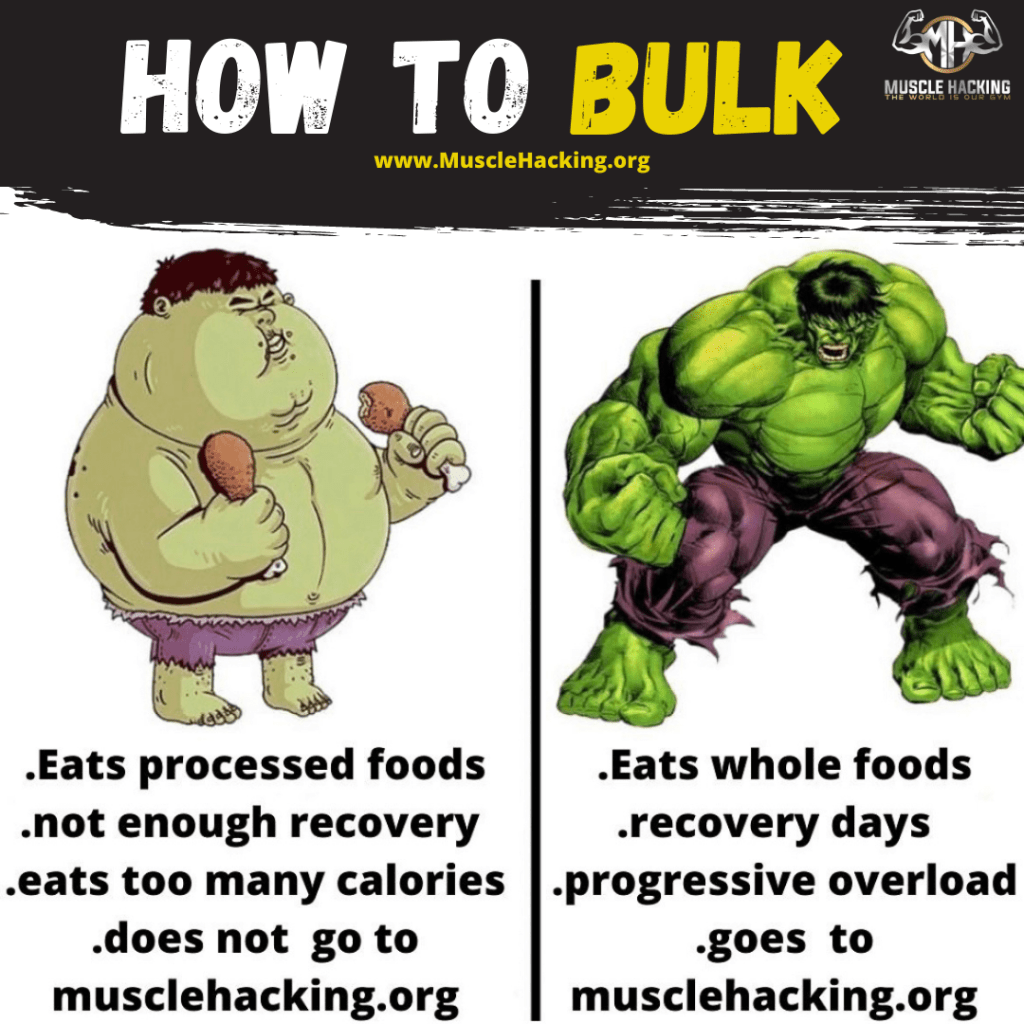
▪️When trying to put on some extra muscle, it’s easy to focus on the wrong things. ⠀ ▪️While some things like excessively eating highly processed foods to consume more calories might gain you some weight, it’s not a long-term strategy and it’s far from optimal. ⠀ ▪️To keep it simple, you want to focus on gradually increasing your calorie intake by around 250-500 calories over your maintenance level, and mainly eat nutrient-dense whole foods (this is usually called a “lean bulk”). ▪️Yes, you can, of course, eat much more than that, but you will most likely not be growing much more muscle, but instead, pack on excess fat (this is usually called a “dirty bulk”). ⠀ ▪️Keep your protein and carb intake high. ⠀ ▪️In the gym, focus on progressively overloading your compound lifts and then your accessory exercises. ⠀ ▪️A BIG MISTAKE a lot of people make is to not get enough rest. Your body needs to recover to grow stronger and to build muscle, and this happens during your rest periods. So make sure you get at least 7-9 hours of quality sleep. ⠀ ▪️Keep educating yourself to consistently grow your muscles AND your brain. ⠀ Share with a friend that is bulking.
▪️No matter what the situation is; fat loss begins & ends with a calorie deficit. Being in a calorie deficit is like being the driver of fat loss. In a nutshell, you want to consume fewer calories than you expend.
▪️I get many questions in my inbox about cardio and HIIT classes. People also message, “How can I burn more calories?!” If your main focus is to burn more calories than you’re missing the bigger picture; which is calories in.
▪️You’ve most likely heard it before. It’s a big piece of repeated fitness advice that’s actually true; you can’t out work your diet. The focus should be on how many calories you’re eating.
▪️1.Protein Intake: While in a calorie deficit, adequate protein consumption helps you keep your muscle while shedding fat. Maintaining and building muscle is a must in order to look good, perform better, age well & keep your metabolism revin’
▪️Protein also helps with satiety. Want to manage your hunger? Eat your protein!
▪️2.Strength training: To keep (and to build) muscle in a calorie deficit; you not only need enough protein, you need to let your body know that you need to build more muscle. Strength train with the focus on getting stronger over time. Make that your priority in every workout.
▪️3 NEAT: Non exercise activity thermogenesis is the most underrated strategy to burning fat. NEAT is any activity you do outside of organized workouts. Which is most of your time btw. Little bits add up. Track your steps aiming for 8-12k.
▪️4. Sleep & stress management: Sleep and stress will impact your ability to burn fat indirectly. They can boost cravings and hunger, lower your ability to feel full and impede your judgement around food choices.
▪️5.Cardio When it comes to burning fat, it’s not the best way to achieve results (exceptions: marathoners, long-distance racers, pro-athletes, etc). Keep your focus on tracking your calories.
▪️I often get messages from concerned readers who are worried about the scale not moving, despite the fact that they are lifting weights and eating a healthy diet consistently.
▪️Here’s the thing, the scale isn’t a reliable indicator for progress when you are changing your body composition. It actually doesn’t do anything but tell you how much you weigh in that moment on that particular day & time. That’s absolutely all the scale does. The scale doesn’t display any info about how your body’s getting stronger, how your clothes are fitting better, how climbing stairs is getting easier. And let’s be honest, you’re most likely training for a LOOK and how you FEEL, not a number right?
▪️Nobody is walking around with their scale weight tattooed to their foreheads. No one but you is aware of how much you weigh.
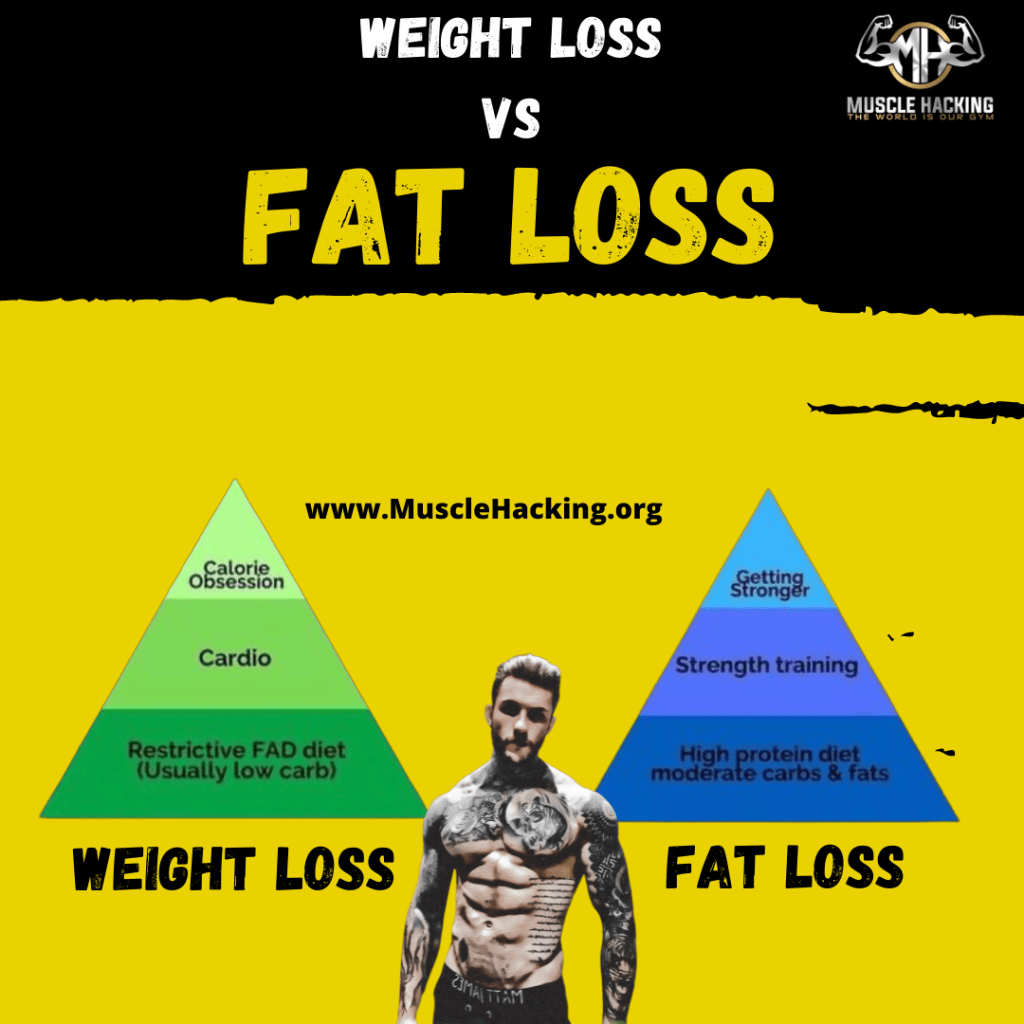
▪️What needs to be understood is that people should be more concerned with FAT LOSS, not WEIGHT LOSS. Weight loss occurs from a combination of muscle, fat, water, human waste, etc.
▪️If you want to have a lean physique, then you’re going to have to start removing the attachment to the scale and observing it as just ONE data point among many.
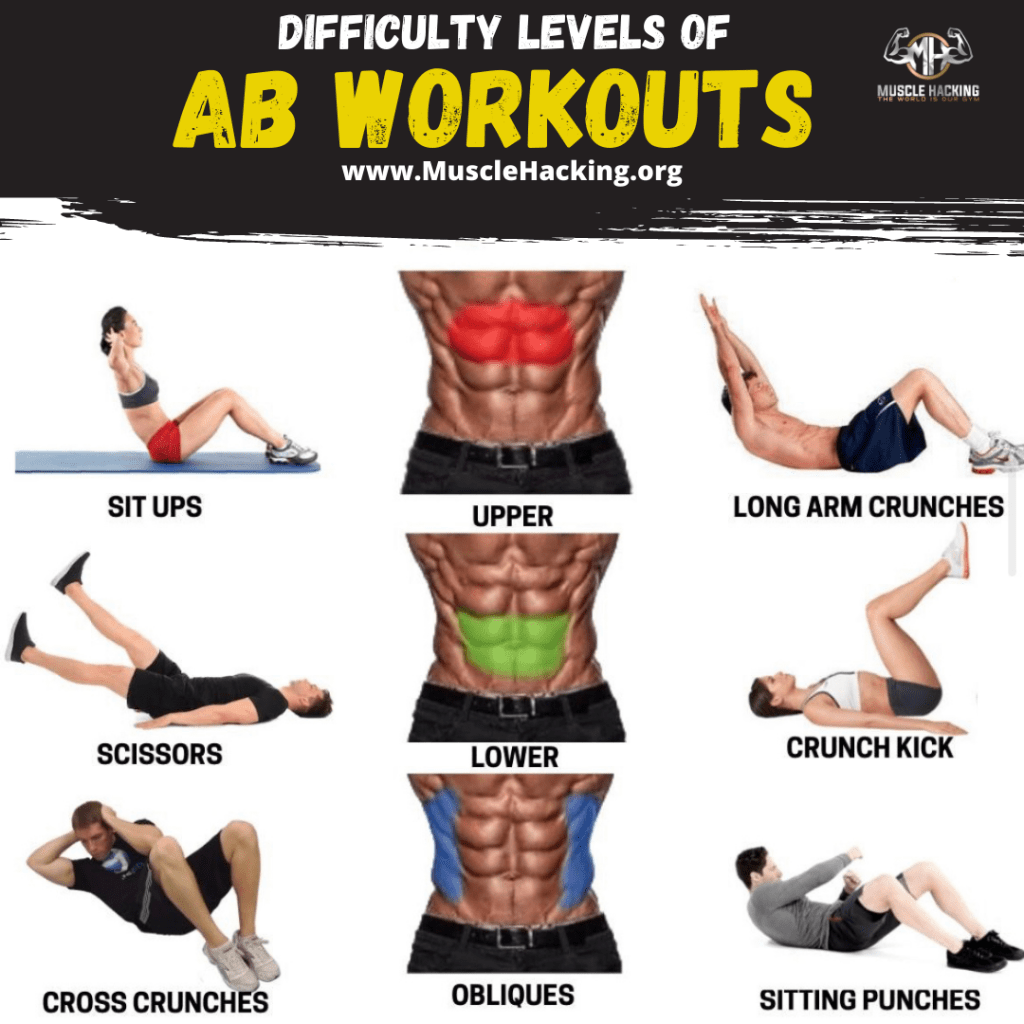
Get Visible Abs ⠀ ▪️These workouts target the Upper and Lower parts of your abdominals as well as the Obliques. ⠀ ▪️While doing these difficulty-based workouts, you can choose either the easier option (left side) or to step it up a notch and go for the harder version (right side). ⠀ -The Workout
▪️Perform these workouts in a circuit-style fashion (perform all reps for each exercise and move on to the next workout without resting. Continue as you go to the third exercise, then rest 30-60 seconds. That’s one circuit/round completed). ⠀ ▪️Go through a total of 2-4 circuits with either the easier or harder edition. ⠀ -Easier Version:
Sit-Ups: 15-20 Reps
Scissors: 15-20 Reps
Cross Crunches: 15 Reps on each side (30 total) ⠀ -Harder Version:
Long Arm Crunches: 15-20 Reps
Crunch Kick: 15-20 Reps
Sitting Punches: 30 Seconds ⠀ ▪️Important Note: To have visible abs you have to have a lower body fat percentage (around 8-15% for men and around 14-24% for women, these can vary), and fat loss is occurs with a calorie deficit, mainly through food. ⠀ So make sure that you eat well while performing these exercises to achieve well-defined abs. ⠀ Share with a friend who wants that aesthetic Six-Pack!
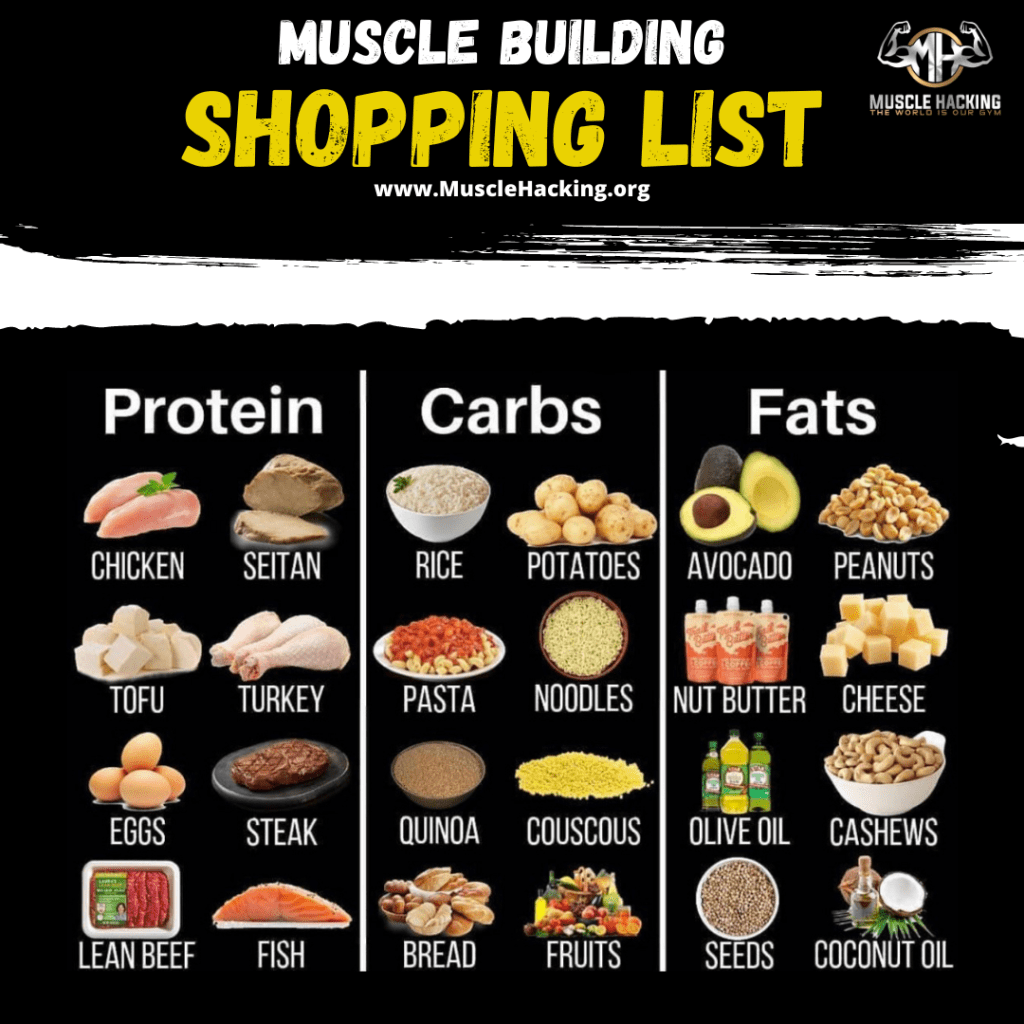
▪️Ask 10 people why they fail to reach their fitness goals and 9 will tell you it’s due to nutrition. . ▪️I get it. It’s much more difficult to make the right food choices on a daily basis than it is to go smash some weights for an hour a few days per week. . ▪️Truth be told, however, nutrition doesn’t have to be complicated. Aim for at least .75 grams of protein per pound of bodyweight, get 30% of your calories from fats, and determine how many carbs you need based on your goals (bulking or cutting). . ▪️Once you’ve got that in order, it’s simply a matter of making the right food choices to meet those numbers (and of course you should always be tracking your weight and making adjustments accordingly). Which is why I’ve created this easy-to-follow shopping list. Use this as a guide to help you select the right foods to meet your goals. .


 musclehacking.org