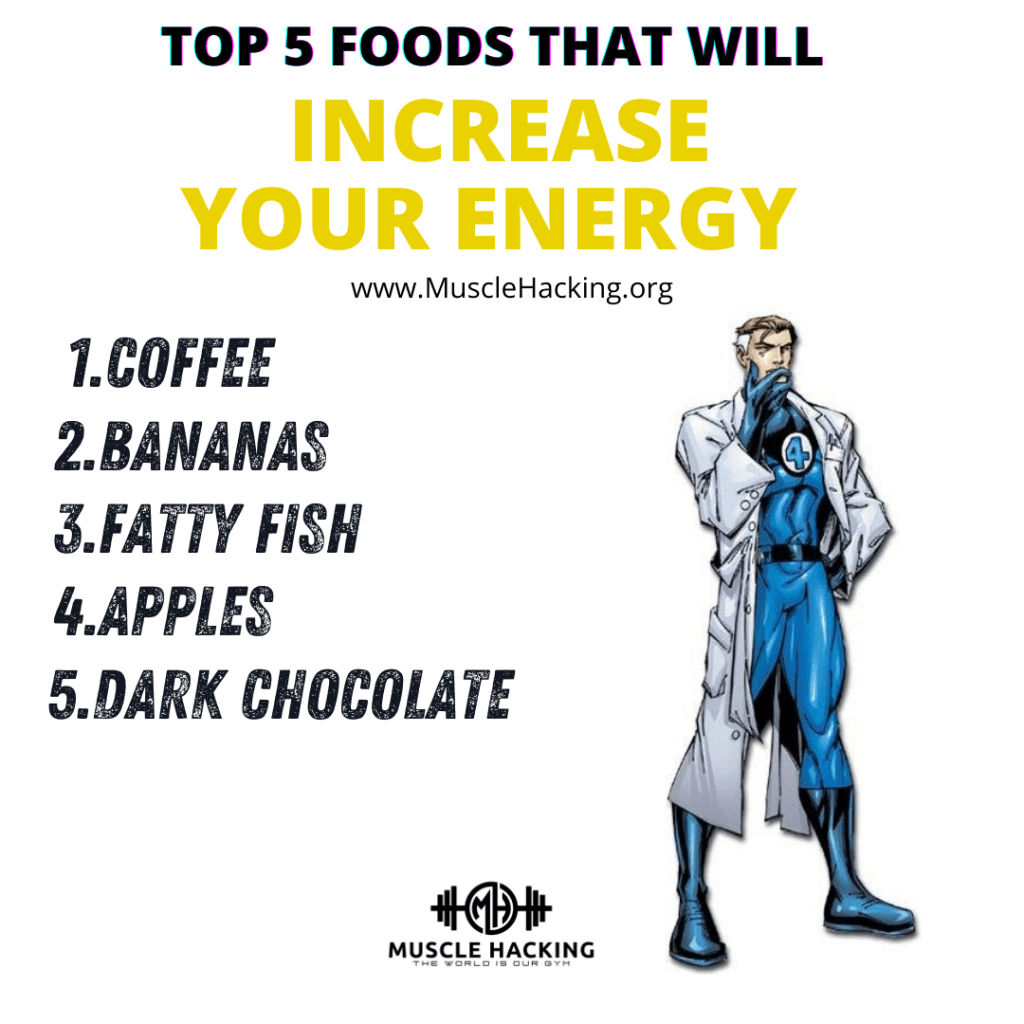
Increase Your Energy

➖Coffee

🔹Coffee is often the first option that people go to when they are looking for an energy boost.

🔹Because of the caffeine, which can instantly pass from your bloodstream into your brain and inhibit the activity of adenosine, a neurotransmitter that quiets the central nervous system. 

🔹Therefore, the production of epinephrine which is a hormone that stimulates the body while boosting brain activity will increase even more.

🔹Although coffee only has two calories per cup, its stimulatory effects can heighten your focus.

🔹Even though I sometimes go overboard on the coffee consumption, I wouldn’t recommend drinking over 400 mg of caffeine, or about 4 cups of coffee, per day.

➖Bananas

🔹Bananas have complex carbs, potassium, and vitamin B6, all of which can help boost your energy levels and simultaneously make you more alert. 

➖Fatty fish

🔹Fatty fish such as salmon and tuna are excellent sources of protein, fatty acids, and B vitamins, making them a must if you are looking for that extra boost. 

🔹Having salmon or tuna in your diet will provide your daily amount of omega-3 fatty acids and vitamin B12. 

🔹Omega-3’s are known to reduce inflammation, which is a common cause of fatigue and lethargy. 

➖Apples

🔹Medium sized apples (100 grams) have around 14 grams of carbs, 10 grams of sugar, and up to 2.1 grams of fiber.

🔹Because of the  natural sugars and fiber, apples can provide a slow and sustained energy release.

🔹Apples also have a high antioxidant content. Studies have concluded that antioxidants may slow the digestion of carbs, so they release energy over a more extended period of time.

🔹You should try to eat apples whole to reap the benefits of the fiber in their skin.

➖Dark chocolate

🔹Dark chocolate has higher amounts of cocoa than regular chocolate.

🔹The antioxidants found in cocoa increases blood flow throughout your body. 

🔹The increased blood flow throughout your body aids the delivery of oxygen to the brain and muscles, which helps improve their functions. This is great for when you have intense workouts.

🔹Dark chocolate also has theobromine and caffeine, which will enhance mental energy and mood.

🔹 Message me the word “FREEDOM” for a nutrition and fitness plan that will give you optimal energy.

Resources: https://fdc.nal.usda.gov/fdc-app.html#/food-details/362759/nutrients

https://fdc.nal.usda.gov/fdc-app.html#/food-details/1028841/nutrients

https://pubmed.ncbi.nlm.nih.gov/25285409/

https://www.ncbi.nlm.nih.gov/pmc/articles/PMC4462044/

https://fdc.nal.usda.gov/fdc-app.html#/food-details/577849/nutrients 
https://pubmed.ncbi.nlm.nih.gov/25782129/

Eating Clean

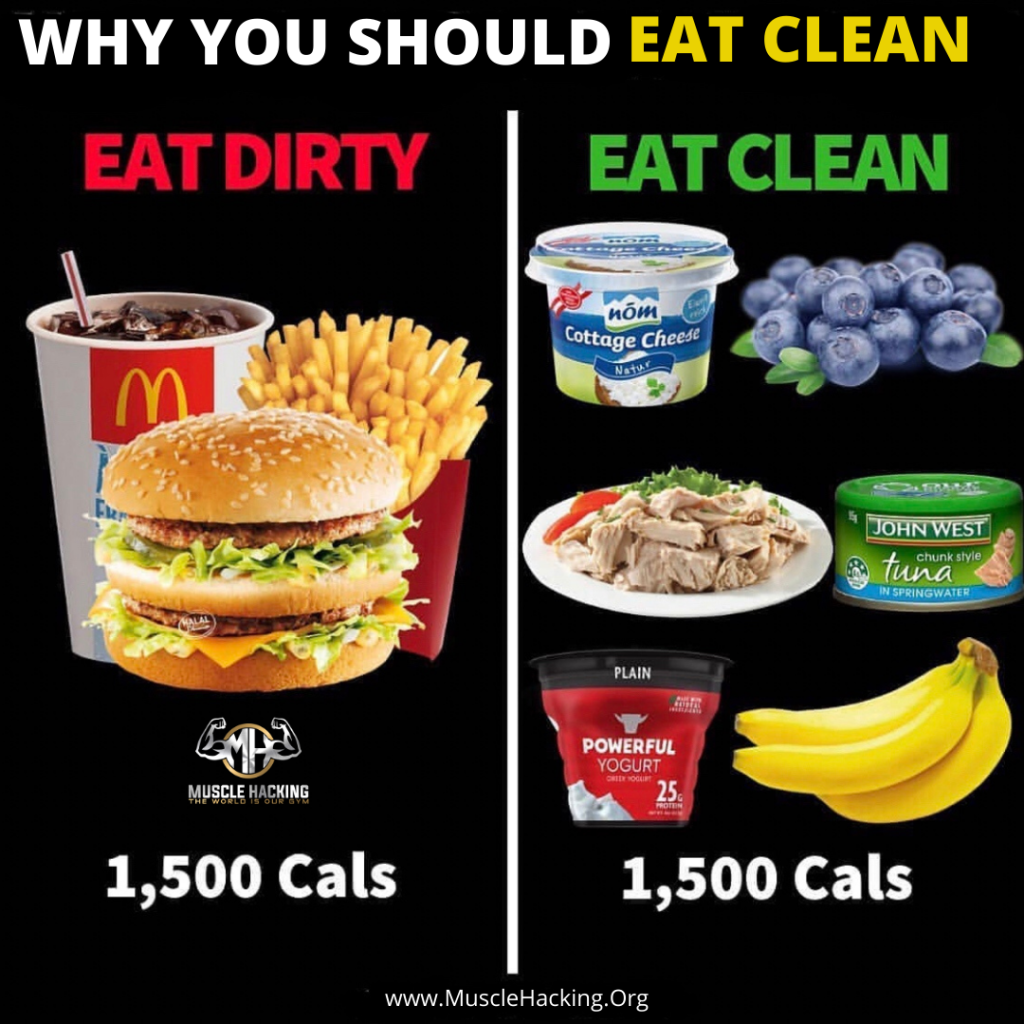
🔹 You’ve probably heard the phrase: “eat clean, train dirty” or “eat clean, train mean” or “you can’t expect to look like a million bucks if you eat off the dollar menu.” What does that even mean, anyway? If you ask 10 people what it means to “eat clean,” you’ll get 10 different answers..
🔹 The answer to these phrases all have one thing in common: it’s extremely restrictive. We are led to believe that some foods are good and others are bad. No one has ever dropped dead from one candy bar though—just like no one has gotten up in the morning lean and healthy from consuming a few servings of vegetables. This is not to say that we should opt for the mint chocolate chip ice-cream over apples and carrots, but being too restrictive in your diet is (1) making it nearly impossible to eat enough and (2) removing one of life’s greatest pleasures—delicious food.
.
🔹 If you’ve ever tried to get 3000 calories from chicken breasts and broccoli, you know exactly what I’m talking about. Although I do advocate a mostly minimally processed, whole food diet—I do also promote a flexible way of eating. If 80-90% of your foods are coming from minimally processed, whole foods, then don’t be afraid of getting the other 10-20% from that strawberry ice-cream—assuming it fits into your overall macro and micronutrient goals.
.
🔹 Keep in mind, however, that the longer you’ve been dieting, the lower your calories. And the lower your calorie intake, the less room you’ll have for “fun foods.” But that’s probably a good thing since minimally processed foods are more satisfying and provide more vitamins and minerals.

🔹 Message me the word “FREEDOM” if you want a customized workout and nutrition plan

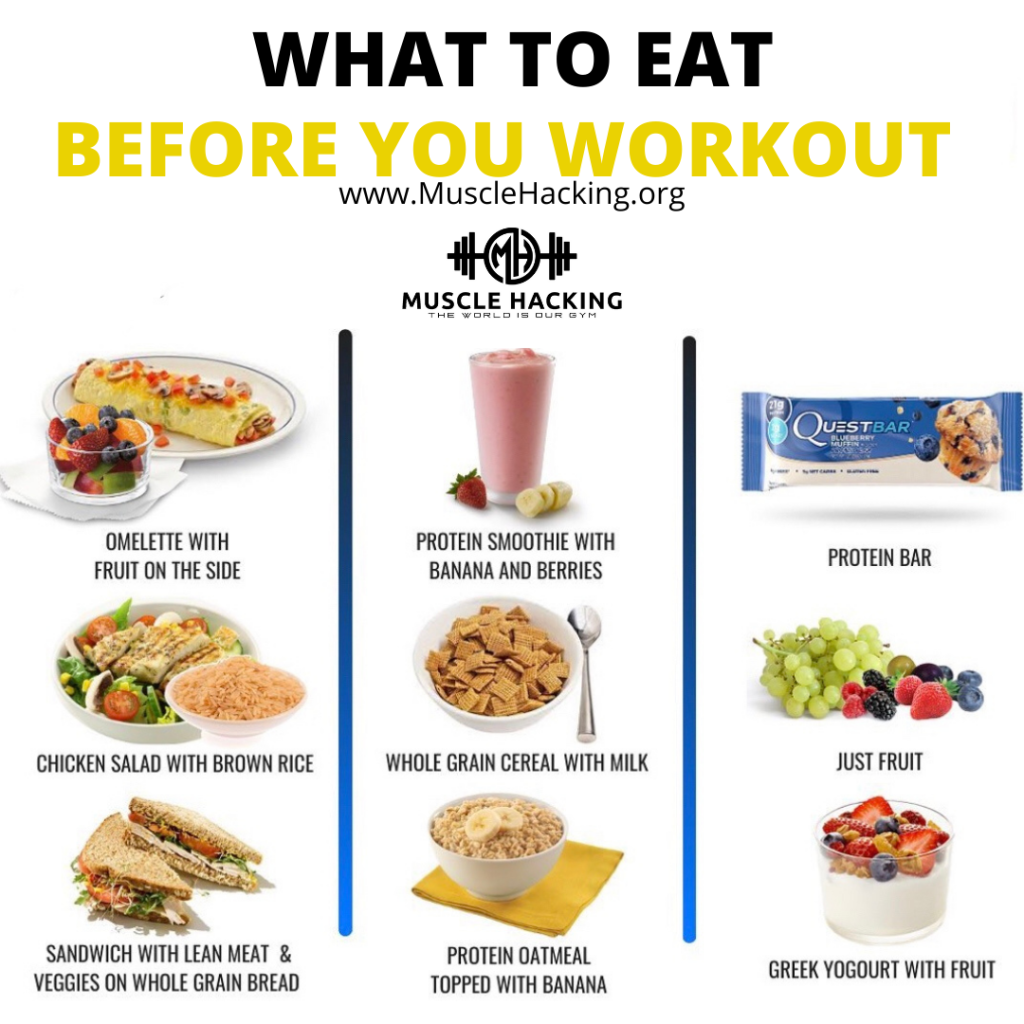
Pre Workout Meals

Pre-Workout Meals
What should you eat before a workout?

Well that depends on your goal, when you train and how organized you are. If you’re doing intermittent fasting, then you might just have some water and coffee and go lift. Your performance might not be fantastic, just make sure you eat afterwards

Ps. I don’t condone intermittent fasting. I digress …


If you’re not fasting, and you’re able to eat 2-3 hours before the workout, you can get in some protein, complex carbs and fats. This can be a fairly large meal as you’ll have time to digest it

If you’re eating 1-2 hours before then the meal should be a bit simpler. Not much fat, simpler carbs and some protein

If you’re eating right before your workout then the meal has to be very simple. Quickly digestible carbs, protein and no fat

Keep in mind that you are NOT eating at all 3 of these times – you can have a larger meal early and a quick snack before but not all 3 of these (unless you’re really trying to gain weight)

Other add ons for pre-workout intake can and should include water, caffeine and creatine with the water being 100% necessary and the other 2 optional (although they will help your performance )

Key takeaway is that when you’re exercising, your body needs blood for your muscles. You don’t want to be digesting a big meal at the same time because your body will want that food out ASAP – and you won’t feel great

So make sure the size of your meal lines up properly with the timing of your workout

Your body (especially your stomach) will thank you…

If you’re sick of yo-yo dieting and want to learn how to lose the weight once and for all, msg me the word “FREEDOM” and we can speak about whether you’d be a good fit for my new Fat Loss program.

Portion Size

🔹 Eyeballing serving sizes can work if you’re not really trying to lose or gain weight
🔹 If you DO want to drop some weight, measuring and actually knowing how much food is going in is pretty important. Especially at first so that you can learn more about portion sizes. Once you’re where you want to be you can relax on the precision. Plus you’ll know more about what to look for and what mistakes to avoid.

🔹 I’m not saying that you need to measure each banana you eat. Just be aware that different amounts of something will have a different calorie content, that’s all.

🔹 Things like peanut butter, oils and nuts are very calorie dense and can add up quickly so they are the things you want to be careful with. Small amounts add up and if you’re eating 500-1000 cals more than you thought in a week you’ll be confused why the progress isn’t there. Let me know if you have any questions, I can help.


Food To Eat For Acne

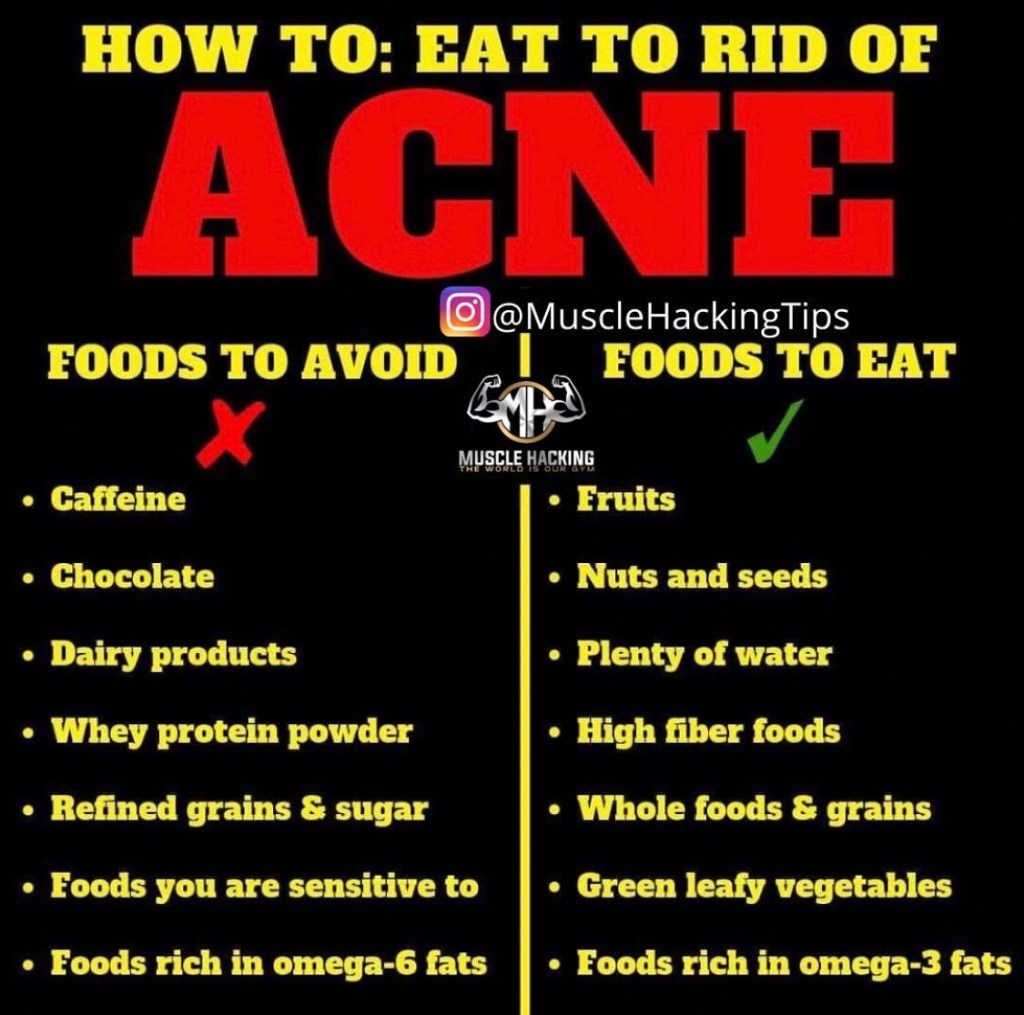
FOOD TO EAT FOR ACNE

🔹 Studies estimate approximately 80% of all people between the ages of 11 to 30 have experienced acne outbreaks at some point in their lives, and nutrition plays a key role in controlling those breakouts.

🔹 It can be tricky and frustrating dealing with acne while trying to have a social life. These are the top foods that often lead to inflammation and breakouts for people.

❌ Try your best to avoid the foods on the left. Not only are they not the healthiest, but they can trigger acne as well. In order to regulate hormones and lessen inflammation, it is key to avoid foods that are processed, have refined sugars, and are high on the glycemic index.

✔On the other hand, the right side has plenty of healthier food options, that are anti-inflammatory and low on the glycemic index. They say you are what you eat.. well the healthier you eat, the better you’ll look and feel, and ultimately reduce the likelihood of a breakout!

🔹 Keep in mind that studies have NOT shown a direct connection between the food you eat and acne; hence this is more anecdotal evidence. That being said, most people find that their acne drastically improved once they eliminated some of these foods from their diet. Try and test some of this food one at a time to see whether it makes a difference!

What 500 Calories Look Like

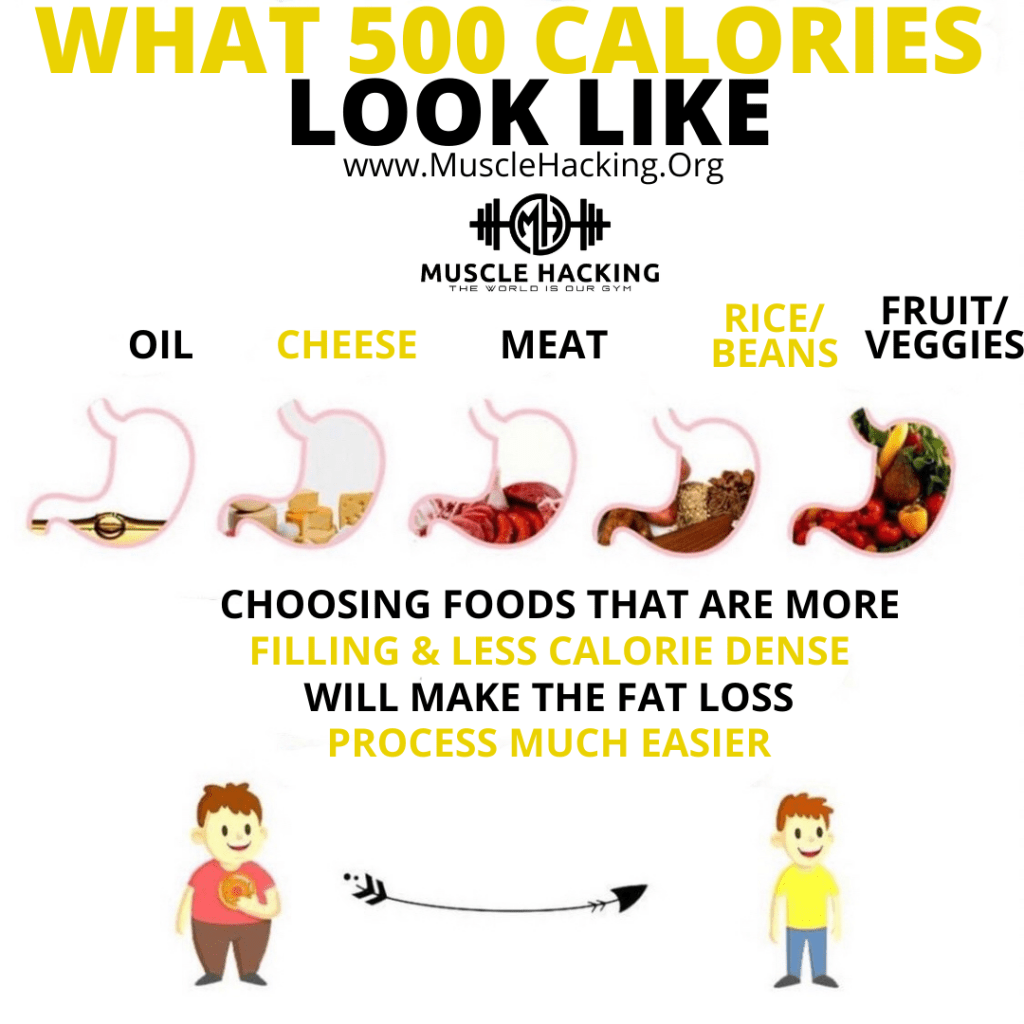
The tricky part about counting calories is the fact that not all foods have the same amount of calories.

Foods that are higher in fat have more calories, given that 1 gram of fat is 9 calories, whereas protein & carbs have 4 calories each per gram.⁣

In addition, carbs & fruits/veggies tend to be much more filling, yet less calorie dense.

This means that you can consume a much higher volume of these foods and feel more full and satisfied.

This is why it is important that you strategically eat foods that are less calorie dense so you can avoid the constant feeling of hunger.⁣

That being said, you should not be completely avoiding all the foods on the left side of the diagram.

Rather, eat a balanced diet, while keeping in mind which foods can help you feel full for longer without consuming a large amount of calories.

Fruit Juice Is Not Fruit

Have you ever considered the total amount of teaspoons of sugar in a bottle of fruit juice?

Many family households consume litres of fruit juice a week, unaware the volume of sugar inside.

Cheaper concentrated juices have heaps of additional sugar added.
Why?

To make the product taste more appealing and reduce the cost compared to 100% freshly squeezed fruit juice.

It’s common to pop into a supermarket and pick up a Meal deal with a bottle of fruit juice included.
(Average bottle between 250-500ml)

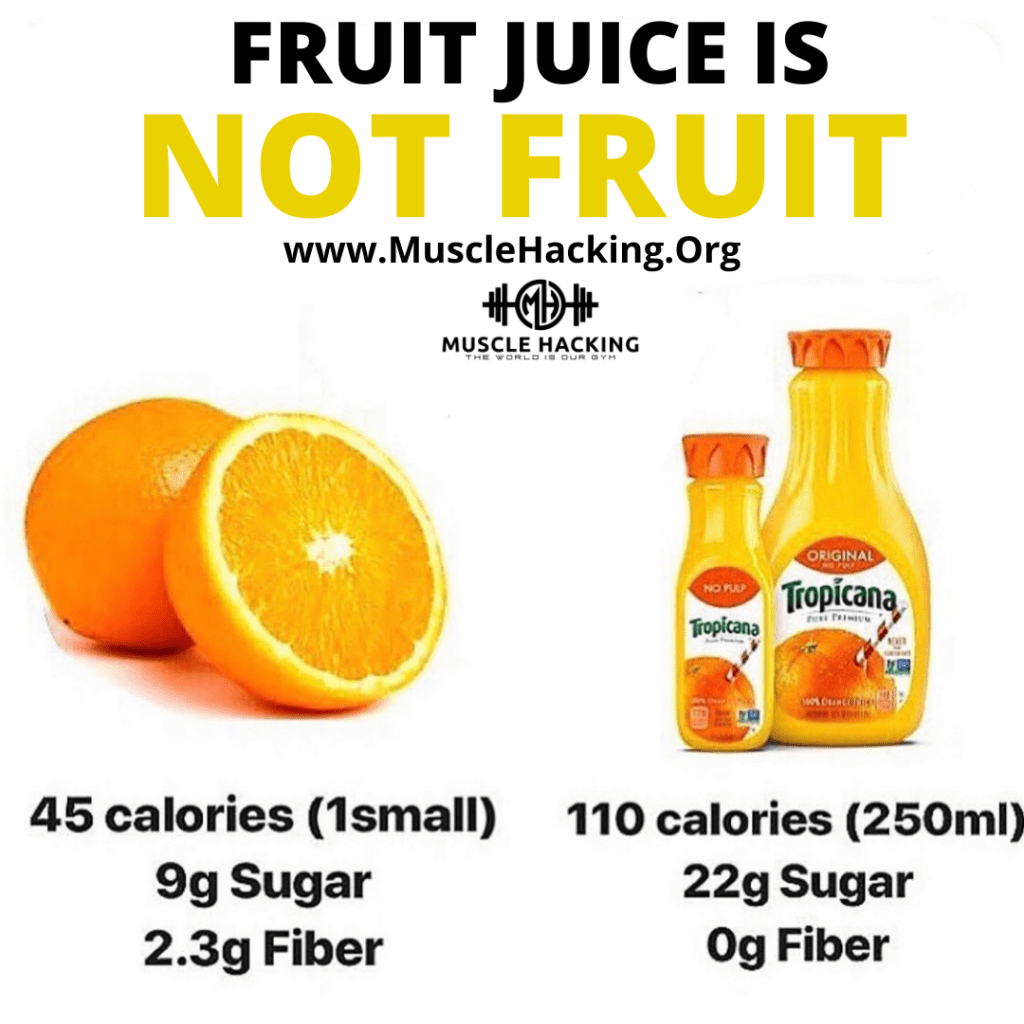
100% organic freshly squeezed orange juice…. sounds like a good choice but little do many know it will have anyware from 22 – 44g of sugar per bottle.
This is equal to 5.5 – 11 teaspoons of sugar!

This isn’t directly unhealthy, and of course this can be enjoyed alongside a balanced diet.

One drink can be the equivalent of adding 11 teaspoons of sugar to a cup of coffee or tea. You wouldn’t let your children add 11 teaspoons of sugar to a cup of tea, but it’s common to give children the equal amount of sugar, disguised as “Liquid Fruit?”

Some make the mistake of swapping coke for fruit juice as a “healthy” alternative when aiming to lose weight, without being aware that the fruit juice can contain more calories than the coke.

Liquid calories add up, if you’re looking to lose weight, be conscious of what you consume.

Healthy Fats

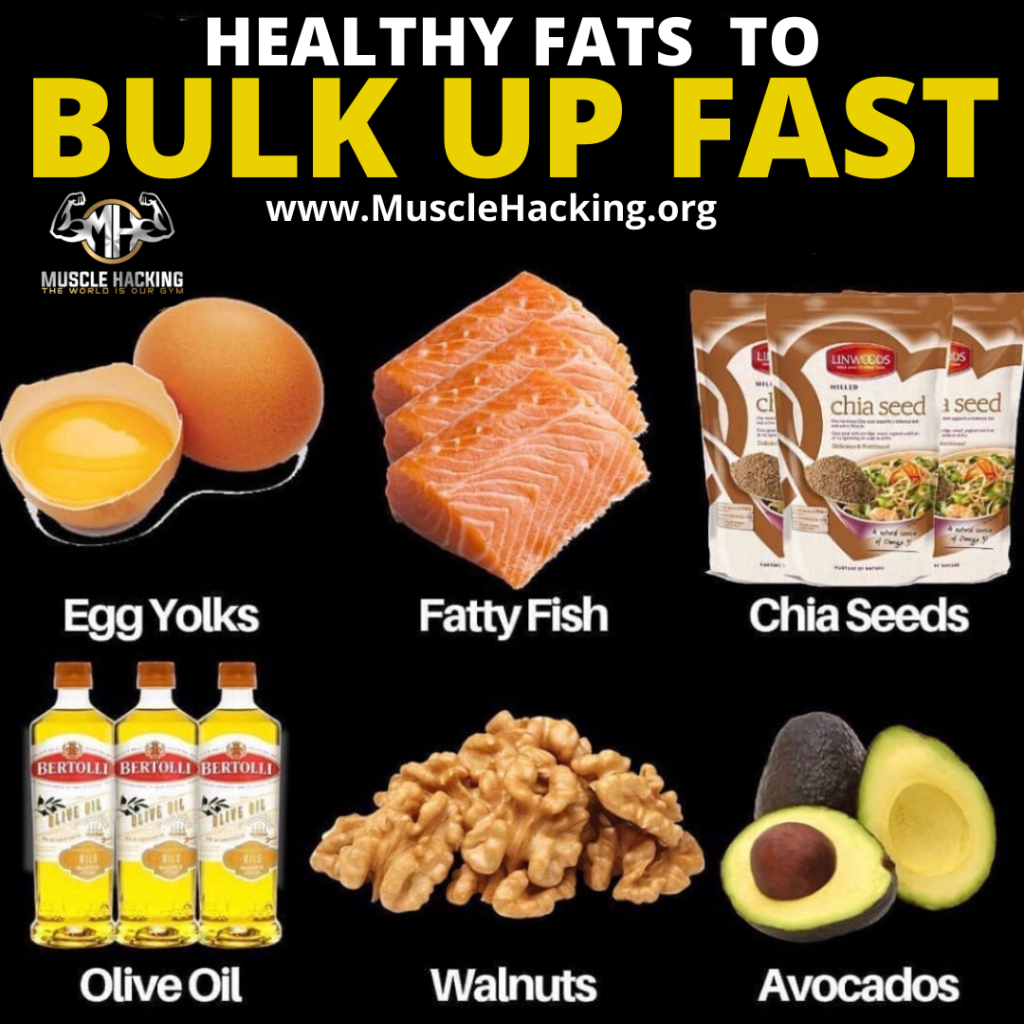
You can be quite flexible in how you reach your fat intake for the day—but, I recommend you get most of your dietary fats from healthy choices like: meats, eggs, nuts, seeds, oils, and fatty fish.
.
Although I wouldn’t overthink your saturated fatty acid consumption, I do suggest that you strive to get plenty of your daily fat intake from unsaturated fats.
.
Ultimately, if you’re reaching your minimum required fat intake for the day (0.4g / pound of BW)—while making an effort to get a good deal of it from healthy fat sources—you’ll surely achieve all of the health and performance benefits that come from a healthy fat intake.

Macro Nutrition

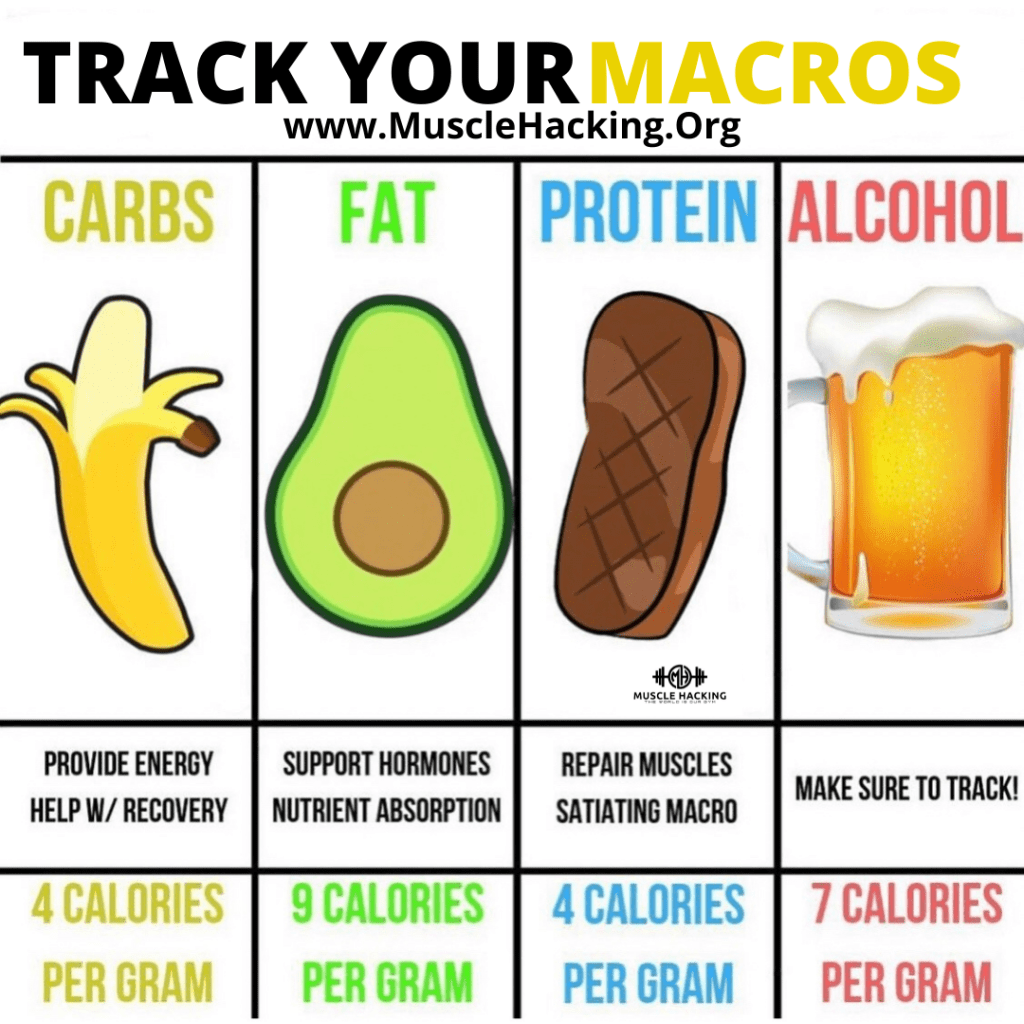
If you want to properly track your calories and macros, you need to get a sense of the caloric content of each macro.

Carbs help provide us with energy, and have 4 calories per gram, so if you eat 250g of carbs a day, that contributes 1,000 total calories.

Fats help support hormones, and have 9 calories per gram. Fat is the most calorically dense macro, and can be more filling. If you eat 80g fat everyday, that contributes to 720 calories.

Protein helps repair the muscles after we workout, and has 4 calories per gram. If you eat 150g protein everyday, that contributes to 600 calories.

DON”T FORGET ABOUT ALCOHOL EITHER. Alcohol, in some ways, can be considered a 4th macro. It contains 7 calories per gram. So if you have 2 drinks (those 2 drinks in this example being 2 1.5 oz shots of vodka), that can come out to around 190 calories. Calories from alcohol can be very sneaky, so make sure to keep that in mind!

So let’s put all those numbers together: From the examples above, let’s say one person one day eats 250g carbs, 80g fat and 150g protein. All that combined comes out to 2,320 calories. 1,000 calories coming from carbs (250g x 4 calories/g), 720 calories coming from fat (80g x 9 calories/g), and 600 calories coming from protein (150g x 4 calories/g).

Hope this helps if you’re struggling with macro tracking!

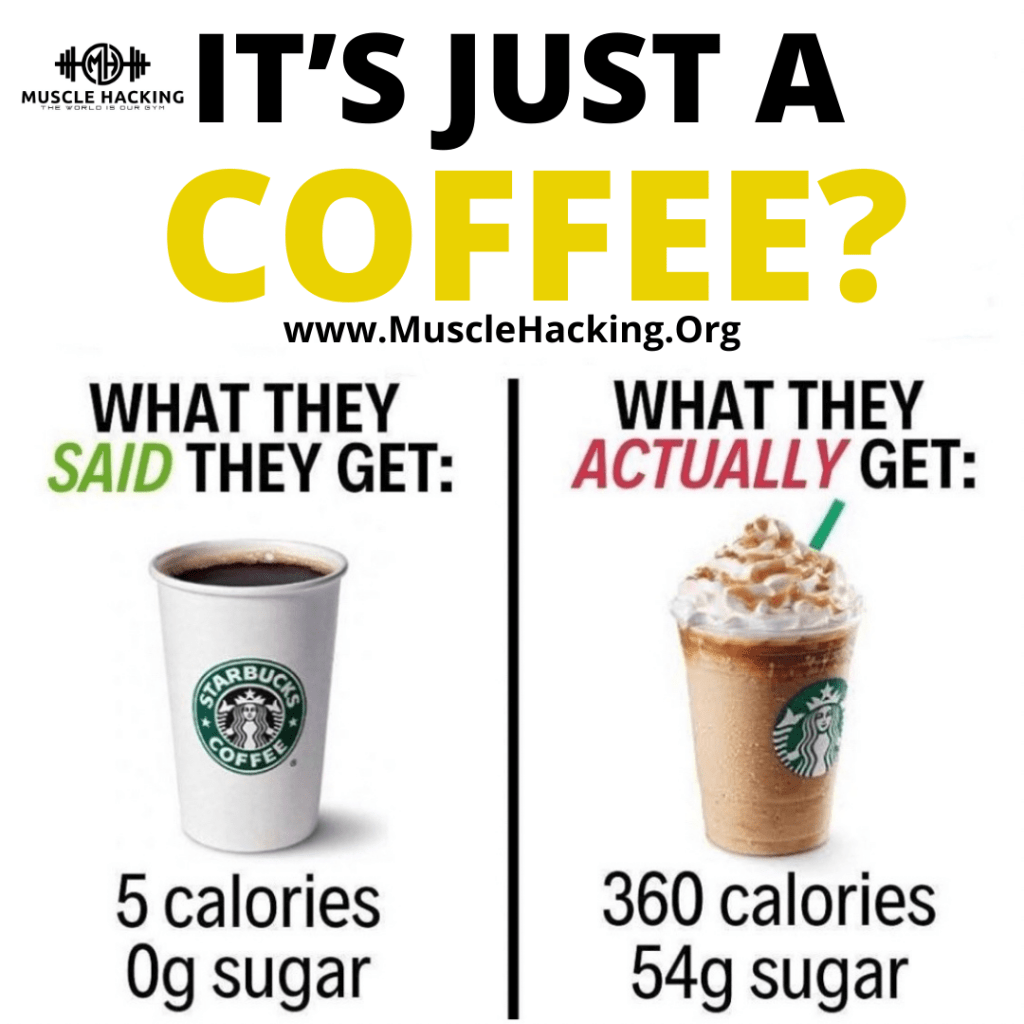
The Type of Coffee That You’re Drinking Could Be The Problem ⠀⠀⠀⠀⠀⠀⠀⠀

The majority of people don’t think twice about regularly drinking coffee packed with 200, 300, even 400 kcals per beverage…⠀⠀⠀⠀⠀⠀⠀⠀⠀
⠀⠀⠀⠀⠀⠀⠀⠀⠀⠀
Yet, when it comes to eating 300-400 kcals worth of nutrient-dense, quality foods….they are “too much”.⠀⠀⠀⠀⠀⠀⠀⠀⠀
⠀⠀⠀⠀⠀⠀⠀⠀⠀⠀
I’ve seen it happen over and over again with new clients…⠀⠀⠀⠀⠀⠀⠀⠀⠀
⠀⠀⠀⠀⠀⠀⠀⠀⠀⠀
These types of habits truly can be enough to stall your weight loss efforts.⠀⠀⠀⠀⠀⠀⠀⠀⠀
⠀⠀⠀⠀⠀⠀⠀⠀⠀⠀
Consuming 300 extra calories every morning might seem small, but added up 7-days per week, 30 days per month….and we’re talking about potentially 10,000+ additional calories in A MONTH!⠀⠀⠀⠀⠀⠀⠀⠀⠀
⠀⠀⠀⠀⠀⠀⠀⠀⠀⠀
Big takeaway here…
⠀⠀⠀⠀⠀⠀⠀⠀⠀⠀
If you drink high-calorie coffee, or any liquid calories in excess (soda, juice, alcohol, etc.), you just might need to reassess your daily habits before you claim that “you can’t lose weight”!⠀⠀⠀⠀⠀⠀⠀⠀⠀
⠀⠀⠀⠀⠀⠀⠀⠀⠀⠀
Tag a friend that would find this beneficial!⠀